
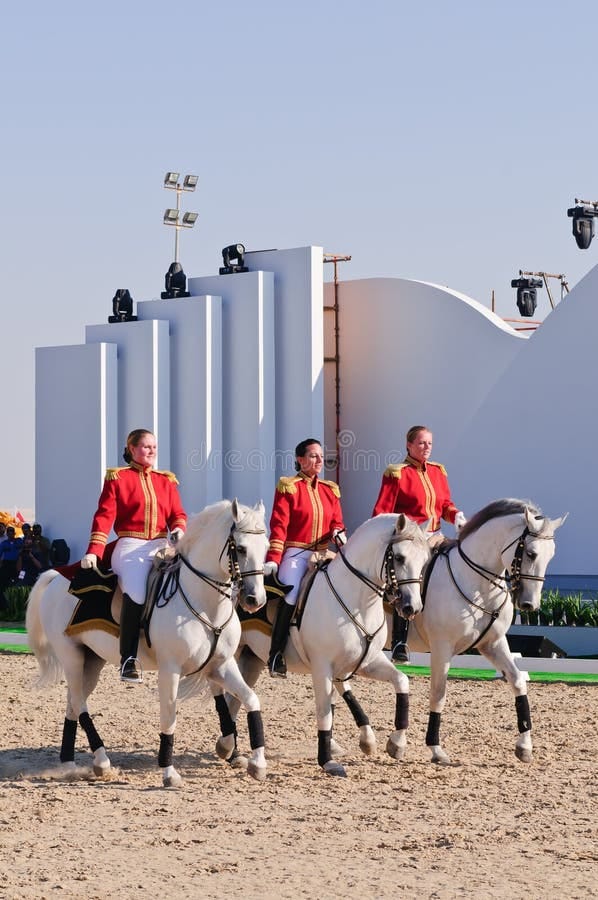
The art of Lipizzaner Horse Training is a centuries-old tradition, a captivating blend of classical horsemanship and disciplined artistry that defines the world-renowned Spanish Riding School in Vienna. These magnificent white horses, with their intelligence, sensitivity, and athletic prowess, are not merely trained; they are sculpted into performers of breathtaking beauty and precision. The journey from a spirited foal to a performing stallion is one of patience, deep understanding, and a profound connection between horse and trainer, rooted in the principles of classical dressage.
The genesis of Lipizzaner training is intrinsically linked to the Spanish Riding School itself, founded in 1572. The school’s primary mission was to preserve the high school of classical dressage, a discipline focused on the harmonious partnership between horse and rider, emphasizing the horse’s natural gaits and movements enhanced through meticulous training. This philosophy dictates that training should always be in accordance with the horse’s physical and mental capabilities, fostering trust and mutual respect rather than coercion. This approach ensures the longevity and well-being of the horse, a cornerstone of ethical equestrian practice.
The Foundation: From Foal to First Steps
The training of a Lipizzaner begins long before a rider ever sits upon its back. Foals are born dark, typically bay or dark grey, and gradually lighten to their characteristic white or grey over several years. They are allowed to grow and develop naturally, learning basic social skills and forming bonds with other horses in a herd environment. This period is crucial for their physical and psychological development, allowing their bones and muscles to mature without undue stress.
Around the age of three to four, the formal training begins. This initial phase, often referred to as “groundwork,” involves familiarizing the young horse with human presence, handling, and basic commands. Trainers use voice commands, gentle pressure, and positive reinforcement to teach the horse to yield to touch, accept a halter and lead rope, and walk calmly beside the handler. This stage is about building trust and establishing clear communication channels. It’s here that the horse learns to understand the human’s intentions and respond willingly. The goal is to create a willing partner, not a subservient automaton. This mirrors the initial stages seen in other forms of equestrian pursuits, such as [white horse training], where establishing a solid foundation of trust is paramount.
Introducing the Saddle and Rider: A Gradual Ascent
Once the horse is comfortable with groundwork, the next step is introducing the saddle and rider. This is done gradually and with utmost care. The saddle is first presented to the horse, allowing it to sniff and investigate, before being placed gently on its back. The horse is accustomed to the weight and feel of the saddle through short sessions, often with the trainer leading the horse while it is tacked up.
The first rides are typically led from the ground, with the rider offering a calming presence and minimal direction. The emphasis is on the horse accepting the weight of the rider and moving forward calmly and confidently. As the horse becomes more accustomed to being ridden, the trainer begins to introduce subtle aids – the gentle pressure of the legs, the slight movement of the reins, and the rider’s weight shifts. This is where the nuances of classical dressage begin to take shape. The trainer guides the horse through basic gaits – the walk, trot, and canter – ensuring correct posture and rhythm. This methodical progression is essential for preventing fear or resistance in the young horse. Understanding the early stages of such a disciplined process can provide valuable insights for anyone interested in specialized equestrian disciplines, much like understanding [travis horse trainer from yellowstone]’s approach to working with diverse equine temperaments.
The School of the Aids: Refining Movement and Communication
As the Lipizzaner matures, typically between the ages of five and seven, it progresses into the more advanced stages of training, often referred to as “The School of the Aids.” This phase focuses on refining the horse’s responses to the rider’s subtle cues, known as the “aids.” The aids – voice, leg, seat, and reins – are used in combination to elicit precise movements, balance, and collection from the horse.
Collection is a key element of Lipizzaner training. It’s a state of advanced balance where the horse carries itself in a more elevated posture, with its hindquarters engaged and its forehand lightened. This is not achieved through artificial means but through the development of the horse’s musculature and a deep understanding of the aids. Collection allows for the execution of the intricate movements characteristic of the Spanish Riding School, such as the levade, capriole, and courbette.
The training at this stage is highly individualized. Each horse possesses unique physical and mental attributes, and the training must be adapted accordingly. Trainers at the Spanish Riding School are masters of reading their horses, understanding their moods, and adjusting their approach to ensure progress without compromising the horse’s spirit or well-being. The goal is to develop a harmonious partnership where the horse performs willingly and with understanding, responding to the slightest cue. This dedication to understanding the horse’s needs is a universal principle in all forms of equine education, from therapeutic riding to competitive show jumping.
Mastering the Haute École: The Pinnacle of Lipizzaner Performance
The highest level of Lipizzaner training is the mastery of the Haute École, or High School movements. These are the breathtaking aerial and capriole movements that form the climax of performances at the Spanish Riding School. They require immense strength, athleticism, agility, and a profound level of trust and communication between horse and rider.
These movements are not taught overnight. They are the culmination of years, often a decade or more, of dedicated training. Each movement is broken down into smaller steps, with the horse gradually building the strength and coordination required. For instance, the levade, where the horse rears and holds its forelegs tucked beneath its body, requires exceptional core strength and balance. The capriole, a spectacular leap where the horse kicks out with its hind legs, demands incredible power and precise timing.
The trainers achieve this through consistent, patient, and knowledgeable application of the classical dressage principles. They understand the biomechanics of the horse and use the aids to guide the horse through the complex sequences of movements. The success of this training is evident in the effortless grace and power with which the Lipizzaners perform these demanding maneuvers. It is a testament to the efficacy of classical training methods when applied with expertise and ethical consideration. This rigorous yet humane approach to training is a hallmark of excellence, similar to the specialized methodologies employed in [horse training vienna], showcasing a deep respect for the animal.
The Role of the Rider and Continuous Learning
The rider plays a crucial role in Lipizzaner training. They are not just passengers but active partners who must possess a deep understanding of the horse’s physiology, psychology, and the principles of classical dressage. Riders at the Spanish Riding School undergo years of rigorous training themselves, developing the sensitivity, balance, and communication skills necessary to work with these highly trained horses.
Continuous learning is integral to the Lipizzaner training tradition. The methods are passed down through generations of riders and trainers, ensuring the preservation of this unique equestrian art form. While the core principles remain the same, there is always room for refinement and adaptation based on new understanding and insights into equine behavior and welfare. This commitment to lifelong learning ensures that the training remains effective, humane, and true to its classical roots. The ongoing evolution of training techniques, even within such a traditional framework, highlights the dynamic nature of equestrian education and the continuous pursuit of improvement. This spirit of refinement is echoed in the ongoing discourse surrounding [where are the lipizzaner horses trained] and the dedication to their unique educational path.
Preserving a Legacy: The Future of Lipizzaner Training
The tradition of Lipizzaner horse training is more than just a method of working with horses; it is a living cultural heritage. The Spanish Riding School is not only a performance venue but also a vital institution dedicated to preserving and propagating the art of classical dressage. The training is a slow, methodical process, emphasizing the long-term well-being and partnership with the horse above all else.
In an era of rapid change, the dedication to these time-honored training principles stands as a powerful statement about the enduring value of patience, respect, and deep understanding in our relationship with animals. The Lipizzaners, with their innate intelligence and the masterful training they receive, continue to captivate audiences worldwide, embodying an elegance and discipline that has been perfected over centuries. Their training is a continuous journey, a dance between two souls, a testament to what can be achieved when human expertise meets equine potential in perfect harmony.
