
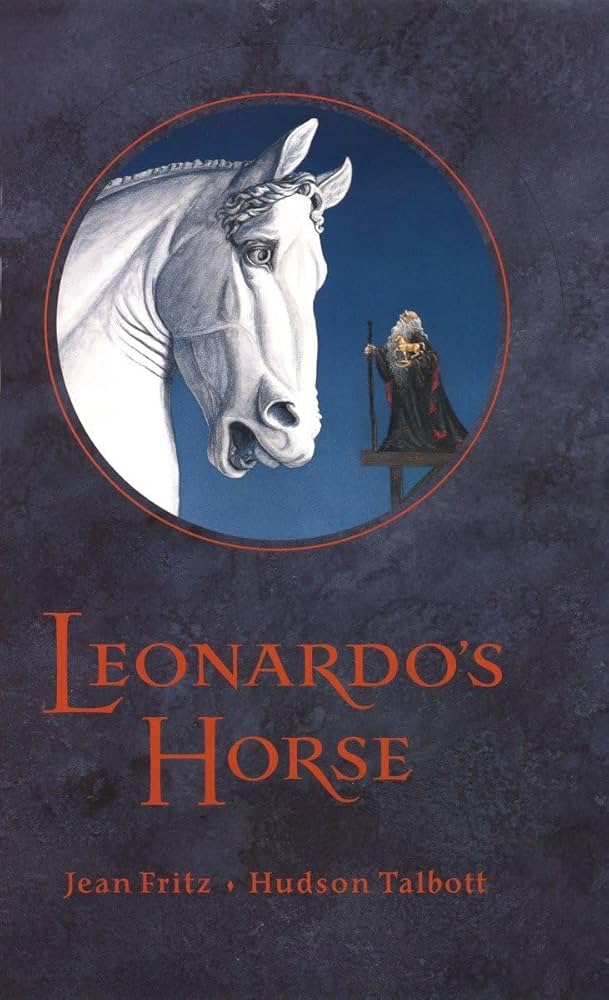
The tale of Leonardo da Vinci’s horse is not just about a sculpture; it’s a narrative woven with threads of artistic genius, ambitious patronage, and the poignant reality of unfinished projects. This story, centered around the colossal bronze equestrian statue commissioned by Ludovico Sforza, Duke of Milan, offers a captivating glimpse into the Renaissance world and the challenges faced even by the greatest minds. It’s a story that has resonated through centuries, inspiring awe and a touch of melancholy, much like the enduring legacy of Leonardo himself.
The Grand Commission: A Duke’s Vision and a Master’s Challenge
In the late 15th century, Ludovico Sforza, the powerful Duke of Milan, envisioned a monumental tribute to his father, Francesco Sforza. This tribute was to be a bronze equestrian statue, a testament to military might and ducal grandeur. The scale of the project was unprecedented, dwarfing previous attempts at such colossal sculptures. For this ambitious undertaking, Sforza turned to the preeminent artist of his time, Leonardo da Vinci. Leonardo, already renowned for his intellect and artistic prowess, embraced the challenge with characteristic enthusiasm and meticulous study.
His preparation was exhaustive. Leonardo dedicated years to studying equine anatomy, filling notebooks with detailed sketches of horses in motion, at rest, and in every conceivable pose. He observed their musculature, the way they carried their weight, the flow of their manes, and the expression in their eyes. These studies weren’t merely academic; they were foundational to his ambition to create a lifelike and dynamic representation of a horse that would stand as a masterpiece of sculpture.
Engineering the Impossible: Leonardo’s Innovative Approach
The sheer size of the proposed statue presented immense technical hurdles. The planned dimensions were staggering: a horse standing over 24 feet tall. Casting such a massive bronze would require innovative techniques and a significant quantity of the precious metal. Leonardo, ever the inventor, devised new methods for constructing the clay model and for the complex bronze casting process. He experimented with different types of furnaces and casting techniques, pushing the boundaries of metallurgical and engineering knowledge available at the time. His detailed plans and theoretical calculations reveal a mind not only artistically brilliant but also profoundly adept at problem-solving and engineering.
The Colossal Clay Model: A Tangible Spectacle
After years of dedicated work, Leonardo completed a full-scale clay model of the horse in 1499. This enormous sculpture, standing in the courtyard of the Duke’s castle, was a breathtaking sight. Contemporary accounts describe it as a marvel, a testament to Leonardo’s genius, and a symbol of Milanese power and artistic achievement. It was so lifelike and grand that it captured the imagination of all who saw it, serving as a powerful, albeit temporary, testament to what Leonardo could achieve. The model itself became a spectacle, drawing crowds and solidifying Leonardo’s reputation for monumental artistic vision.
War’s Interruption: The Tragic Fate of the Model
Tragically, the political landscape of Italy proved as volatile as Leonardo’s artistic pursuits were ambitious. In 1499, French forces invaded Milan, and Ludovico Sforza was overthrown. The courtyard where the magnificent clay model stood became a training ground for French archers. The colossal horse, a symbol of Sforza’s power and Leonardo’s artistic triumph, was used as a target and ultimately destroyed. This destruction was not merely the loss of a sculpture; it was the obliteration of years of painstaking effort, innovation, and artistic vision. The very purpose for which the horse was commissioned—a lasting tribute—was obliterated by the ravages of war.
The Lost Legacy: Bronze Never Poured
The destruction of the clay model meant that the bronze casting, the ultimate realization of Leonardo’s vision, never took place. The immense quantity of bronze that had been prepared was reportedly repurposed for cannons by the invading forces. The dream of the colossal bronze horse, a project that had occupied Leonardo for over a decade, dissolved into a poignant “what if.” The absence of the finished sculpture left a void in art history, a powerful symbol of unrealized potential and the fragility of grand artistic endeavors in the face of political turmoil.
Echoes Through Time: Rediscovery and Reconstruction
Despite the physical loss, the story of Leonardo’s horse did not entirely vanish. Leonardo’s meticulous notebooks, filled with his studies, sketches, and technical plans for the statue, survived. These documents became invaluable resources for later generations, preserving the memory and the technical details of the project.
In the late 20th century, inspired by these surviving records, a renewed effort was made to bring Leonardo’s vision to life. Several attempts were made, most notably by American artist Nina Akamu and later by a foundation in Italy, to create a full-scale bronze version of the horse, based on Leonardo’s original designs and studies. These modern interpretations, while not the direct casting of Leonardo’s original work, serve as powerful homages to his genius and the enduring appeal of his unfinished masterpiece. One such interpretation, standing in Milan, stands as a contemporary testament to the original ambition.
The story of Leonardo’s horse is a powerful reminder that even the greatest artists face the caprices of fate, political upheaval, and the inherent difficulties of realizing monumental projects. It is a narrative that continues to captivate, reminding us of the intersection of art, science, history, and the enduring human drive to create.
