
When it comes to training your canine companion, the gear you choose is just as important as the commands you teach. For generations, seasoned trainers and loving owners have relied on a timeless classic: the leather dog training collar. It’s more than just a stylish accessory; it’s a durable, comfortable, and effective tool that can significantly improve communication between you and your dog. If you’re looking for a reliable option that blends strength with comfort, understanding the benefits of leather is the first step toward more productive training sessions.
The right equipment can make all the difference, and a good collar is foundational. For a complete setup, consider pairing your collar with one of the best training leash for dogs to ensure you have a cohesive and reliable system for your daily walks and training exercises.
Why Choose a Leather Collar for Training?
In a market flooded with synthetic options, leather holds its own for several key reasons. It offers a unique combination of features that make it particularly well-suited for the rigors of training while ensuring your dog remains comfortable and safe.
Unmatched Durability and Strength
One of the most significant advantages of a leather collar is its longevity. High-quality, full-grain leather is incredibly strong and resistant to wear and tear, making it ideal for dogs of all sizes, including strong pullers. Unlike nylon collars that can fray or plastic buckles that might crack under pressure, a well-made leather collar is built to last for years, often for the entire lifetime of your dog with proper care. This durability provides peace of mind, as you can trust the collar won’t fail during a critical training moment.
Superior Comfort for Your Dog
Training requires consistency, which means your dog will be wearing their collar frequently. Comfort is essential to prevent distractions and ensure a positive experience. Leather is a natural, breathable material that softens over time, molding to the unique shape of your dog’s neck. This custom fit minimizes the risk of chafing, irritation, or hair loss, which can be common issues with rougher, synthetic materials. For dogs with sensitive skin, a smooth, well-finished leather collar is often the gentlest option.
Better Grip and Control
The firm yet flexible nature of leather provides a steady and reliable grip for the handler. It doesn’t stretch or slip like some other materials, allowing for clear and gentle corrections. This consistency is vital during training, as it helps your dog understand commands more effectively. When you give a light tug on the leash, the collar communicates that cue without any give, creating a direct line of communication.
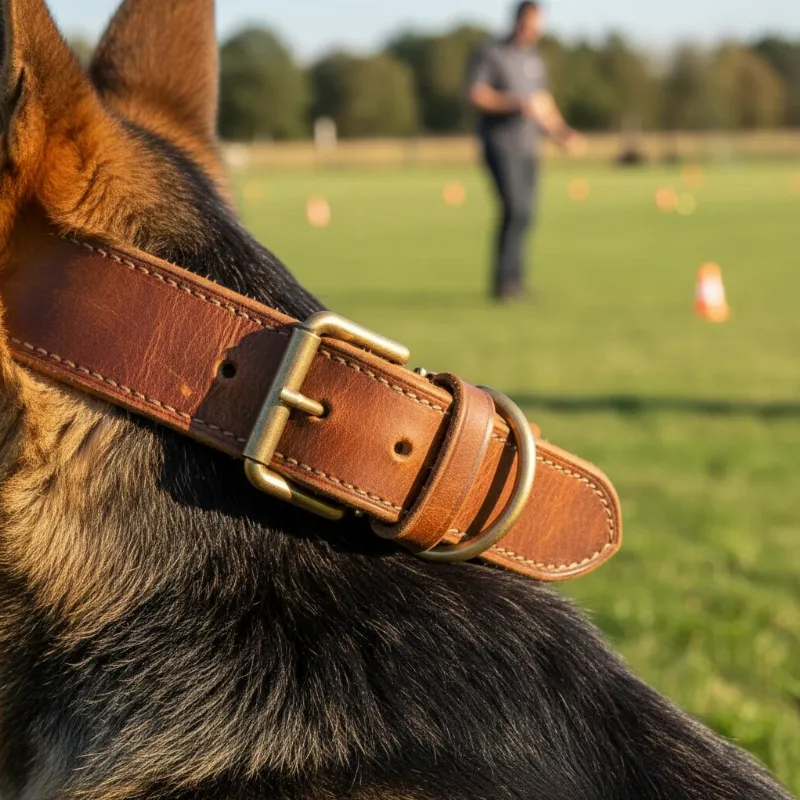 A handsome German Shepherd wearing a classic brown leather dog training collar, sitting attentively in a sunny park.
Types of Leather Dog Training Collars Explained
Not all leather collars are the same. Different designs serve different purposes, and choosing the right one depends on your dog’s breed, coat, and training needs.
The Classic Flat Collar
This is the most common and versatile type of leather collar. The flat design is suitable for most dogs and everyday use, from daily walks to basic obedience. It’s an excellent choice for dogs that don’t pull excessively and have short to medium-length coats. When selecting a flat collar, pay attention to the width; a wider collar distributes pressure more evenly and is generally better for larger, stronger dogs.
The Rolled Leather Collar
A rolled leather collar is specifically designed for dogs with long, thick coats, such as Collies or Golden Retrievers. The rounded shape helps prevent the collar from matting down the fur or creating unsightly lines in their coat. While they are gentle and lightweight, they are typically not recommended for very strong dogs who pull hard, as the narrower surface area can concentrate pressure.
The Padded Leather Collar
For extra comfort, especially for larger dogs or those prone to pulling, a padded leather collar is an excellent option. These collars feature a soft lining on the inside, which provides cushioning against the dog’s neck. This design is ideal for dogs with short hair or sensitive skin, as it minimizes rubbing while still providing the strength of a traditional leather collar. Making sure you have the right dog training leash and collar combination is key to successful and comfortable training sessions.
How to Select the Perfect Leather Training Collar
Choosing the right collar involves more than just picking a style. Proper fit and quality materials are crucial for both safety and effectiveness.
Getting the Right Fit
An improperly fitted collar can be dangerous. If it’s too loose, your dog could slip out of it. If it’s too tight, it can cause discomfort, restrict breathing, or even lead to injury. A widely accepted rule is the “two-finger” rule: you should be able to comfortably slide two fingers between the collar and your dog’s neck. Always measure your dog’s neck before purchasing and consult the manufacturer’s sizing chart.
Understanding Leather Quality
The best Leather Dog Training Collars are made from full-grain leather, which is the strongest and most durable part of the hide. It ages beautifully, developing a rich patina over time. Avoid “bonded leather” or “genuine leather” that isn’t specified as full-grain, as these are often made from scraps and are far less durable. Also, check the hardware. Buckles and D-rings should be made from solid brass or stainless steel to resist rust and breakage.
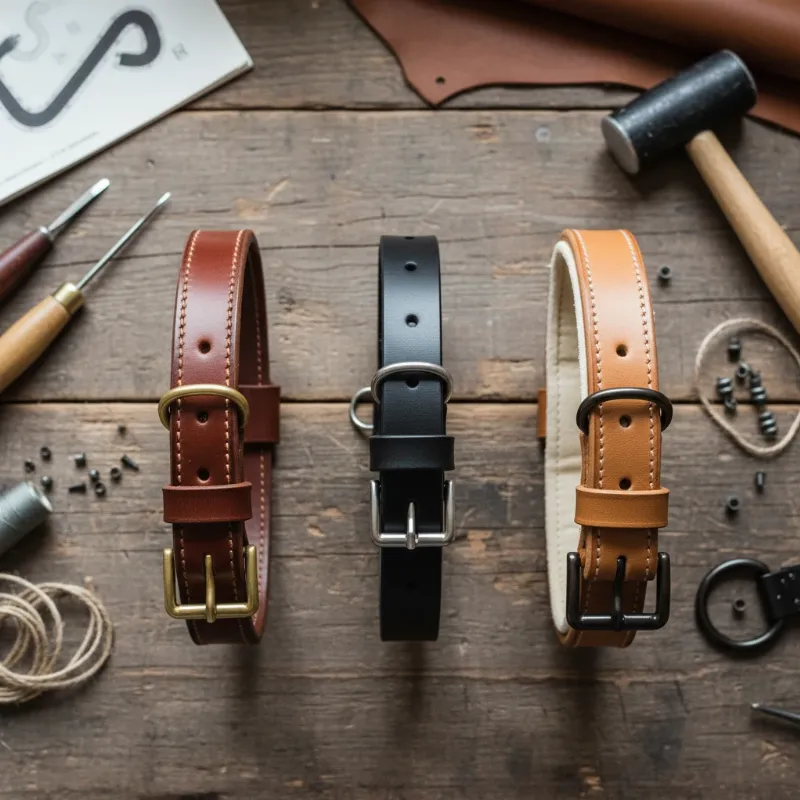 A collection of different leather dog training collars, including flat, rolled, and padded styles, arranged neatly on a rustic wooden surface.
Maintaining Your Leather Collar for Longevity
A leather collar is an investment that, with a little care, can last a lifetime. Proper maintenance keeps it strong, supple, and comfortable for your dog.
“Think of a leather collar like a good pair of hiking boots,” says Dr. Ethan Clarke, a canine behavior specialist. “It’s built tough, but it performs best when you keep it clean and conditioned. A well-cared-for collar is a reliable tool that strengthens the bond of trust between you and your dog during training.”
- Cleaning: To clean the collar, simply wipe it down with a damp cloth to remove dirt. For tougher grime, you can use a mild soap, but be sure to wipe it off completely. Never soak the collar in water.
- Conditioning: About two to three times a year, apply a leather conditioner or neatsfoot oil to keep the leather from drying out and cracking. This will restore its natural oils and maintain its flexibility.
- Drying: If the collar gets wet, let it air dry. Do not place it near a direct heat source, as this can cause the leather to become brittle.
For those working on specific behaviors, such as pulling, understanding how to train dog from pulling on leash can be complemented by using a sturdy and reliable leather collar that gives you better control.
Frequently Asked Questions (FAQ)
1. Are leather collars good for puppies?
Yes, leather collars can be great for puppies, especially padded ones that offer extra comfort for their delicate necks. However, since puppies grow quickly, you will need to check the fit frequently and be prepared to purchase a larger size as they mature.
2. How long do leather dog training collars last?
With proper care, a high-quality full-grain leather collar can last for many years, often exceeding a dog’s lifetime. Its durability is one of its primary benefits over synthetic materials.
3. Can leather collars get wet?
While leather is water-resistant, it is not waterproof. If it gets wet, it’s important to let it air dry completely. Repeated exposure to water without proper conditioning can cause the leather to dry out and weaken over time.
4. Are leather collars better than nylon for training?
Both have their pros and cons. Leather offers superior durability and a classic look, and it softens to conform to a dog’s neck. It provides a firm, non-slip grip for corrections. Nylon is often cheaper, comes in more colors, and handles water better. For serious training where control and longevity are key, many professionals prefer leather.
5. How do I know if the collar is too tight?
Besides the two-finger rule, watch for signs of discomfort. If your dog is coughing, gagging, or if there is hair loss or irritated skin under the collar, it is likely too tight. Ensure the collar sits high on the neck, just behind the ears, for the best control during training.
Ultimately, choosing the right equipment is a key step in building a successful and positive training relationship with your dog. A leather collar provides a reliable, comfortable, and long-lasting tool that helps you guide your dog with confidence. By investing in quality and ensuring a proper fit, you’ll find that leather dog training collars are a classic choice for a reason.
