
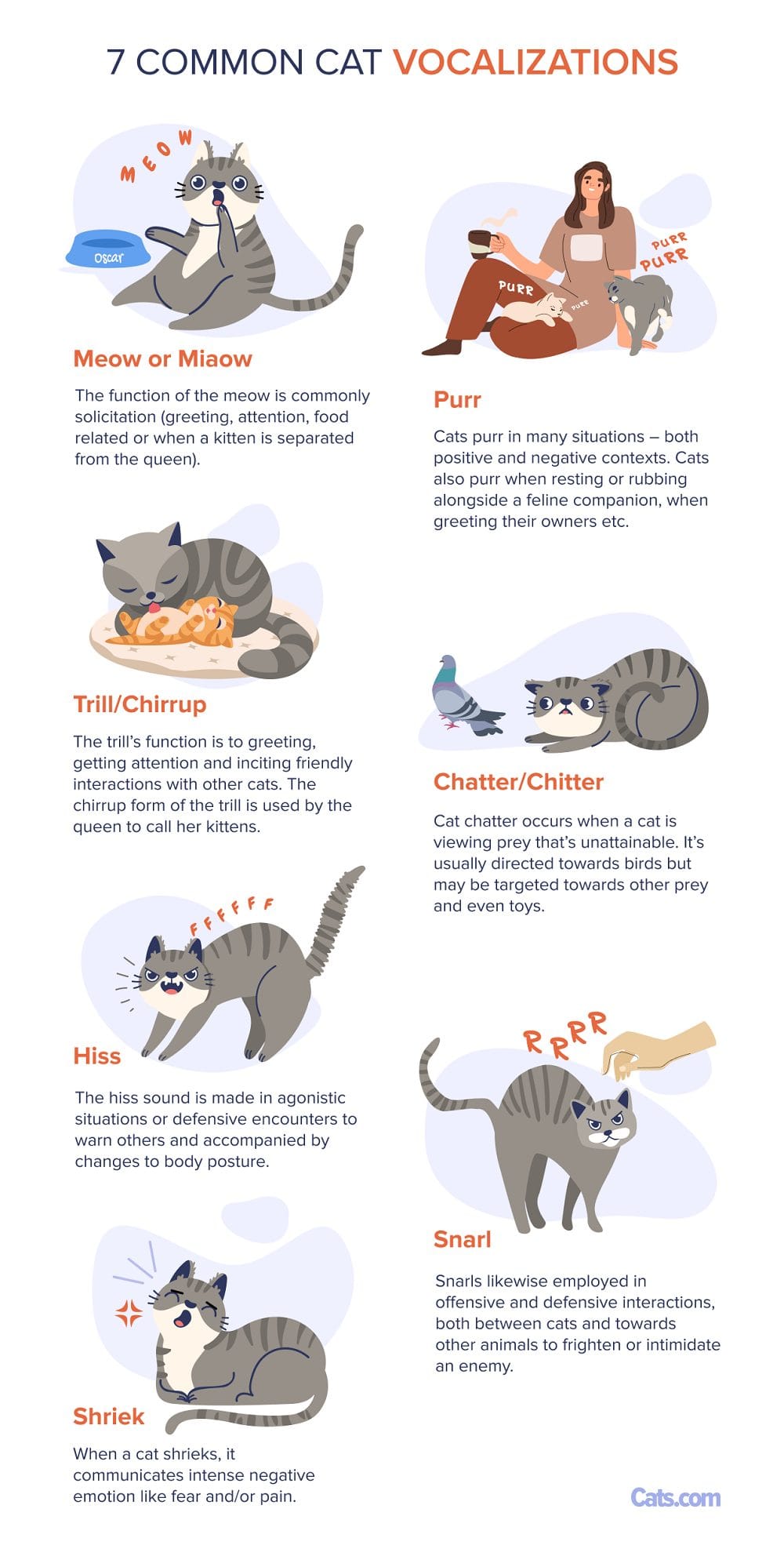
Is your new kitten crying all night, or has your adult cat suddenly started meowing incessantly? While some vocalization is normal for felines, excessive meowing can be concerning and disruptive. Understanding the underlying reasons can help you address the issue and restore peace to your home. This guide explores why kittens and cats vocalize excessively and provides practical solutions for calming your furry companions.
Some meowing is a natural part of feline communication. Kittens meow to their mothers to signal hunger or cold, and as they mature, they direct these vocalizations towards humans for various reasons, including seeking attention or indicating distress. Certain breeds, like Siamese cats, are also known for being more vocal. Cats may also “yowl,” a deeper, more drawn-out sound often used in communication between adult cats, especially during heat cycles. While vocalization is normal, changes in environment, stress, hormones, or health issues can lead to a sudden increase in meowing.
Why Your Kitten Won’t Stop Crying
Kittens are particularly prone to excessive meowing for several reasons:
Seeking Attention
This is perhaps the most common reason for a kitten’s persistent cries. Kittens quickly learn that meowing loudly elicits a response from their humans, whether it’s food, play, or petting. When you consistently reward this behavior, you reinforce their belief that meowing is an effective way to get what they want.
Pain and Discomfort
As kittens’ baby teeth erupt (between two to four weeks old) and their adult teeth come in (by six months), they can experience discomfort and pain. Additionally, kittens are curious and prone to accidents around the home. It’s crucial to consult a veterinarian to rule out any serious injuries and to kitten-proof your home to prevent future mishaps.
Litter Box Dissatisfaction
Kittens can be particular about their litter box. If it’s messy, too small, or the litter type isn’t to their liking, they might express their frustration through crying. Ensuring the litter box is clean and appropriately sized is essential.
Stress and Environmental Changes
Moving to a new home, changes in their routine, or even rearranging their favorite spots can be stressful for kittens. This stress can manifest as increased vocalization.
Calming a Crying Kitten
Addressing a crying kitten requires patience and understanding:
- For attention-seeking: Try to ignore the meowing until the kitten is quiet, then offer praise or a treat. This teaches them that quiet behavior gets rewarded. Be mindful of how quickly you respond to their cries, as this can reinforce the behavior.
- For discomfort: If the kitten is under six months, consider a kitten-safe dental chew to ease teething pain. If their gums appear red or swollen, consult your veterinarian immediately.
- For litter box issues: Check if the litter box is clean and if the kitten has outgrown its current size. If problems persist, seek veterinary advice to rule out medical issues like urinary tract infections.
- For stress: Provide a quiet, safe space where the kitten can retreat and feel secure. This helps them adjust to their new environment and learn to self-soothe.
Why Your Adult Cat is Meowing So Much
As cats mature, the reasons for excessive vocalization can evolve:
Demands and Desires
Similar to kittens, adult cats often meow to communicate their needs, most commonly for food. They might also be asking for water or access to their litter box.
Boredom and Loneliness
Indoor cats, in particular, can become bored or lonely if their environment isn’t stimulating enough. This can lead to yowling, especially at night. Persistent meowing, even after adequate playtime, could indicate underlying health issues like kidney disease or thyroid problems.
Feeling Threatened or Insecure
A cat that feels threatened or insecure in its territory may vocalize excessively as a defense mechanism. This is often observed when a new pet is introduced to the home.
Illness or Pain
Cats are adept at masking discomfort, but significant pain from illness or injury can lead to increased meowing. Elderly cats are particularly susceptible to excessive vocalization due to sensory decline or cognitive issues. Consulting a veterinarian is crucial to diagnose and treat any health problems.
Being in Heat
Unspayed female cats (typically starting between six to 10 months old) will go into heat, becoming more affectionate and vocal to attract a mate. Male cats may yowl in response to a female in heat. Heat cycles usually last several days and can recur frequently.
How to Get Your Cat to Stop Meowing Excessively
Managing excessive meowing involves understanding the cause and implementing consistent strategies:
- Acceptance and Realistic Expectations: Understand that some cats are naturally more vocal. Aim to reduce, rather than eliminate, meowing.
- Avoid Reinforcing the Behavior: Do not give in to meowing for food or attention outside of regular mealtimes. Providing food on demand can lead to overfeeding and obesity. If your cat meows for food, discuss high-fiber diet options with your vet to promote satiety.
- Ignore Unwanted Vocalizations: Reacting to excessive meowing, even with a scolding, provides attention, which is often what the cat desires. Calmly ignore the behavior and reward quiet moments.
- Increase Stimulation: Combat boredom and loneliness by engaging in regular, interactive play sessions. Introduce new toys or simple novelties like boxes to keep your cat entertained.
- Veterinary Check-ups: Rule out medical conditions, especially in older cats, that might be causing discomfort or confusion. Medications can often help manage these issues.
- Spay or Neuter: Desexing your cat can significantly reduce vocalization associated with heat cycles and prevent unwanted pregnancies. It also offers numerous health benefits, such as reducing the risk of certain cancers and uterine infections. Spaying typically costs between $300 and $500, and pet wellness plans or insurance can help cover these expenses.
Key Takeaways
Excessive vocalization in cats is often a learned behavior reinforced by human responses. By calmly ignoring demands and rewarding quiet behavior, you can help manage attention-seeking meows. Sudden increases in vocalization warrant a veterinary visit to rule out underlying health problems. Pet insurance can provide peace of mind and financial support for necessary veterinary care throughout your cat’s life.
References
- Pawlicy Advisor. (n.d.). Common Illnesses and Accidents in Kittens.
- Pawlicy Advisor. (n.d.). How to Kitten-Proof Your Home.
- Pawlicy Advisor. (n.d.). Hyperthyroidism in Cats.
- Pawlicy Advisor. (n.d.). Spay & Neuter.
- Pawlicy Advisor. (n.d.). Are Pet Wellness Plans Worth It?
- Pawlicy Advisor. (n.d.). Is Pet Insurance Worth It?
