
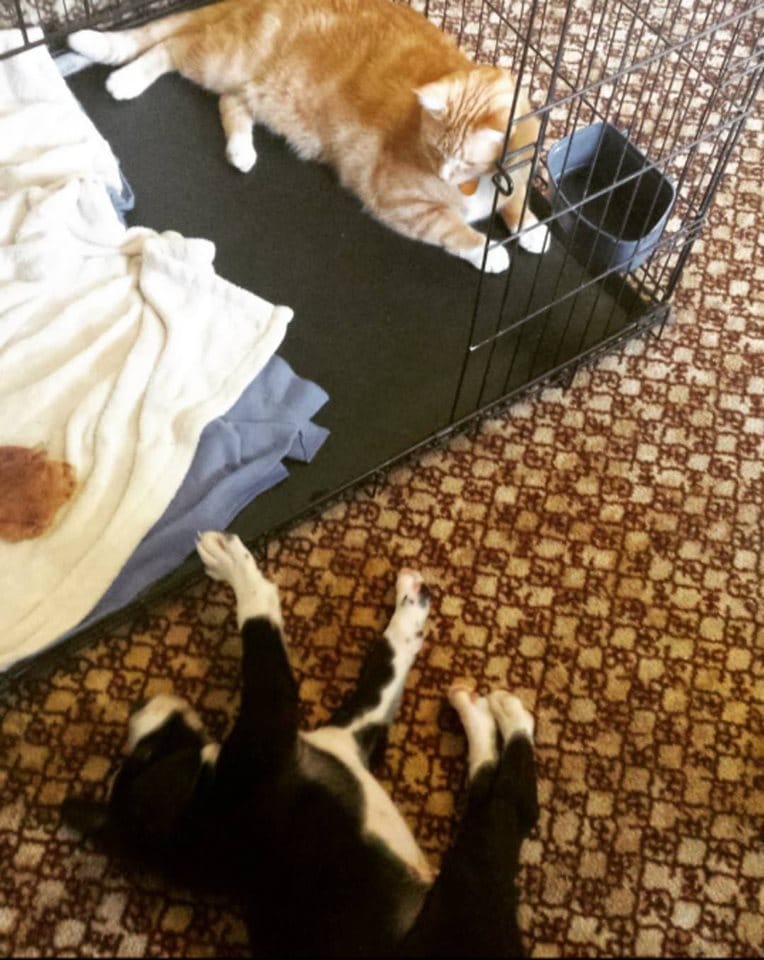
For those who have shared their lives with cats, the idea of crate training might initially bring to mind images of dogs. However, as experience with our feline companions deepens, so does our understanding of their needs. Free-access crate training, where a cat views their carrier as a personal sanctuary, offers a proactive approach to managing feline well-being, preventing behavioral issues, and ensuring their comfort in various situations. This method, much like crate training for dogs, provides a secure space that can significantly benefit your cat’s overall health and happiness.
What is a Crate for Cats?
When we refer to a “crate” for cats, we mean the common pet carriers available in pet stores, large department stores, or online retailers. These carriers typically consist of a top, bottom, and door, designed for easy disassembly and cleaning. For cats, an ideal crate should be spacious enough to accommodate the cat, their bedding, food and water bowls, and even a small litter box if needed. A simple cardboard box filled with litter can suffice as a temporary or supplementary litter solution.
While cat beds or snug cat houses can serve as retreats, carriers offer a distinct advantage: the ability to securely contain the cat by simply closing the door. Furthermore, washing bedding used in a carrier is generally more convenient than cleaning an entire cat bed. Some cat houses are not washable at all, making carriers a more hygienic choice, especially when dealing with potential health issues. The ease of dismantling, scrubbing, and disinfecting a carrier significantly simplifies cleanup compared to extensive cleaning of a carpeted cat tree or a non-washable cat bed.
The Core Benefits of Crate Training
The advocacy for free-access crate training stems from understanding three fundamental animal priorities: establishing and protecting territory, finding sustenance, and reproduction. When animals, including cats, do not feel secure in their environment, their basic needs can be compromised. This can lead to reduced appetite and water intake, impacting their overall resistance to diseases. Studies have shown that insufficient water consumption is a significant factor differentiating cats prone to non-infectious urinary tract problems from those who remain healthy.
Introducing a kitten to a free-access crate from an early age is recommended because their early experiences often shape their future behaviors. Kittens develop a sense of personal space early on, and this can become difficult to modify as they mature. By providing a crate as their designated personal space, you alleviate the cat’s need to fiercely claim territory within the larger home environment.
Cats who embrace their crates as personal space gain several advantages:
- Reduced Territoriality: They perceive the owner’s home as a neutral territory, lessening their instinct to defend it. This can significantly decrease the likelihood of territorial disputes, including marking and fighting, especially if you introduce another cat to the household.
- Portability of Personal Space: The cat’s personal haven moves with them. This is invaluable during veterinary visits, boarding stays, relocation to a new home, or even short trips to a friend’s house. The familiar environment reduces stress.
- Disaster Preparedness: In emergency situations like fires or floods that necessitate evacuation, a crate-trained cat is better equipped to cope. The familiar space offers security, and carriers increase the chances of acceptance in emergency shelters. If separation is unavoidable, the crate provides comfort in unfamiliar surroundings.
- Child-Friendly Environment: Teaching children to respect a cat’s “house” is easier than teaching them not to disturb a cat napping in a corner. Like children, kittens and cats require downtime, and a crate provides a safe and convenient space for them to rest undisturbed.
Implementing Crate Training for Cats
For kittens, their natural curiosity often leads them to explore new spaces, especially those that offer comforts like food, water, toys, and bedding. Incorporating a towel or an old t-shirt that carries your scent can be particularly comforting. Placing the crate in a secure location, such as your bedroom, enhances its appeal. Many cats also prefer elevated spaces, particularly in multi-pet or child-occupied households. Positioning the crate on a bench or dresser can increase its attractiveness.
Adult cats who associate carriers with negative experiences, such as veterinary visits, require a more nuanced approach. Observe your cat’s sleeping preferences outside the crate – do they prefer smooth or fuzzy surfaces? Mimicking these bedding conditions inside the carrier can be effective. In some cases, you may need to gradually introduce the carrier. Start by allowing the cat to explore the bottom portion of the dismantled crate, engaging in positive interactions like playing and feeding. Once they are comfortable, reassemble the carrier and gradually introduce the top, followed by the door.
A synthetic feline facial pheromone, such as Feliway, can expedite the crate acceptance process. Cats use facial pheromones to communicate messages of acceptance. Theoretically, introducing this scent to an environment can neutralize negative associations. While initially developed to deter marking, these pheromones can be effective in mitigating fearful responses to crates, cars, or even people. Spraying the pheromone on the object of fear or on your hands can help neutralize negative feelings. It’s advisable to let the cat leave the area before spraying, as some animals dislike the sound of the spray or the initial scent of the alcohol carrier. Pheromone products are available in plug-in diffusers and sprays at pet stores and veterinary clinics.
While crate training might seem like extra effort for cats without existing problems, it proves to be a long-term time and energy saver. Providing cats with their own secure space can prevent future medical and behavioral issues, ultimately reducing the need for intensive training under stressful circumstances.
The principle of prevention is always more effective and economical than treatment. By proactively establishing a free-access crate as a feline haven, you invest in your cat’s long-term health, happiness, and your peace of mind.
