
Welcoming a new kitten into your home is an exciting time, but it also comes with responsibilities, especially when it comes to potty training. Young kittens, typically around three to four weeks old, are too small to manage the high sides of standard litter boxes. As a solution, many turn to reusing ordinary cardboard boxes to create temporary, accessible litter boxes. This practical method isn’t just for kittens; it can also serve as a temporary solution for adult cats during emergencies or when a regular litter box isn’t available. Learn how to teach a cat not to do something to ensure a well-behaved feline companion.
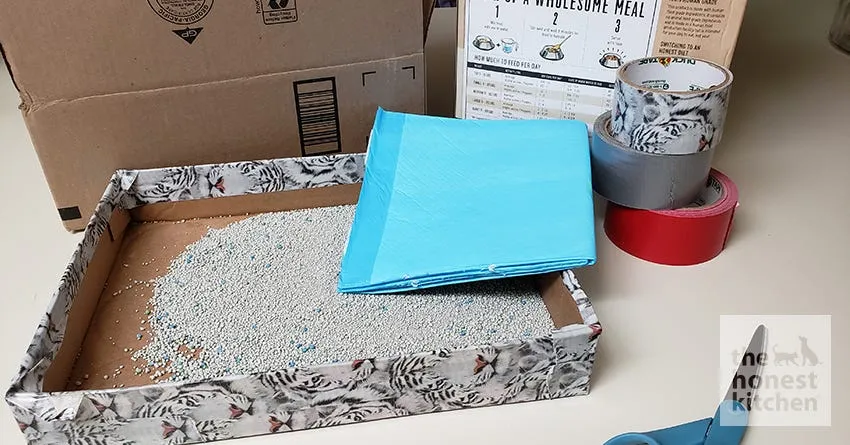 A person cutting down a cardboard box to make a litter box.
Essential Materials for Your Cardboard Litter Box
To construct a functional temporary litter box, you will need a few key items:
- Cardboard Box: Choose a box of appropriate size. For kittens, a smaller box that can be cut down to a low height is ideal. For adult cats, a larger and sturdier box is recommended to allow ample room for movement. Many pet food brands, like The Honest Kitchen, offer boxes that can be repurposed.
- Cutting Tool: Heavy-duty scissors or a box cutter will be necessary to adjust the box’s height.
- Duct Tape: This is crucial for reinforcing the box’s structure and edges, making it more durable and somewhat moisture-resistant.
- Cat Litter: Select your preferred type of cat litter.
- Potty Pads (Optional): These can be placed at the bottom of the box, underneath the litter, to help absorb moisture and odors, especially if the box will be used multiple times.
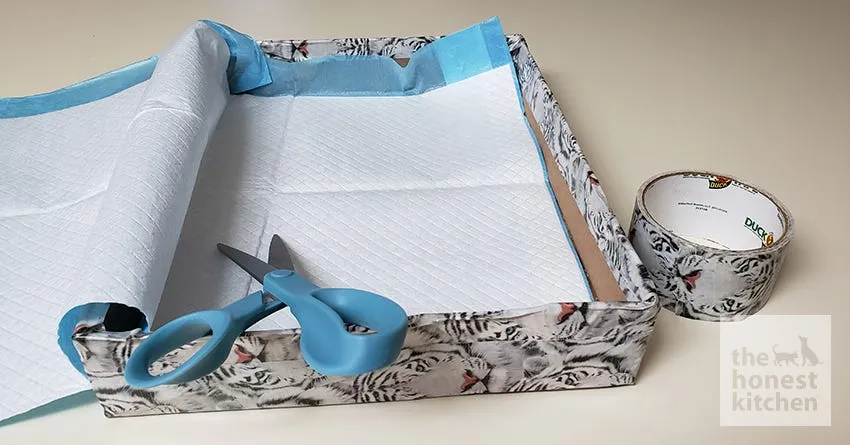 The assembled cardboard litter box with potty pads and litter.
Assembling Your DIY Cardboard Litter Box
Creating a cardboard litter box is a straightforward process:
- Prepare the Box: Determine the desired orientation of the box. Decide which side will be the bottom and how high you want the walls. For very young kittens, walls only a couple of inches high are sufficient. For adult cats, four to five-inch walls or higher are more appropriate.
- Cut the Sides: Carefully cut the cardboard to achieve the desired wall height.
- Reinforce with Duct Tape: Cover the cut edges and the top rim of the walls with duct tape, both inside and outside. Fold the tape over the cut edges to provide extra reinforcement. This also helps protect the cardboard from moisture.
- Secure the Base: Inspect the bottom of the box and apply duct tape to any folded edges or weak spots to strengthen it.
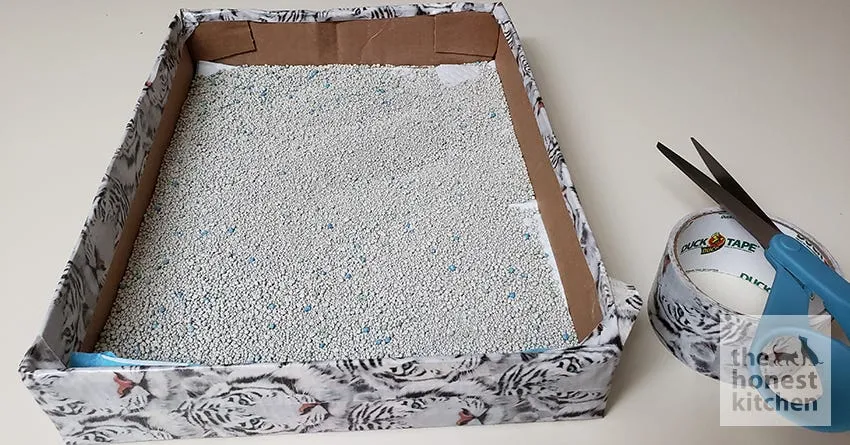 A close-up of the cardboard litter box showing how to place the potty pad and litter.
Using Potty Pads and Litter Effectively
If your cardboard litter box is intended for a single use, such as during travel, you can simply add litter. However, for multi-use situations, lining the box with a potty pad is highly recommended.
- Trimming the Pad: Cut the potty pad to fit snugly inside the bottom of the box.
- Anchoring the Pad: If your cat tends to scratch vigorously, use small pieces of duct tape to secure the potty pad in place.
- Adding Litter: Do not overfill the box with litter. A modest amount is sufficient to absorb waste. Excessive litter can spill out, especially since the cardboard may not be as sturdy as a traditional plastic box. Regular scooping of waste is essential.
 A person cleaning out the cardboard litter box.
Maintenance and Replacement
Even with a potty pad, cardboard will eventually absorb moisture and odors. If your cat or kittens are using a cardboard litter box for an extended period, be prepared to replace it frequently. Since cardboard boxes are readily available and easy to assemble, this temporary solution can be a practical and cost-effective option. For adult cats, understanding the best way to train cats to stay off counters can also be a part of managing their behavior around the house.
If you’re looking for more DIY projects for your pets, consider creating a cat castle or a snuffle mat for your dog. How to train cat to not jump on table can also be a useful skill to explore. Remember, a happy and healthy pet is a well-cared-for pet. Explore more tips on how to teach a cat not to climb on counters and how to get my cat to stop jumping on things.
