
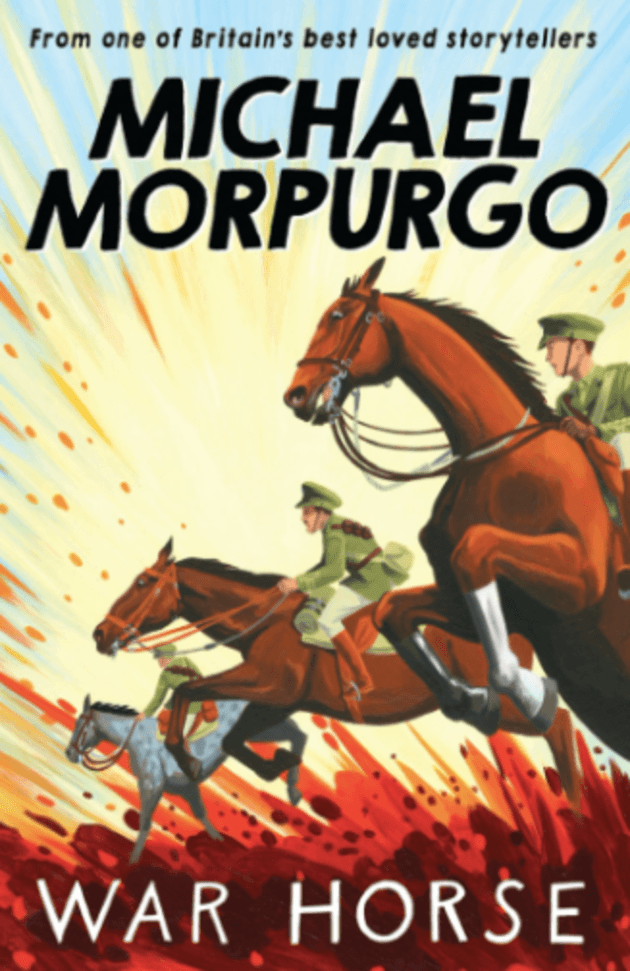
The thundering hooves, the unwavering loyalty, and the heart-wrenching journey across the battlefields of World War I—the story of Joey, the star of Michael Morpurgo’s novel War Horse, has captured the hearts of millions. It’s a tale of an extraordinary bond between a boy and his horse, tested by the unprecedented brutality of global conflict. But as audiences watch the play or read the book, one question inevitably arises: is the Joey The War Horse True Story a factual account of a real horse? The answer is a beautiful and complex tapestry woven from fiction, memory, and the very real history of millions of forgotten heroes.
While Joey himself is a fictional character, his story is one of the most historically authentic tales ever told. He is not one horse, but every horse. His journey is an amalgamation of the experiences of the countless horses that served, suffered, and died in the Great War. Author Michael Morpurgo was not chronicling a single animal’s life but rather channeling the spirit and sacrifice of an entire species pressed into human service. The emotional core of the narrative is profoundly true, representing the silent stories of the millions of equines that served alongside soldiers. Understanding the inspiration for this powerful narrative reveals a deeper truth about the cost of war. Many elements of the narrative are explored in the movie war horse true story, which brings these historical threads to life on screen.
The Fictional Heart of a True War
At its core, War Horse is a work of fiction. Michael Morpurgo created the character of Joey, a spirited Devon farm horse, to serve as a narrator and a silent observer of the Great War. By telling the story from the horse’s perspective, Morpurgo offers a unique and poignant view of the conflict, one that transcends nationality and politics. Joey’s innocence and his simple understanding of kindness and cruelty provide a powerful lens through which the reader can experience the senselessness of war.
Morpurgo’s genius was in creating a character that could stand for so many. Joey is sold to the army, separated from his beloved owner Albert, and serves on both the British and German sides of the war. He pulls artillery, carries wounded soldiers, and faces the terror of machine guns and barbed wire. This fictional arc allowed Morpurgo to explore different facets of the war and to show that the suffering was universal, affecting men and animals on all fronts. Joey is the perfect vessel for this story because a horse feels loyalty and fear but knows nothing of the reasons for the fight.
The Real Inspirations Behind Joey’s Story
The seed for War Horse was planted in Morpurgo’s mind through a series of encounters and discoveries in his own village of Iddesleigh in Devon, the very place the fictional story begins. He wasn’t looking for a war story, but the ghosts of the past found him.
Voices from the Past
One of the primary inspirations came from conversations with World War I veterans in his local pub. He met an old soldier named Captain Budgett, who had served in the cavalry. Though reluctant to speak of the horrors he witnessed, he spoke with deep emotion about the bond he shared with his horse. Another villager, Albert Weeks, told Morpurgo how he remembered the army coming to the village to requisition horses for the war effort, a scene that became pivotal in the book. A third veteran, when asked about his experience, broke down in tears, not for his fallen comrades, but for the horse he had to leave behind. This profound grief, lingering for decades, showed Morpurgo the depth of the connection between soldier and steed.
The Painting and the Book
A crucial piece of inspiration came from an old, oil-stained painting Morpurgo discovered. The painting, created by F.W. Reed in 1917, depicted a majestic bay horse against a terrifying backdrop of mud and barbed wire. The image was haunting, showing the horse’s terror and resilience. This visual sparked the initial image of Joey in Morpurgo’s imagination. He realized that the story of the war was not just about the soldiers in the trenches, but also about the animals caught in the crossfire.
He was further moved by a book titled All the King’s Horses by V.S. Summerhays, which detailed the British Army’s Remount Service during the war. It provided the factual backbone for his narrative, outlining how horses were purchased, trained, and sent to the front lines.
What Was the True Story of Horses in World War I?
To fully appreciate the truth behind Joey’s story, one must understand the staggering scale of equine involvement in World War I. Before the advent of tanks and mechanized transport, armies ran on horsepower. Horses and mules were the backbone of military logistics.
- Massive Numbers: Over the course of the war, an estimated eight million horses, donkeys, and mules died on all sides. Britain alone sent over one million horses to the front, and it is estimated that only around 62,000 returned home.
- Varied Roles: While the image of the cavalry charge is iconic, it quickly became obsolete due to machine guns and trench warfare. The vast majority of horses served in less glamorous but far more critical roles. They were essential for:
- Transport: Pulling wagons filled with ammunition, food, and supplies to the front lines.
- Artillery: Hauling the massive field guns that were a staple of the war. A team of six to twelve horses was needed for a single gun.
- Ambulances: Drawing ambulance carts to carry wounded soldiers from the battlefield.
- Harsh Conditions: The conditions these animals faced were horrific. They suffered from shelling, gunfire, gas attacks, exhaustion, starvation, and disease. They were often mired in thick mud, exposed to the elements, and worked to the point of collapse. The story of their endurance is a central theme in the broader story of a horse during wartime.
Warrior: The Real-Life “War Horse”
While Joey is fictional, there were real horses whose stories of survival seem almost unbelievable. Perhaps the most famous is that of “Warrior,” a thoroughbred stallion owned by General Jack Seely. Warrior’s story is so remarkable that he is often called “the horse the Germans couldn’t kill.”
Born on the Isle of Wight, Warrior went to the Western Front with General Seely in 1914 and served for the entire four years of the war. He survived some of the most infamous battles in history:
- He was present at the First Battle of Ypres.
- He fought on the Somme, where he was twice trapped in a burning stable under heavy shellfire.
- He survived the mud and carnage of Passchendaele.
- He led a famous cavalry charge at the Battle of Moreuil Wood in 1918.
Despite being shelled, buried in debris, and wounded on multiple occasions, Warrior survived. He returned home to the Isle of Wight with General Seely in 1918 and lived peacefully until the age of 33. His incredible resilience and the deep bond he shared with his owner make him a true historical counterpart to the fictional Joey. In 2014, Warrior was posthumously awarded the honorary PDSA Dickin Medal, recognized as the animals’ Victoria Cross, for his bravery.
Why Does the Story of Joey Resonate So Deeply?
The enduring power of the joey the war horse true story lies in its ability to connect us to history on a deeply personal level. The story isn’t about tactics or politics; it’s about friendship, loyalty, and the tragedy of innocence lost.
“By focusing on Joey, Morpurgo allows us to see the war through the eyes of a non-combatant who is nonetheless a victim,” notes Dr. Eleanor Vance, a fictional historian specializing in human-animal bonds in wartime. “The horse doesn’t understand the conflict, only the kindness or cruelty of the humans around him. This perspective strips the war of its glory and exposes its raw, emotional cost.”
The narrative taps into the profound connection that can exist between humans and animals. Albert’s relentless search for Joey gives the reader a thread of hope to cling to amidst the despair of the trenches. It reminds us that even in the darkest of times, compassion and love can endure. This universal appeal is why many people want to watch war horse – the real story to connect with these powerful emotions. The story forces us to confront the fact that war consumes everything, not just the lives of soldiers, but the lives of the millions of animals who served and died without a voice.
Frequently Asked Questions about Joey the War Horse
Was Joey a real horse?
No, Joey is a fictional character created by author Michael Morpurgo. However, his story was inspired by the true accounts of World War I veterans and the very real experiences of the millions of horses that served in the war.
Who was Michael Morpurgo inspired by?
Morpurgo was inspired by several sources in his Devon village: conversations with WWI veterans Captain Budgett and Albert Weeks, a painting of a horse in the war by F.W. Reed, and historical accounts of the army’s use of horses.
How many horses died in WWI?
An estimated eight million horses, mules, and donkeys died on all sides during the four years of the conflict. The British Army deployed over a million horses, but only about 62,000 of them returned to Britain after the war ended.
What breed of horse was Joey?
In the book, Joey is described as a bay horse with a white cross on his forehead, looking like a hunter. He was bought as a foal and was not of a specific pedigree, representing the common farm horses often bought for the war effort.
Is the movie War Horse a true story?
Like the book it is based on, the film directed by Steven Spielberg is a work of fiction. It tells the story of the fictional horse Joey, but it is set against a historically accurate backdrop and powerfully depicts the real roles and hardships that horses faced during World War I.
A Truth Deeper Than Fact
In the end, whether Joey was a single, real horse is less important than the greater truth his story tells. The joey the war horse true story is not about one animal’s biography but about the collective experience of countless unsung heroes. Joey gives a voice to the voiceless, a name to the nameless. His journey is a powerful monument to the millions of horses whose loyalty and sacrifice were an integral, though often overlooked, part of the Great War. Michael Morpurgo’s masterpiece ensures that their silent contribution to history will never be forgotten.
