
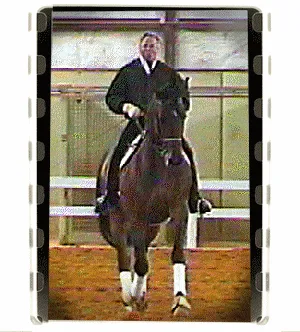
The legacy of Leonardo da Vinci extends far beyond his artistic masterpieces, touching upon the very foundation of modern equestrianism. His profound understanding that “All our knowledge has its origin in our perceptions” and the necessity to “Be sure you know the structure of all you wish to depict” laid the groundwork for a new paradigm in horse training. This philosophy is the cornerstone of The Science of Motion, a revolutionary approach that re-educates horses by understanding their innate physiology rather than relying on outdated, crowd-pleasing methods.
The Systemic Failure in Traditional Horse Training
Often, when a horse suffers an injury or fails to perform to its potential, the blame is misplaced. The prevailing equestrian system, which prioritizes increasing the amplitude of the horse’s spinal movements and emphasizes riding principles unrelated to equine physiology, is frequently the root cause of lameness and underperformance. This system, much like the difficulty of quitting smoking, can lead to a cycle of failure for both horse and rider. A true leader, as James Crook suggested, must “turn his back on the crowd” to innovate. For horses, this means shifting focus from exaggerated spinal movements to the intricate orchestration of minuscule muscle contractions that truly define efficient locomotion.
Rethinking Equine Biomechanics: Beyond the “Bow and String”
For decades, the dominant theory in horse training, exemplified by E.J. Slijper’s “bow and string” metaphor and refined by Dr. Deb Bennet’s “ring of muscles” concept, posited that flexing the horse’s lower line (abdominal, pectoral, and neck muscles) controlled the upper line (vertebral column and surrounding muscles). However, research pioneered by Richard Tucker and further explored by experts like Leo Jeffcott, Jean Marie Denoix, and Kevin Haussler, along with dynamic models developed by Anton J. van den Bogert, suggests a different mechanism. This research indicates that while the lower body muscles are vital for locomotion, the vertebral column’s sophisticated movements are primarily governed by the muscular system situated directly above the vertebral bodies.
The Science of Motion’s approach acknowledges this complexity. Instead of influencing the horse through artificial aids at either end of its body – like engaging the hind legs or manipulating neck posture – this new method focuses on understanding and influencing the biomechanical properties of the rider’s own vertebral column. This interaction, combined with a deep understanding of the equine vertebral column’s mechanism and the teachings of great masters, offers a fundamentally new way to enhance a horse’s performance and soundness.
Overcoming Resistance: The Proof is in the Horse’s Soundness
This innovative approach, predictably, has been met with resistance and panic. However, the ultimate arbiter of its validity is the horse’s well-being. The Science of Motion’s methods not only enable horses to perform at their peak potential while remaining sound but also make previously unimaginable re-educations possible. Lameness issues that defy traditional and alternative therapies can be resolved by addressing the source of all body movement: the horse’s vertebral column. Documented case studies showcase horses returning to soundness, transforming from mediocre movers into world-class athletes, overcoming conditions like “kissing spine,” and mastering challenging movements like piaffe and water jumps.
Case Studies: Beyond Expectations
Navicular Syndrome: A horse diagnosed with navicular syndrome, previously struggling with tempi changes and suffering from lameness, was able to perform extended series of changes with great ease after the intervention.
Fear of Water Jumps: A horse with the physical capacity for grand prix show jumping but a categorical refusal of water jumps was able to overcome this fear. The issue stemmed from muscle pain caused by back muscle imbalance upon landing, which was resolved through corrective physical therapy.
Kissing Spine: A horse diagnosed with kissing spine between L4 and L5, exhibiting behavioral problems due to pain, was successfully rehabilitated through a non-invasive physical therapy approach. Within three months, the horse was working pain-free, and within six months, it was performing beautifully and happily.
Mediocre Gaits to World-Class Movement: A large athlete horse with seemingly poor gaits, a result of being driven onto the bit, was transformed by orchestrating the subtle contractions of back muscles. This demonstrates how outstanding gaits and performances are achievable through a nuanced understanding of equine physiology.
 Mediocre Gaits to World-Class Movement Transformation
The Abnormal Illuminating the Normal
The study of these “abnormal” cases has shed light on the “normal” functioning of horses. A key observation is that horses with sensitive vertebral column structures cannot tolerate the common equestrian concepts of “driving the horse onto the bit” or significant shifts in rider weight. This suggests that these very techniques, while perhaps tolerated by stoic horses, may be altering the vertebral column mechanism even in seemingly sound animals. The Science of Motion emphasizes two prerequisites for successful re-education: reducing the pressure exerted on the bit and achieving authentic rider balance. Heavy contact on the bit and rider weight shifts drastically impair a horse’s ability to function soundly, a point supported by both advanced scientific studies and classical authors.
The equine vertebral column has a very limited range of motion. Leo B. Jeffcott’s research in 1980 found the total range of movement in the dorso-ventral direction of the equine back to be only 53.1 mm under experimental conditions. Hans Carlson’s work in 1979 highlighted that back muscles are primarily designed to control the stiffening of the back, protecting it from excessive movement, rather than creating movement itself. Both horses and cats absorb the impact of landings by resisting excessive arching of the vertebral column, which then induces a flexion of the spine.
The Future of Equitation: Rider as Harmonizer
Ultimately, The Science of Motion proposes that the quality of a horse’s gaits and its ability to perform at its utmost potential, while remaining sound, are achieved by enhancing the subtle orchestration of numerous, minuscule back muscle contractions. Jean Luc Cornille states, “A gifted horse will lead a good rider to victory. A great rider will give to the horse the gift of soundness.” Through a deeper understanding of equine biomechanics and a commitment to working in harmony with the horse’s natural physiology, riders can unlock their horses’ true potential and ensure a lifetime of health and performance.
Reference Materials
- “The Horse Who Could Not Trot” DVD. Science of Motion.
- “Beyond Expectations: Navicular syndrome and beyond.” Science of Motion.
- “Beyond Expectations: The horse who would not jump the water.” Science of Motion.
- “Beyond Expectations: A case of kissing spine.” Science of Motion.
- “Beyond Expectations: From mediocre gaits to world class movement.” Science of Motion.
- Cornille, Jean Luc. “What is the Science of Motion? Transversal Rotations in the Equine Vertebral Column.” Science of Motion.
- Jeffcott, Leo B. “Natural Rigidity of the horse’s backbone.” Equine vet J. 1980, 12 (3), 101-108.
- Carlson, Hans. (1979). [Unspecified study on back muscles].
- Rooney, James R. Biomechanics of lameness in horses. 1969.
- Denoix, Jean Marie. “Spinal biomechanics and functional anatomy.” 1999.
- Decarpentry, General. Academic Equitation. 1949.
- Tucker, Richard. (1964). [Unspecified study on equine vertebral column forces].
- Crook, James. [Unspecified quote].
- Zettl, Walter. [Unspecified quote].
- Ivins, Molly. [Unspecified quote].
