
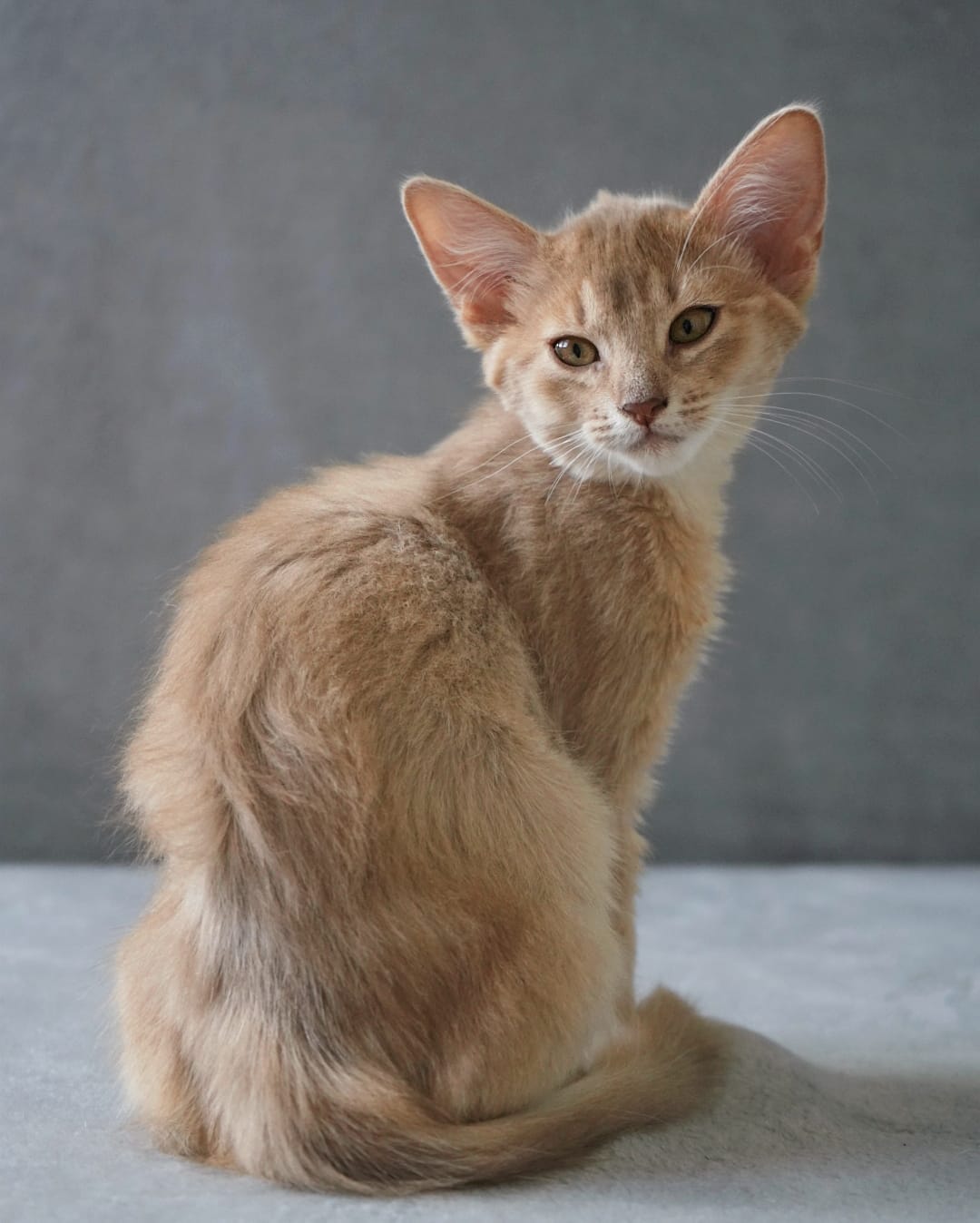
The journey of the Javanese Cat breed is a testament to the dedication and passion of breeders who sought to introduce new colors and refine the breed’s type. What began with a group of enthusiasts breeding “new-color Balinese” has culminated in a recognized and celebrated breed within the cat fancy. This article delves into the early days of the Javanese, tracing their path from initial recognition to achieving full championship status, highlighting key milestones and the collaborative efforts that shaped their history.
Early Days: The Genesis of the “New-Color Balinese”
The story of the Javanese begins around 1978, with breeders like Nina Boal, Linna Reusmann, and Maureen Davies experimenting with Balinese cats in “Colorpoint” colors. These breeders, seeking to incorporate new color variations into the Balinese breed, found the information shared in the Progressive Colorpoint Cat Club newsletter, which Barbara Harr edited, to be invaluable. They also sought guidance on gaining recognition for their cats within The Cat Fanciers’ Association (CFA). Initially hesitant to take on another cause due to her existing involvement with “far-out breeds,” Harr was drawn to the “bright and delightful group” of new-color Balinese breeders. These breeders were organized under the unaffiliated club “Balinese Internationale,” which published a witty and literate newsletter edited by Linna Reusmann. Another club, Balinese Breeders and Fanciers of America (BBFA), was more open to considering new colors, though not as vocal as Balinese Internationale.
Maureen Davies, in particular, emerged as a leading breeder, working closely with Ann Sandner. Together, they focused on breeding longhaired cats with the typiest Siamese and Colorpoints available, achieving a type that surpassed many standard-color Balinese of the time. Their cats would form the foundation stock for many of the excellent Javanese cats seen today.
The Campaign for Recognition
The breeders, with Maureen Davies coordinating petitions and applications, and Linna Reusmann and Barbara Harr providing support and guidance on CFA’s rules, embarked on a campaign for recognition. This was complicated by the CFA’s Breeds and Standards Committee’s efforts to establish clearer rules for new breeds and colors. However, Tom Dent in the Central Office provided significant assistance. Utilizing ACFA registration as the initial criterion for foundation stock in CFA, they gathered the required number of breeders and registered cats.
In October 1979, a delegation including Maureen Davies, Linna Reusmann, Nina Boal, and others, along with two cats – Balimoor Pippi Longstocking (a lynx point) and Balimoor Free Spirit of Harr (a tortie point) – presented their case to the CFA Board in Chicago. Their initial preference was to be accepted as a division of the Balinese, but they were prepared to accept recognition as a separate breed if necessary for political reasons. The Board meeting was good-natured, with members engaging with the cats, which helped to ease earlier political tensions.
A significant challenge arose with the newly adopted “Rules for New Breeds,” which demanded a “cut-off date” beyond which breeding to Siamese, Colorpoints, or Balinese would be prohibited. As the first “new breed” to face this rule, the breeders worried about their ability to compete with breeds that could indefinitely breed back to Siamese to perfect their type. Despite these concerns, they reluctantly accepted a cut-off date as far into the future as possible. This issue of the cut-off date remains a critical concern for Javanese breeders, who have since sought extensions to maintain competitive parity with other Siamese-type breeds.
Naming the Breed: The Javanese
In 1979, the CFA Board agreed to register the cats but required a new name, as they could not be registered as Balinese. Anticipating this, the breeders had discussed several potential names. Consulting Asian maps and guidebooks, they discovered the island of Java, located next to Bali. Recognizing the shared language, culture, and religion, and appreciating Java’s status as the larger, richer, and more fertile island, they found the name “Javanese” to be appropriate. This marked the official naming of the breed.
Achieving Championship Status
Following the naming, a dedicated campaign for full CFA recognition ensued. Maureen Davies’ tortie point, Balimoor Free Spirit of Harr, became an exhibition ambassador, traveling to CFA shows across the East. Spirit, along with her kittens and other cats from Balimoor and Tassam, played a crucial role in showcasing the breed. Full-page catalog ads, flyers, and enthusiastic explanations at shows helped to educate the public and judges. A memorable moment involved Free Spirit’s playful interaction with Judge Bill Eisenman at the Empire show, which captivated the audience.
In 1984, Barbara Harr temporarily stepped back from active involvement due to graduate studies, and Karen Christmann continued the narrative. Christmann highlighted other early breeders who contributed significantly to the Javanese breed, including Nancy Lehrer, Fran McFarland, Crys Eikanger, Howard Angel, Kris Willison, Bev Eitner, Gail Fine, Janet Wilkie, Robin Radlein, Ramona Turner, and Terry Cobden.
In 1984, Maureen Davies and Karen Christmann attended a Board meeting to request the Javanese be advanced to Provisional status, again presenting several exemplary cats. The Board was supportive, provided the Javanese remained a separate breed. Upon achieving provisional status, the focus shifted to meeting further requirements, primarily through extensive exhibiting across various regions. By 1986, these efforts paid off, and the Javanese were granted full Championship status.
Championship Milestones
The Javanese breed quickly made its mark:
- November 1986: The first three Grand Champion Javanese emerged: Tassam’s Tru Purr (seal lynx point male), Tassam’s Kinu (blue lynx point female), and Musashi’s Cleopatra of Balique (seal lynx point female). Cleopatra became the first national Best of Breed Javanese, with Kinu securing second place.
- 1987: The first tortie point, Balique Gypsy Flame (seal tortie point female), achieved Grand Champion status and also won Best of Breed for the year.
- 1988: Another lynx point, Tassam’s Lady Alyssa of Balinan (blue lynx point female), won Best of Breed. The first red point grand, Balique Firecracker (red lynx point male), took second honors.
- 1989: Aileron in the Buff (cream point male) became the first solid point grand and Best of Breed, while Balique Winning Colors (blue-cream lynx point female) placed second.
- 1990: A significant achievement was the first Javanese regional winner, Zinzani Marion B (seal lynx point female), ranking as the North Atlantic Region’s (NAR) 16th Best Cat. Hunnapurr Sheezajehm (seal tortie point female) received 2nd Best of Breed.
- 1991: Two regional winners were recognized: Zinzani Zapata (blue lynx point male) was NAR’s 19th Best Cat and national Best of Breed, while JaiBois’ Shelby (blue lynx point female) was the Northwest Regional’s 20th Best Shorthair Cat and 2nd Best of Breed nationally.
- 1992: The first National Winner emerged, NW Zinzani St. Johns’ Revelation (blue lynx point male), ranking as the 9th Best Cat nationally and NAR’s 4th Best Cat, along with Best of Breed. Balik’s Jubal (blue lynx point male) was 2nd Best of Breed and the Southwest Region’s 18th Best Cat.
- 1992-93 Season: The breed saw its first Javanese Grand Premier, with Balique Firecracker (red lynx point male) achieving a double grand.
In just over seven years of competition, the Javanese breed had produced thirty-two grand champions, four grand premiers, five regional winners, and one national winner. These numbers, considering the breed’s modest origins and the necessity of repeatedly breeding back to Siamese and Colorpoints to enhance type, represent a substantial accomplishment and steady growth.
The development of the Javanese cat is a compelling narrative of perseverance, collaboration, and a shared vision among breeders. From their humble beginnings as “new-color Balinese” to their prestigious championship status, the Javanese have carved a distinct and admired place in the world of pedigreed cats. The contributions of individuals like Barbara Harr, Maureen Davies, Linna Reusmann, Karen Christmann, and Kris Willison have been instrumental in shaping the breed’s history and ensuring its continued success.
