
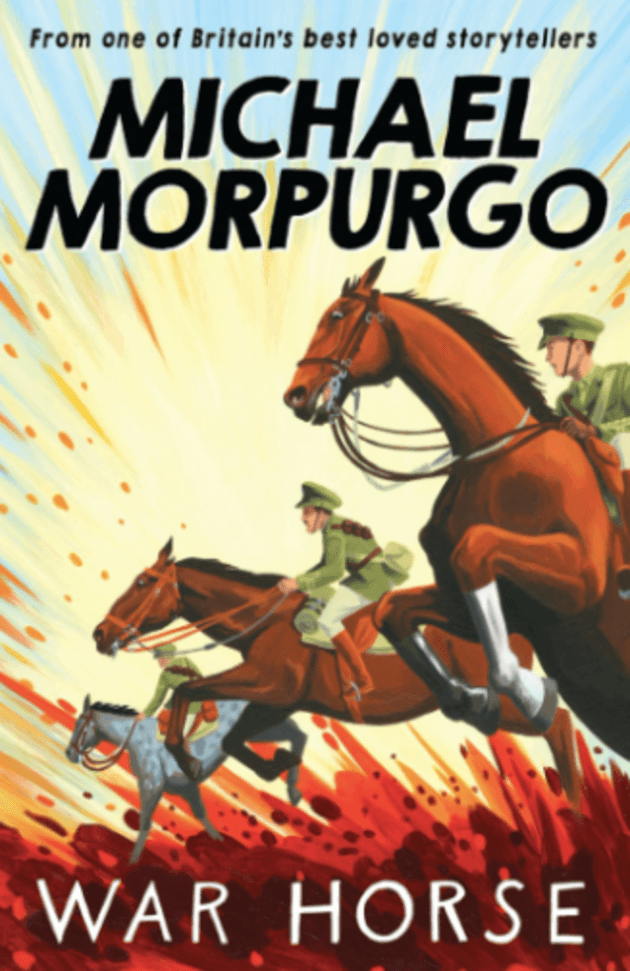
The story of War Horse has captured the hearts of millions, whether through Michael Morpurgo’s poignant 1982 novel, the breathtaking stage play, or Steven Spielberg’s epic film adaptation. The tale of Joey, a Devon farm horse thrust into the brutal chaos of World War I, and his young owner Albert’s unwavering quest to find him, is a powerful narrative of loyalty, survival, and the profound bond between a man and his animal. But after the tears are shed and the credits roll, one question lingers: is War Horse one based on a true story?
While the specific horse Joey and his incredible journey are a masterstroke of fiction, the novel is deeply embedded in historical fact and the genuine experiences of the men and animals who endured the Great War. The story is not true in the literal sense, but its soul is forged from the very real memories, sacrifices, and historical realities of World War I.
The Fictional Heart: Who Was Joey?
First and foremost, the character of Joey is not a single, historical horse. He is a fictional creation, a brilliant literary device used by author Michael Morpurgo to tell a much larger story. By creating Joey, Morpurgo gave a voice to the millions of voiceless horses conscripted into military service. His journey, which sees him serve on both the British and German sides, and even find refuge with a French family, allows the reader to witness the “universal suffering” of the war without political bias.
Joey acts as a silent, innocent observer, a witness to the humanity and the horror on all fronts. His perspective transcends nationalism, focusing instead on the shared experiences of kindness and cruelty he encounters from soldiers on every side of the conflict. He is a composite character, representing the spirit, strength, and tragic fate of all the horses caught in the war machine. Many captivating tales can be found in horse story books, but Joey’s story holds a unique place in literature.
The Real Inspirations: Where Did the Story Come From?
Michael Morpurgo didn’t conjure Joey’s world from thin air. The seeds of the story were planted in his own backyard, in the Devon village of Iddesleigh, where he talked with aging veterans of the First World War.
The Veterans of Iddesleigh
Morpurgo met three specific men whose memories formed the foundational pillars of the novel.
- Captain Budgett: A former cavalryman, he spoke to Morpurgo about the deep, personal bond he shared with his horse during the war. He confessed that he would talk to his horse every night, confiding in the animal his deepest hopes and most terrifying fears. This intimate relationship became the emotional core of Albert and Joey’s connection.
- Wilfred Ellis: A local villager who had served in the Devon Yeomanry, he spoke of his experiences working with the horses in the mud and horror of the trenches. His first-hand accounts provided the gritty realism of what life was like for the animals on the front line.
- Albert Weeks: Another villager, he remembered the day the Army came to the village to buy, or requisition, horses for the war effort. This poignant memory of animals being led away from their homes and families directly inspired the heartbreaking scene where Joey is sold by Albert’s father.
A Haunting Image
Another key inspiration was not a person, but a piece of art. Morpurgo discovered a chilling oil painting from 1917 by F.W. Reed. It depicted a dramatic British cavalry charge against German lines, a scene of chaos and futility, with horses horribly entangled in coils of barbed wire. The image horrified him and became a symbol of the tragic collision between the old world of cavalry and the brutal, mechanized reality of modern warfare. It was an image of immense bravery rendered futile by new technology, and it haunted him throughout the writing process.
The Real War Horse: The Story of Warrior
While Joey is fictional, the First World War had its own legendary equine hero whose true story is as incredible as any fiction. This was Warrior, a Thoroughbred horse ridden by General Jack Seely. Warrior went to the Western Front in 1914 and survived the entire war, enduring some of its most ferocious battles, including the Somme, Passchendaele, and Ypres.
He survived machine-gun fire, shelling, and sinking mud. He was dug out of debris after shell explosions on two separate occasions and led a famous cavalry charge at the Battle of Moreuil Wood in 1918. His incredible resilience and bravery earned him the awe of the troops and the nickname “the horse the Germans couldn’t kill.” Miraculously, Warrior survived the war and returned home to the Isle of Wight with General Seely, where he lived peacefully until the age of 33. In 2014, he was posthumously awarded the PDSA Dickin Medal, recognized as the animals’ Victoria Cross, for his courage and devotion. The question of a story’s factual basis is a common curiosity, much like asking is the water horse a true story, and Warrior’s tale proves that truth can indeed be stranger than fiction.
The Historical Truth: A War on Four Legs
The most profound truth in War Horse is its portrayal of the sheer scale of equine involvement and sacrifice. At the start of the war, the British Army had only 25,000 horses but quickly requisitioned hundreds of thousands more from civilians. Over the course of the war, an estimated eight million horses, donkeys, and mules died on all sides.
These animals were not just used for cavalry charges, a tactic that quickly proved suicidal against modern firepower. Their primary roles were logistical and indispensable to the war effort:
- Transport: They hauled ammunition, food, water, and supplies to the front lines over terrain that was impassable for new, unreliable motor vehicles.
- Artillery: Teams of up to twelve horses were required to pull the heavy field guns and artillery pieces through seas of mud.
- Ambulances: They pulled ambulance carts, carrying wounded soldiers from the battlefield to field hospitals.
They faced the same horrors as the soldiers: shelling, machine-gun fire, and gas attacks. Yet, the vast majority succumbed to the conditions—drowning in mud, starvation, exhaustion, and disease. This grim reality is the real story that War Horse honors. It shines a light on the suffering of creatures who served with unwavering fortitude but had no say in the conflicts of men, a theme often explored in movies about horses based on true stories.
Why the “True Story” Question Matters
The desire for War Horse to be based on a single true story stems from its profound emotional impact. The narrative taps into universal themes of friendship, loyalty, and the hope of reunion in the face of unimaginable loss. We want to believe that a bond like the one between Albert and Joey could survive the apocalypse of war because it affirms the power of love and spirit over destruction.
The story’s power lies in this emotional truth. It takes the incomprehensible statistic of eight million dead horses and makes it personal. By following the journey of one horse, we feel the tragedy in a way that statistics could never convey. It’s the same narrative technique that makes a story like is the trojan horse a real story so compelling for centuries; it personalizes a massive conflict.
In conclusion, to answer the question “Is War Horse One Based On A True Story?” is to say both no and yes. No, there was no single horse named Joey who had Albert Narracott searching for him across the battlefields of Europe. But yes, the story is fundamentally true. It is true to the memories of the veterans who shared their stories, true to the spirit of real-life hero horses like Warrior, and, most importantly, true to the immense sacrifice of the millions of horses who served and fell in the Great War. War Horse is a powerful work of fiction that tells a history that should never be forgotten.
