
Steven Spielberg’s 2011 film War Horse captivated audiences with its sweeping cinematography and the heart-wrenching story of a young man, Albert, and his beloved horse, Joey, separated by the chaos of World War I. The film’s raw emotion and vivid depiction of the Great War left many wondering: Is The Movie War Horse Based On A True Story? While the film feels incredibly real, the direct answer is that Joey and Albert’s specific journey is a work of fiction. However, it is a story deeply rooted in the historical reality and the collective true experiences of millions of men and animals who served and suffered during the First World War.
This remarkable tale didn’t begin on the silver screen. Its journey started with the 1982 children’s novel of the same name by acclaimed author Michael Morpurgo. The film is a faithful adaptation of this book, which itself was born from a series of real-life encounters and historical truths that Morpurgo pieced together. The story’s power lies not in being a biography of one horse, but in its ability to tell the story of all of them. This exploration of historical fiction is fascinating, much like uncovering whether the film Dream Horse is based on a true story, which also blends narrative with real events.
The Novel Behind the Film: Michael Morpurgo’s Inspiration
The seed for War Horse was planted in Michael Morpurgo’s own English village of Iddesleigh, Devon. Morpurgo, who co-founded the charity Farms for City Children, was deeply moved by his interactions with veterans of the First World War who lived nearby. He met an old soldier named Captain Budgett, a cavalryman who served in the war. Budgett spoke of his time in the trenches and his profound connection with the horses he served alongside, revealing a depth of emotion that stuck with the author.
Another key inspiration came from a different veteran, who would only speak to Morpurgo about his wartime experiences in the privacy of the local pub’s kitchen. This man had been tasked with the grim duty of taking horses out to be shot when they were wounded or no longer useful. The haunting memories and the emotional toll of these actions provided Morpurgo with the raw, unfiltered perspective of the war’s impact on animals. A third veteran, who had served in the Royal Army Veterinary Corps, shared further tales of the horses’ bravery and suffering.
The character of Albert Narracott was inspired by a young boy with a stammer who visited Morpurgo’s farm. The boy was withdrawn and quiet around people but became a completely different person when he was with the horses, speaking to them with confidence and ease. This powerful observation of the human-animal bond gave Morpurgo the emotional core for his protagonist. The final piece of the puzzle was an old oil painting hanging in the village hall depicting horses charging through barbed wire during a WWI cavalry charge, a stark and powerful image that fueled the narrative.
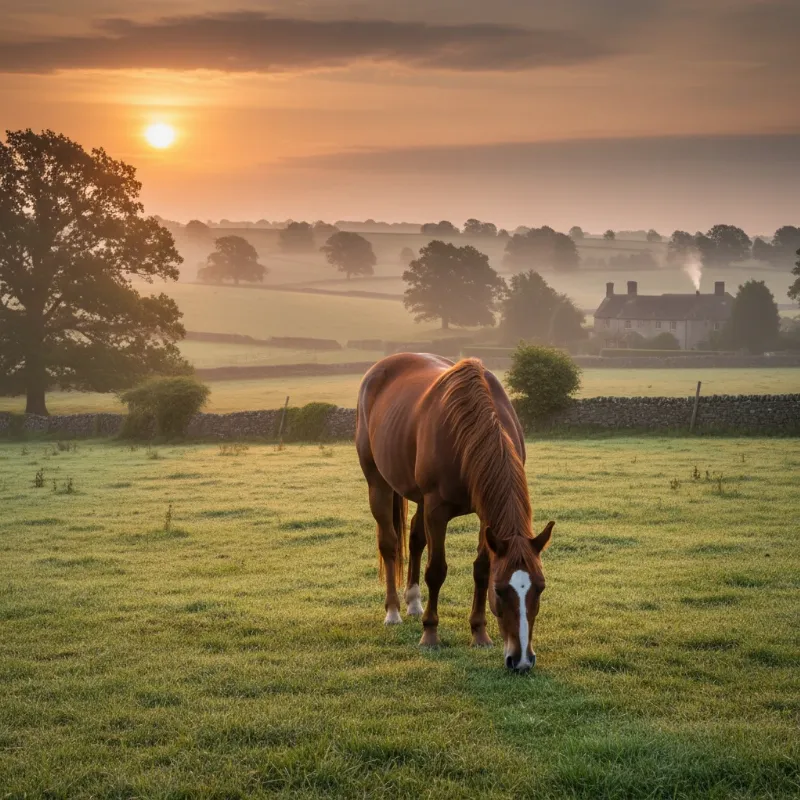 A beautiful bay horse with a white cross on its forehead, representing Joey from War Horse, standing in a tranquil English field with rolling green hills. The image captures the peaceful beginning of the story.
Joey: A Symbol for Millions of Real War Horses
While Joey is a fictional character, he serves as a powerful symbol for the more than one million horses and mules that were conscripted by the British Army alone during World War I. Across all warring nations, an estimated eight million horses perished. These animals were not just cavalry mounts; they were the backbone of the military’s logistics.
They performed a variety of grueling and essential tasks:
- Cavalry Mounts: In the early stages of the war, cavalry charges were still a part of military strategy, often with devastating consequences against modern machine guns.
- Artillery Transport: Horses were used in teams to haul heavy artillery guns and ammunition wagons to the front lines, often through treacherous mud and under constant fire.
- Supply Chain: They transported food, water, and essential supplies to soldiers in the trenches.
- Ambulances: They pulled ambulance wagons, carrying wounded soldiers away from the battlefield.
The conditions these animals faced were horrific. They suffered from shelling, disease, exhaustion, and starvation. The story of Joey’s journey—from a peaceful farm to the front lines, serving on both the British and German sides—is a fictional device used to illustrate the widespread and indiscriminate nature of the war’s devastation. It’s a narrative vehicle to show the conflict from a neutral, innocent perspective, highlighting the shared humanity and suffering on all sides. The concept of a beloved animal character is a powerful storytelling tool, similar to how we remember Woody’s horse in Toy Story as a symbol of loyalty and friendship.
How Historically Accurate is War Horse?
The film’s depiction of the war’s setting and the experiences of soldiers and horses is largely praised for its historical accuracy. While the narrative of a single horse surviving so many different battles and roles is highly improbable, the individual scenes reflect the grim reality of the time.
The movie accurately portrays the transition from traditional cavalry warfare to the brutal, mechanized reality of trench warfare. The infamous and futile cavalry charge against German machine guns is a harrowing and historically sound representation of how outdated tactics clashed with new technology. The scenes of horses struggling through the mud-drenched hellscape of No Man’s Land, tangled in barbed wire, are also tragically accurate.
Dr. Sarah Miller, a historian specializing in the role of animals in conflict, notes, “While the story of a single horse like Joey surviving the entire war is a narrative miracle, his experiences are a composite of the truth. He represents the terror, the loyalty, and the immense suffering of millions of real animals. The film gets the emotional history right, which is just as important as the factual history.”
The Emotional Core: A Truth Beyond Facts
The ultimate “truth” of War Horse is not in its plot but in its emotional resonance. The unwavering bond between Albert and Joey is a testament to the deep connections that can form between humans and animals, especially under the extreme pressures of war. Soldiers frequently wrote about their horses in letters home, viewing them not as equipment but as trusted companions who shared their burdens and fears. This emotional truth is the heart of the story and is what makes it feel so authentic. Michael Morpurgo’s genius was in telling the story of the war through the eyes of an animal, an innocent observer who could not comprehend the politics or hatred, only the chaos and the kindness of individuals. This perspective elevates the story from a simple war narrative to a universal plea for peace and empathy.
From Page to Stage to Screen
The journey of War Horse is a testament to the power of its story. After the success of the novel, it was adapted into a groundbreaking stage play by the National Theatre in London. The play, famous for its life-sized horse puppets, was a global phenomenon, winning numerous awards and touching audiences worldwide. Its success caught the attention of legendary director Steven Spielberg, who saw its cinematic potential. Spielberg’s film adaptation brought the story to an even wider audience, solidifying its place as a modern classic. Each adaptation, while different in medium, has preserved the core emotional truth that Michael Morpurgo first captured: a story of devotion, survival, and the senseless tragedy of war. This multi-platform success is rare, and it’s interesting to consider how different stories evolve, like wondering if the horse comes back in The Neverending Story, another tale with a powerful animal presence.
Frequently Asked Questions about War Horse
Was Joey a real horse?
No, Joey was not a real horse. He is a fictional character created by Michael Morpurgo to represent the millions of horses that served and died in World War I.
Was Albert Narracott a real person?
Albert is also a fictional character. His devotion to Joey symbolizes the real bonds that formed between many soldiers and their animals during the war.
How many horses died in WWI?
An estimated eight million horses, donkeys, and mules died during World War I across all participating armies. The British Army alone lost over 484,000 of its horses.
Did any horses from WWI return home?
Very few. Of the one million horses that left Britain for the war, only about 62,000 returned. Many were sold to locals in the countries where they served or were euthanized due to injury or illness.
What was Michael Morpurgo’s main goal in writing the book?
His main goal was to shed light on the immense contribution and sacrifice of animals in the war, a chapter of history he felt had been largely forgotten. He wanted to tell the story of the war from a unique, non-human perspective to emphasize its universal tragedy.
In conclusion, while you won’t find the tale of Joey and Albert in any history textbook, the story of War Horse is fundamentally true in spirit. It is a powerful work of historical fiction that captures the brutal realities of World War I and the enduring strength of the bond between a man and his horse. It stands as a moving tribute to the millions of forgotten equine heroes who served with unwavering loyalty and courage.
