
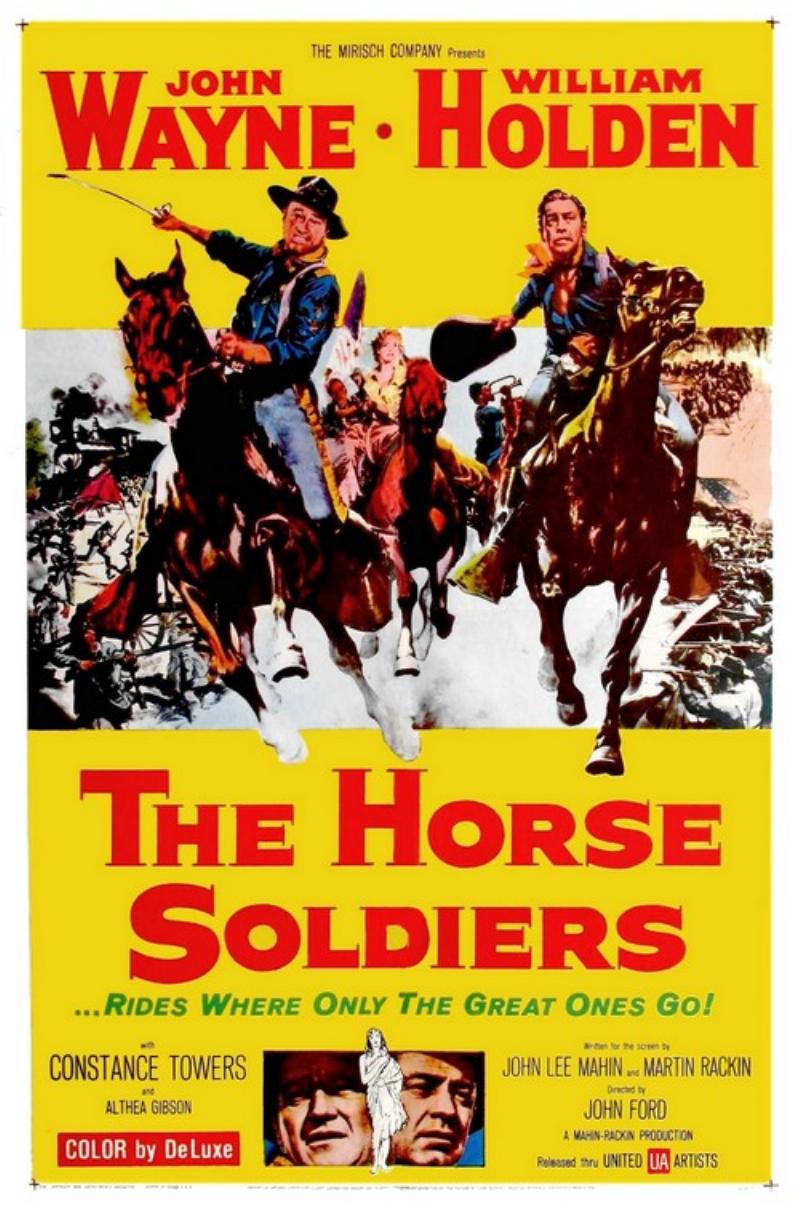
The thundering hooves, the bold cavalry charges, and the charismatic leadership of John Wayne—the 1959 classic “The Horse Soldiers” is a cinematic masterpiece that captures the high drama of the American Civil War. But as the credits roll, a common question arises for many viewers: Is The Horse Soldiers A True Story? The answer is a fascinating blend of historical fact and Hollywood fiction.
The film is indeed based on a real, daring Union cavalry raid, but it takes significant creative liberties to craft a compelling narrative for the big screen. This article will separate the real history from the reel drama, exploring the actual events that inspired the movie and highlighting where the filmmakers embellished the truth. Understanding the historical context not only enriches the viewing experience but also pays tribute to the real soldiers whose bravery shaped the course of the war. To get a fuller picture of how history is adapted for film, it’s interesting to see how other historical events are portrayed, like the true story horse soldiers narrative which shares similar elements of adaptation.
The Real Mission: Grierson’s Raid
The foundation of “The Horse Soldiers” is Grierson’s Raid, a genuine and pivotal Union cavalry operation that took place from April 17 to May 2, 1863. The mission was conceived by Major General Ulysses S. Grant as a crucial diversion during his Vicksburg Campaign. The objective was for a brigade of Union cavalrymen to ride deep into Confederate territory, tearing through the heart of Mississippi.
Their goal was to create chaos, disrupt Confederate supply lines, and, most importantly, draw Confederate General John C. Pemberton’s attention away from Grant’s main force, which was preparing to cross the Mississippi River and lay siege to the fortress city of Vicksburg.
Who Was the Real Colonel Marlowe?
In the film, John Wayne portrays the tough, no-nonsense Colonel John Marlowe. The real-life commander of the raid was Colonel Benjamin Grierson, a former music teacher from Illinois who, ironically, had a strong dislike for horses after being kicked in the face by one as a child. Despite this, he proved to be a brilliant and resourceful cavalry leader.
Unlike the movie’s hardened veteran Marlowe, Grierson was known for his calm demeanor and tactical intelligence. He led a brigade of approximately 1,700 men from the 6th and 7th Illinois and the 2nd Iowa Cavalry regiments. His leadership was defined not by gruff commands but by his ability to inspire his men and outthink the enemy through 600 miles of hostile territory.
 A split image showing the historical photo of Colonel Benjamin Grierson on one side and a movie still of John Wayne as Colonel Marlowe in The Horse Soldiers on the other, comparing the real person to the Hollywood portrayal.
Hollywood’s Creative Touch: What the Movie Changed
While the film correctly captures the raid’s purpose—to wreak havoc behind enemy lines—it introduces several fictional elements to heighten the drama and appeal to audiences. The differences between history and Hollywood are quite stark, which is common in historical films. The journey of understanding the story of the horse soldiers involves recognizing these artistic choices.
The Southern Belle and the Surgeon
Two of the main characters in the film are entirely fictional: Miss Hannah Hunter (played by Constance Towers) and the conflicted regimental surgeon, Major Henry Kendall (played by William Holden).
- Miss Hannah Hunter: There was no Southern belle who discovered the Union raiders’ plans and was forced to accompany them. This romantic subplot was a classic Hollywood addition, creating tension and a moral dilemma for Colonel Marlowe. In reality, Grierson’s men were focused solely on their military objectives and would not have been encumbered by a civilian captive for such a long duration.
- Major Henry Kendall: The character of Major Kendall, whose moral code clashes with Marlowe’s ruthless pragmatism, was created to serve as a narrative foil for John Wayne’s character. Their debates on the ethics of war provide much of the film’s character development but did not happen in the real raid.
The Battle of Newton Station
One of the film’s most memorable scenes is the climactic battle at Newton Station. While Grierson’s men did indeed pass through Newton Station and destroyed railroad tracks, the large-scale, dramatic battle depicted in the movie is heavily exaggerated. The real raid was characterized by speed, stealth, and skirmishes rather than pitched battles. Grierson’s primary strategy was to avoid direct engagement with large Confederate forces, striking quickly and moving on before the enemy could mount a significant response.
The Cadets of Jefferson Military College
The heart-wrenching scene where young, inexperienced military cadets charge the veteran Union troopers is pure Hollywood invention. It’s a powerful and poignant moment, but there is no historical record of such an encounter during Grierson’s Raid. This element was likely added to underscore the tragic nature of the Civil War, where boys were often sent to fight against seasoned soldiers. The exploration of is the horse soldiers based on a true story often leads back to these fictionalized yet emotionally resonant scenes.
How Successful Was the Real Raid?
The actual Grierson’s Raid was an overwhelming success. Over 16 days, Grierson’s brigade rode over 600 miles, confused the Confederate leadership, destroyed miles of railroad and telegraph lines, and ultimately diverted critical Confederate resources away from Grant’s primary target.
General Pemberton was forced to detach a significant number of troops to chase Grierson’s phantom column, weakening Vicksburg’s defenses at the precise moment Grant was preparing his assault. When Grierson’s exhausted but triumphant men arrived safely in Union-held Baton Rouge, Louisiana, on May 2, 1863, their mission was hailed as one of the most successful cavalry operations of the war. It played a small but crucial role in the eventual fall of Vicksburg, a major turning point in the Civil War. Many analyses of the horse soldiers true story emphasize the strategic genius of the actual operation.
The Verdict: Inspired by Truth, Crafted for Drama
So, is The Horse Soldiers a true story? The most accurate answer is that it is a fictionalized story set against the backdrop of a real historical event. The film successfully captures the spirit of Grierson’s daring raid—the danger, the speed, and the strategic importance of the mission.
However, director John Ford and his screenwriters used this historical framework to build a human-interest story complete with romance, interpersonal conflict, and dramatic battles that, while compelling, are not historically accurate. The movie is less a documentary and more a historical adventure, a common approach for war films of its era. This is a recurring theme when examining the true story of the horse soldiers, where the core event is real but the details are dramatized. The film should be enjoyed for what it is: a brilliant piece of classic Hollywood filmmaking that shines a light on one of the Civil War’s most audacious and successful military campaigns.
Frequently Asked Questions (FAQ)
What book is “The Horse Soldiers” based on?
The movie is based on a 1956 historical novel of the same name by Harold Sinclair. Sinclair’s novel itself was a fictionalized account of Grierson’s Raid, so the film is an adaptation of a novel, not a direct adaptation of historical records.
Was Colonel Benjamin Grierson a real person?
Yes, Colonel Benjamin Grierson was a highly respected and effective Union cavalry officer. His successful execution of the raid in Mississippi made him a hero in the North, and he was promoted to brigadier general shortly after its completion.
Did John Wayne’s character, Colonel Marlowe, exist?
No, Colonel John Marlowe is a fictional character. He was created for the film as an amalgam of a tough cavalry officer archetype and was specifically designed for John Wayne. His personality is markedly different from the real, more cerebral Colonel Grierson.
How accurate are the uniforms and equipment in the movie?
The film is generally praised for its attention to detail regarding the uniforms, weapons, and equipment of the Union cavalry during the Civil War era. The production value was high for its time, and efforts were made to achieve a level of visual authenticity.
Was the raid as dangerous as depicted in the film?
Absolutely. While the film invents specific dangers, the real raid was incredibly perilous. Grierson’s men were deep in enemy territory, hundreds of miles from any friendly forces, and constantly hunted by Confederate cavalry. They faced the risk of being cut off, captured, and overwhelmed at any moment. The success of the mission hinged on their endurance, speed, and their commander’s clever tactics.
