
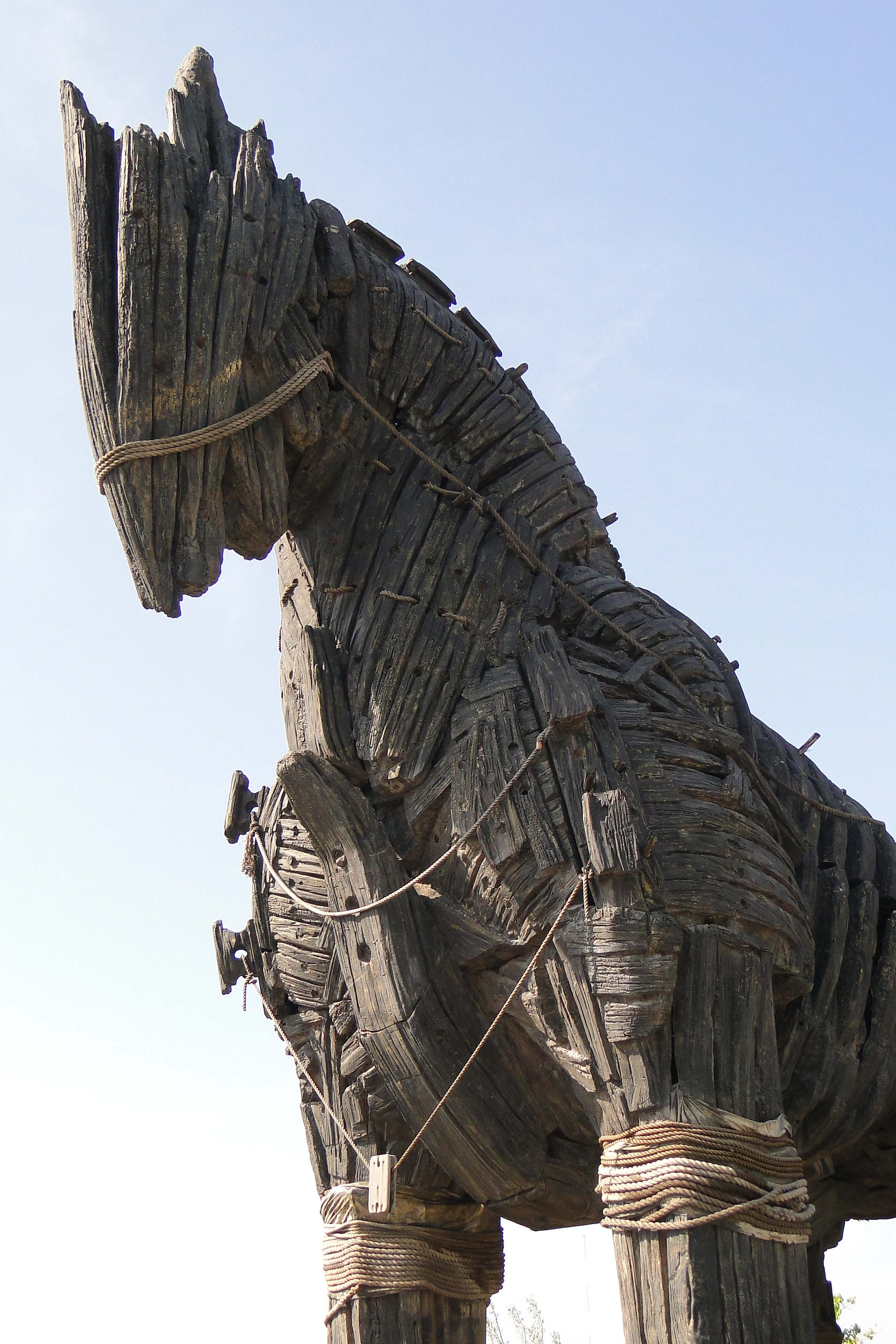
The tale of the Trojan Horse is one of history’s most enduring narratives, a cornerstone of ancient Greek mythology that has captivated audiences for millennia. But as we ponder this legendary deception, a crucial question arises: Is The Horse Of Troy A True Story? While the epic poem the Odyssey and Virgil’s Aeneid vividly recount the events, the historical accuracy remains a subject of debate among scholars. This article delves into the evidence, exploring the archaeological findings and historical context that shape our understanding of this iconic stratagem.
The Trojan War: Setting the Stage
Before examining the horse itself, it’s essential to understand the context of the Trojan War. This legendary conflict, believed to have occurred around the 12th century BCE, pitted the Achaeans (Greeks) against the city of Troy. The war, as Homer famously depicted in the Iliad, was sparked by the abduction of Helen, wife of Spartan king Menelaus, by the Trojan prince Paris. For ten long years, the Greeks besieged the city, unable to breach its formidable walls. The Iliad focuses on a specific period within the tenth year, notably Achilles’ wrath, and does not detail the war’s conclusion. The fall of Troy and the subsequent stratagem of the wooden horse are primarily recounted in later works, such as the Odyssey and the Aeneid.
The Trojan Horse Stratagem: A Brilliant Deception
According to legend, after a decade of fruitless siege, the Greeks devised an ingenious plan. Led by Odysseus, they constructed a colossal wooden horse, concealing a select group of their finest warriors inside its hollow belly. The rest of the Greek army then feigned a retreat, leaving the horse on the beach as what appeared to be an offering to the goddess Athena.
The Trojans, overjoyed at the apparent departure of their enemies, brought the massive horse into their city as a trophy. Despite warnings from the priest Laocoön and the prophetess Cassandra, who foresaw the doom it represented, the Trojans celebrated their victory. That night, under the cover of darkness, the hidden Greek soldiers emerged from the horse, opened the city gates to their returning army, and thus, Troy fell. This daring maneuver is often cited as a prime example of cunning warfare and has become synonymous with deception. The idea of a hidden threat within a seemingly harmless gift is a powerful metaphor that resonates even today.
Archaeological Evidence and Historical Context
The existence of Troy itself has been corroborated by archaeology. Excavations at Hisarlik in modern-day Turkey, led by Heinrich Schliemann in the late 19th century and continued by others, have revealed a city that matches the descriptions of Troy and shows evidence of destruction consistent with a prolonged conflict. However, pinpointing the exact layer of Troy that corresponds to Homer’s Troy and definitively linking it to the Trojan War remains challenging.
While Troy existed and was likely involved in conflicts, the specific account of the Trojan Horse remains largely within the realm of mythology and epic poetry. There is no direct archaeological evidence of a giant wooden horse being used in the siege of Troy. Historians and archaeologists generally consider the horse to be a literary device, a symbolic representation of the clever tactics employed by the Greeks to overcome Troy’s defenses. It’s possible that the legend evolved from a more conventional method of siege warfare or a specific event that was embellished over time. The Odyssey describes the horse, but even then, it’s presented as a story told by Odysseus himself, adding a layer of narrative subjectivity.
Scholarly Debate and Interpretation
Scholarly debate on the historicity of the Trojan Horse centers on several points. Some scholars suggest the story might be an allegory for an earthquake that breached Troy’s walls, with the “horse” symbolizing the unstable structure or a battering ram. Others propose that the legend might stem from a misunderstanding of older seafaring traditions, where ships were sometimes depicted as horses.
The literary significance of the Trojan Horse, however, is undeniable. It serves as a powerful symbol of strategic thinking, the dangers of hubris, and the consequences of ignoring prophetic warnings. The story’s enduring appeal lies not just in its dramatic climax but in its timeless themes. For instance, the concept of a “Trojan horse” has been adopted in modern contexts, particularly in cybersecurity, to describe malware that disguises itself as legitimate software. This linguistic evolution underscores the profound impact of the legend on our collective consciousness. The narrative’s power to inspire and warn continues to resonate, much like the story of the rocking horse winner full story offers a poignant exploration of ambition and fate.
Conclusion: Legend or Fact?
So, is the horse of Troy a true story? The definitive answer remains elusive. While the city of Troy existed and was the site of ancient conflicts, the iconic wooden horse is largely considered a mythical element, a masterful literary invention rather than a historical fact. It represents the ingenuity and deception that characterized ancient warfare, and its tale has been passed down through generations, evolving into a potent symbol of strategic brilliance and treacherous victory. Whether factual or fictional, the story of the Trojan Horse continues to capture the imagination, reminding us of the power of narrative and the enduring human fascination with tales of epic battles and clever stratagems. Understanding this legend allows us to appreciate the rich tapestry of ancient history and mythology, and how these stories continue to influence our world today. The enduring power of such narratives is a testament to their ability to convey profound truths about human nature and conflict, akin to how other tales explore complex themes.
