
The story of an underdog racehorse, bred by a small-town barmaid and owned by a syndicate of local friends, seems perfectly crafted for a feel-good Hollywood film. But is the film Dream Horse based on a true story? The answer is a resounding yes. The movie is a faithful retelling of one of the most heartwarming and improbable tales in modern sports history, centered on a real horse named Dream Alliance and the incredible community that believed in him.
This remarkable journey from a Welsh allotment to the winner’s circle is more than just a simple sports victory; it’s a powerful narrative about hope, perseverance, and the strength of community spirit. It proves that with enough heart, even the loftiest dreams can be achieved. This narrative shares thematic similarities with many a classic horse race story, but its real-world origins make it uniquely compelling.
The Real People Behind Dream Horse
At the heart of this incredible story are the very real people whose passion and determination made it all possible. The film, starring Toni Collette and Damian Lewis, brings their journey to the big screen, but the true story begins in a small, former mining village in South Wales.
Who are Jan and Brian Vokes?
The driving force behind Dream Alliance was Jan Vokes, a barmaid and supermarket cleaner from Cefn Fforest, Wales. With no background in the elite world of horse racing, Jan had previously bred prize-winning whippets and racing pigeons. After overhearing a conversation in her pub about racehorse ownership, a bold idea began to form. She was inspired to try her hand at breeding a champion racehorse.
Her husband, Brian, a former coal deliveryman, was initially skeptical but soon became her biggest supporter. Together, from their humble home, they embarked on a journey that would change their lives and their community forever. They used their life savings to purchase a mare, Rewbell, for just £300, setting up a stable in a shed on their small plot of land.
Forming the Alliance Syndicate
Knowing they couldn’t fund the expensive endeavor of training and racing a horse on their own, Jan and Brian Vokes decided to form a syndicate. They put a sign up in their local working men’s club, inviting friends and neighbors to join their dream.
For a contribution of just £10 per week, members could buy a share in the horse. A group of 23 locals—including fellow bar staff, miners, and retirees—signed up, forming the “Alliance Partnership.” This wasn’t a group of wealthy investors; it was a collection of ordinary people pooling their limited resources, all united by a shared hope and a belief in Jan’s vision.
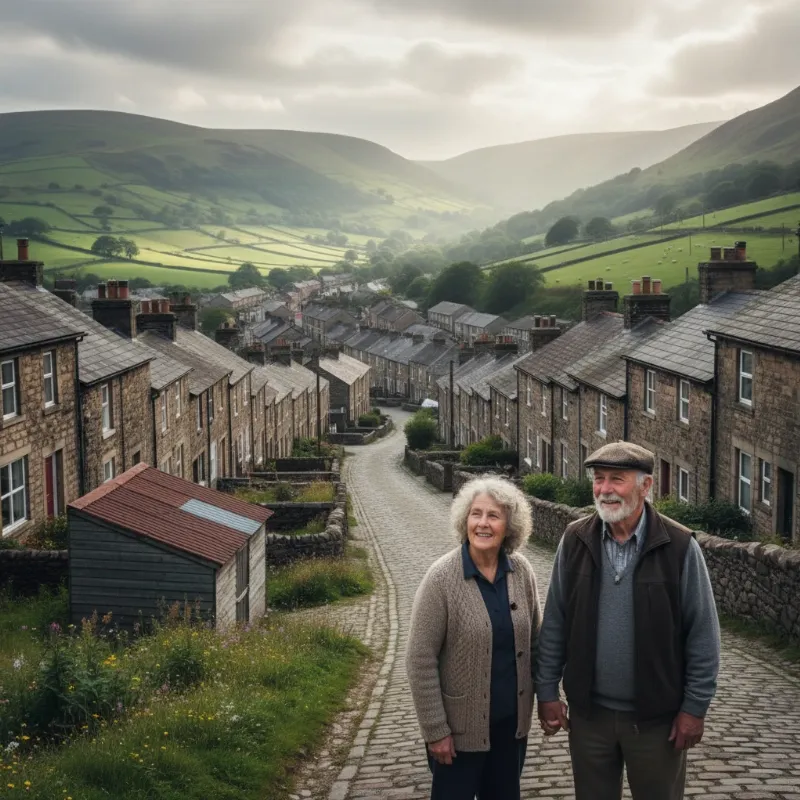 An image capturing the spirit of a close-knit Welsh village community, with terraced houses and green hills in the background, conveying a sense of hope and togetherness, inspired by the true story of Dream Horse.
The Making of a Champion: The Real Dream Alliance
With the syndicate formed and the mare purchased, the next step was to breed a champion. The journey of the real Dream Alliance was filled with as much drama and suspense as any fictional script.
From Humble Beginnings
The Vokeses carefully selected a stallion and, in 2001, Rewbell gave birth to a foal with a distinctive white blaze on his face. He was raised on the Vokes’s allotment, a far cry from the pristine, high-tech stables of the racing elite. The syndicate members watched him grow, their weekly £10 contributions funding his training with professional trainer Philip Hobbs. Despite his unconventional upbringing, Dream Alliance showed early promise, but his path to glory would be anything but smooth.
A Career-Threatening Injury
In 2008, during a preparatory race for the Grand National at Aintree, tragedy struck. Dream Alliance suffered a horrific injury, severing a tendon in his leg. The injury was so severe that veterinarians suggested the most humane option might be to put him down. For the syndicate, it was a devastating blow. Their shared dream appeared to be over.
According to Dr. Alistair Finch, a sports veterinarian, “A severed superficial digital flexor tendon is a catastrophic injury for a racehorse. In the early 2000s, the prognosis for returning to an athletic career, let alone elite racing, was incredibly poor. It would require not just luck, but pioneering medical intervention.”
Refusing to give up, the syndicate voted to use their winnings to pay for a novel and expensive stem-cell treatment. The surgery was a success, but it was followed by a grueling 15-month period of rehabilitation, with no guarantee that Dream Alliance would ever race again.
An Unbelievable Comeback: Winning the Welsh Grand National
Against all odds, Dream Alliance made a full recovery. His return to the racetrack was a testament to his own spirit and the unwavering faith of his owners. In 2009, he was entered into the prestigious Welsh Grand National at Chepstow.
In a cinematic moment that felt like it was pulled straight from a script, Dream Alliance, the horse born in a shed and owned by a syndicate of friends, galloped to victory. He crossed the finish line first, securing one of the most unlikely wins in racing history. For Jan, Brian, and the 23 members of the Alliance Partnership, it was a moment of pure triumph. Their modest £10-a-week investment had not made them rich—the prize money, when split, was a modest sum—but the experience and the shared victory were priceless. It’s the kind of horse racing movie true story that reminds us why we love underdog tales.
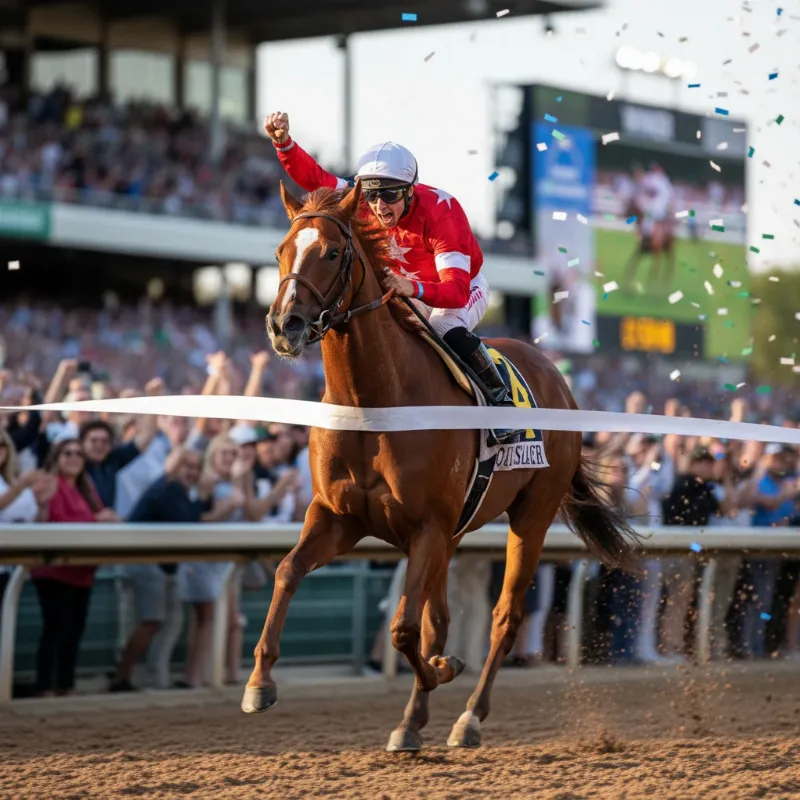 A dramatic shot of a racehorse, representing Dream Alliance, crossing the finish line victorious, with the jockey raising a fist in triumph. The crowd is a blur in the background, emphasizing the horse's incredible achievement and comeback.
How Accurate is the Movie to the True Story?
The film Dream Horse, released in 2020, is remarkably faithful to the real-life events. The filmmakers drew heavily from the 2015 documentary, Dark Horse: The Incredible True Story of Dream Alliance, which featured interviews with Jan Vokes and many of the original syndicate members.
While some minor details and conversations are dramatized for cinematic effect, the core elements of the story are entirely accurate:
- Jan Vokes’s inspiration and her leadership in the project.
- The formation of the £10-a-week syndicate in a small Welsh village.
- Dream Alliance’s humble beginnings on an allotment.
- The horse’s devastating injury and pioneering stem-cell treatment.
- The triumphant comeback to win the 2009 Welsh Grand National.
The movie successfully captures the spirit of the community and the emotional rollercoaster they experienced, staying true to the heart of this incredible underdog story.
The Legacy of Dream Alliance
Dream Alliance was retired from racing in 2012. He lived out his days peacefully in Somerset, a beloved champion who beat the odds. His story is more than just a sports statistic; it is a lasting legacy of hope, community, and the idea that anyone, from anywhere, can dare to dream. It shows that the “sport of kings” can, just sometimes, belong to a barmaid and her friends.
The true story behind Dream Horse is a powerful reminder that the greatest victories are not always measured in prize money, but in the journey and the people you share it with. It’s an affirmation that a little bit of hope, nurtured by a community, can lead to the most extraordinary outcomes, confirming that yes, the film Dream Horse is based on a true story that is as inspiring as it is unbelievable.
Frequently Asked Questions
How much money did the Dream Alliance syndicate win?
From the 2009 Welsh Grand National win, the prize money was £57,000. After trainer and jockey fees, the 23-member syndicate each received a check for about £1,430. Over his entire career, Dream Alliance won over £138,000 in total.
Is the town in Dream Horse a real place?
Yes, the story is set in the very real village of Cefn Fforest in Caerphilly, a former coal-mining town in South Wales.
What happened to the real Dream Alliance?
After retiring from racing in 2012, Dream Alliance lived a quiet and happy life. He passed away peacefully in April 2023 at the age of 22.
Did Dream Alliance really recover from such a bad injury?
Yes. His recovery from a severed tendon, thanks to a then-pioneering stem-cell surgery, is one of the most miraculous parts of his true story and is considered a significant achievement in veterinary science.
Is the “Dark Horse” documentary better than the movie?
Both tell the same incredible story but in different ways. The documentary Dark Horse (2015) uses real interviews with the actual people involved, offering a deeply authentic perspective. The film Dream Horse (2020) is a dramatization that brings the story to life with professional actors, making it highly accessible and emotionally engaging. Many fans enjoy watching both.
