
Have you ever finished a book or a movie and immediately wondered, “Is Horse a true story?” It’s a common question, and for a good reason. The powerful bond between humans and horses has inspired countless tales, from epic war dramas to intimate historical novels. But when you ask this question, the answer isn’t a simple yes or no. The truth is, several famous “horse” stories are floating around, and each one blends historical fact with creative fiction in its own unique way. We’re here to untangle the reins of history and fiction to discover the real stories behind these incredible equine narratives.
The search for truth in these stories is a fascinating journey. It often leads us back to real historical events, uncovering the lives of forgotten heroes—both human and horse. This exploration is not unlike asking about the trojan horse true story, where myth and history intertwine so deeply it’s hard to separate them. Let’s dive into the most prominent stories you might be thinking of and see just how much truth they hold.
The Novel ‘Horse’ by Geraldine Brooks: A Story Rooted in Reality
When most people currently ask if “Horse” is a true story, they’re often referring to the bestselling 2022 novel by Geraldine Brooks. The answer is a resounding yes—it is deeply rooted in the true story of one of America’s greatest racehorses.
The novel is centered on the real-life record-breaking thoroughbred, Lexington. Foaled in 1850, Lexington was a bay stallion who became the most successful sire of the nineteenth century. He was a phenomenon on the racetrack, known for his incredible stamina and speed. Geraldine Brooks didn’t invent this legendary horse; she resurrected his story from the annals of history.
Who Was the Real Lexington?
Lexington was more than just a fast horse; he was a cultural icon in antebellum America. He won six of his seven races, setting a record that held for years. After his racing career was cut short by poor eyesight, he became a stud, siring hundreds of champions. His story is inextricably linked to the history of slavery and the Civil War.
The novel brilliantly weaves together three timelines:
- The 1850s: This storyline follows the enslaved groom, Jarret, who shares an incredible bond with Lexington. While Jarret is a fictionalized character, his role represents the countless unnamed and uncredited African American horsemen whose expertise was the backbone of the racing industry.
- The 1950s: It features a New York art dealer who becomes fascinated with a painting of a horse.
- The 2010s: A Smithsonian scientist and a Nigerian-American art historian team up after discovering the skeleton of a famous horse, leading them to uncover its history.
The genius of Brooks’ novel is how she uses the very real skeleton of Lexington—which is housed at the Smithsonian—as the central artifact that connects these stories. So, while many of the human characters and their specific interactions are fictionalized, the magnificent horse at the heart of it all was absolutely real.
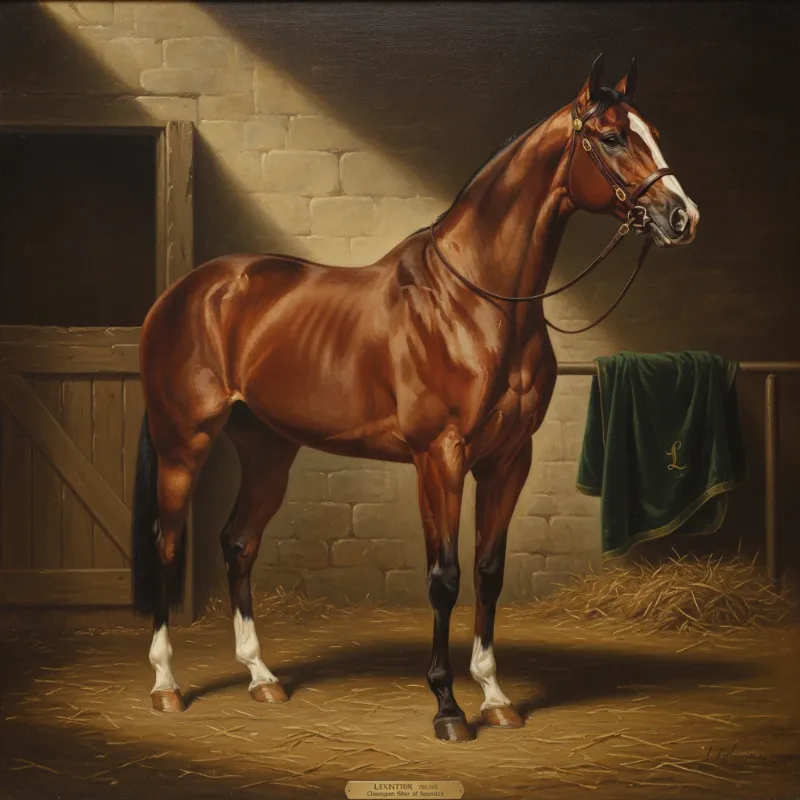 An antique oil painting of the famous 19th-century racehorse Lexington, capturing his powerful build and noble spirit in a classic equestrian style.
The Movie ‘War Horse’: Inspired by Real Events
Another popular query is about Steven Spielberg’s 2011 film War Horse, which was based on a 1982 children’s novel by Michael Morpurgo. Is the movie War Horse based on a true story? The answer here is a bit more nuanced.
The specific story of a horse named Joey, who is sold to the cavalry in World War I and embarks on an incredible journey across Europe before reuniting with his original owner, Albert, is fictional. There was no single horse named Joey who experienced all of these events. However, the narrative is a powerful representation of the very real experiences of millions of horses during the Great War.
The True Story of Horses in World War I
The historical reality behind War Horse is staggering and heartbreaking. Both sides of the conflict used millions of horses and mules. They were essential for transport, carrying soldiers, pulling artillery, and moving supplies. The British Army alone conscripted over a million horses.
These animals faced horrific conditions:
- Artillery Fire: They were constantly exposed to shelling and machine-gun fire.
- Disease: Sickness and exhaustion were rampant in the harsh conditions of the trenches.
- Starvation: Lack of adequate food and clean water was a constant struggle.
The film’s depiction of the cavalry charge is also historically grounded. While trench warfare soon made such charges obsolete and suicidal, they did occur in the early stages of the war. Michael Morpurgo was inspired to write the book after meeting World War I veterans in his village who shared their memories of the deep bonds they formed with their horses. So, while Joey’s story is a composite, it serves as a moving tribute to the millions of real horses who served and suffered. The emotional core of the film is absolutely a true story, a theme that resonates similarly when considering if is the movie war horse based on a true story.
The Horse Soldiers: John Wayne’s Civil War Epic
If you’re a fan of classic cinema, you might be thinking of the 1959 John Wayne film The Horse Soldiers. This movie is indeed based on a true story: a daring Union cavalry raid during the American Civil War.
The film is based on a real-life event known as Grierson’s Raid. In the spring of 1863, Union Colonel Benjamin Grierson led a brigade of 1,700 cavalrymen on a 600-mile raid through Confederate territory, from southern Tennessee, through the state of Mississippi, to Baton Rouge, Louisiana.
What Was the Goal of the Real Raid?
The primary objective was to create a diversion. By tearing up railroads and distracting Confederate forces, Grierson’s Raid was designed to draw attention away from General Ulysses S. Grant’s main effort to capture the key city of Vicksburg, Mississippi. The raid was incredibly successful and is still studied today as a brilliant example of cavalry strategy.
The movie, directed by John Ford, takes some liberties for dramatic effect. The characters played by John Wayne (Colonel Marlowe) and William Holden (Major Kendall) are fictionalized versions of the real leaders, and the romantic subplot involving a Southern belle is a Hollywood invention. However, the core mission, the route, and the high-stakes tension of the raid are all historically accurate. Much like asking if the trojan horse story true or false, it shows how a core historical event can be embellished for storytelling.
Other Famous Horse Stories: Separating Fact from Legend
The world is full of incredible stories about horses, and many of them blur the lines between history and Hollywood. From the underdog tale of Seabiscuit who lifted the spirits of a nation during the Great Depression, to the sheer dominance of Secretariat who won the Triple Crown in 1973, many of these tales are true. Each one highlights the unique spirit and athleticism of these animals.
Even fictional tales can be inspired by a kernel of truth. For example, is the film dream horse based on a true story explores an incredible real-life story of a small-town syndicate that bred a champion racehorse, proving that truth can sometimes be stranger and more inspiring than fiction.
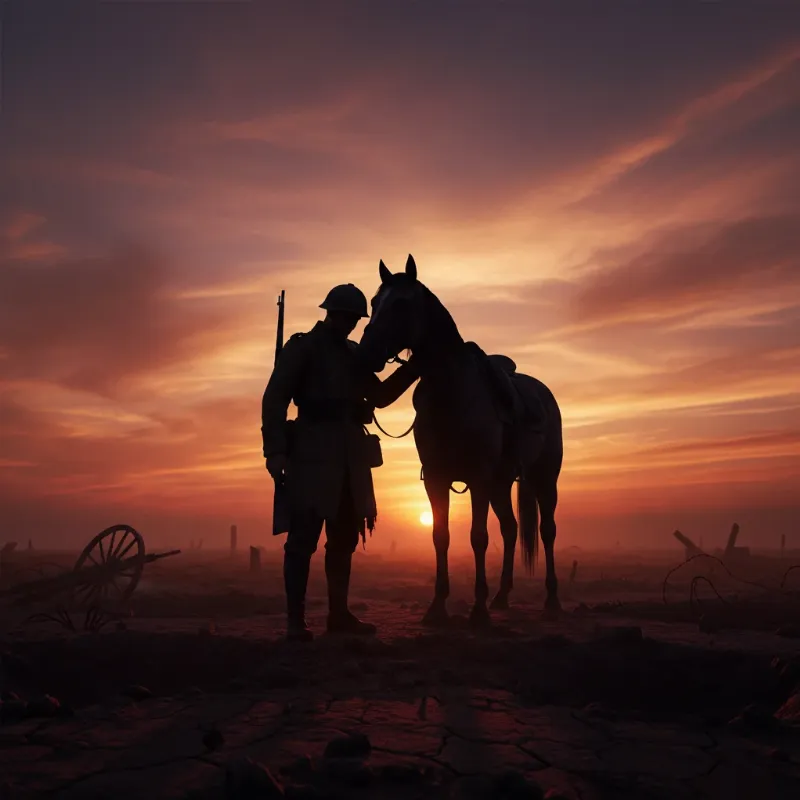 A poignant silhouette of a soldier comforting his horse on a misty World War I battlefield at sunset.
Frequently Asked Questions (FAQ)
Was Lexington a real horse?
Yes, absolutely. Lexington (1850-1875) was a real American thoroughbred racehorse who was one of the most successful sires of his time. The novel Horse by Geraldine Brooks is based on his true story, and his actual skeleton is on display at the Smithsonian Institution.
Is the character of Jarret in ‘Horse’ a real person?
Jarret, the enslaved groom who cares for Lexington in the novel, is a fictional character. However, he was created to represent the many real, yet often uncredited, African American horsemen whose skills and deep knowledge were fundamental to the success of the 19th-century racing industry.
Did a horse really survive World War I like in the movie ‘War Horse’?
While the specific story of Joey is fictional, his journey represents the experiences of millions of horses in WWI. It is certainly plausible that some horses survived the war, but Joey’s complete narrative arc, including the reunion with his owner, is a work of fiction designed to honor the service of these animals.
How historically accurate is the movie ‘The Horse Soldiers’?
The film is based on the very real Grierson’s Raid of 1863, a key diversionary tactic during the Vicksburg Campaign of the American Civil War. While the main plot points of the raid are accurate, the specific characters and a romantic subplot were created for the movie.
Why are so many horse stories based on true events?
The powerful, almost mystical bond between humans and horses has been a part of our shared history for thousands of years. Horses have been our partners in work, sport, and war. Their strength, loyalty, and spirit make their real-life stories naturally compelling and ripe for adaptation into books and films.
Conclusion: A Legacy of Truth and Tribute
So, is Horse a true story? The answer truly depends on which story you mean. From the historically rich novel by Geraldine Brooks about the real racehorse Lexington to the emotionally true tribute of War Horse, these narratives all draw from the deep well of human and equine history. They remind us that behind the fiction, there are often real animals whose strength and spirit were so profound that their stories demand to be told. These tales aren’t just about horses; they are about history, humanity, and the incredible connections that can form between species. Exploring the truth behind these stories enriches our appreciation for both the art of storytelling and the remarkable animals that inspire it.
