
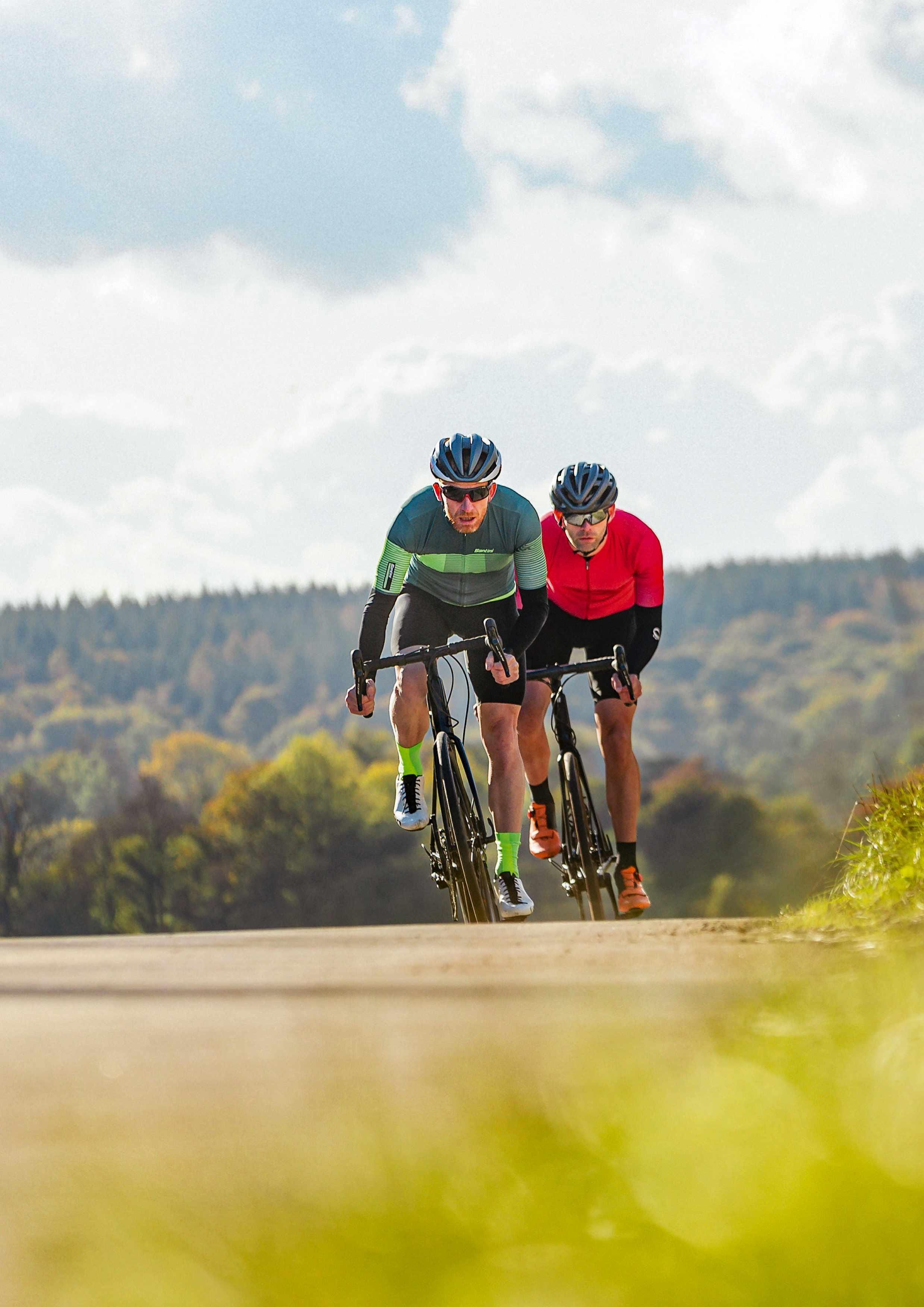
The Iron Horse Bicycle Classic, a storied event with over 50 years of history, began as a friendly wager between brothers Tom and Jim Mayer: a bicycle versus a steam engine to reach Silverton. Today, it stands as a celebrated race for cyclists and enthusiasts alike. This article delves into the training and fueling strategies of two athletes, Ellen Campbell, a seasoned racer, and Maggie Guterl, an ultrarunner tackling the challenge.
Ellen’s Approach: Optimizing for a 50-Mile Road Race
For Ellen Campbell, the Iron Horse Bicycle Classic road race, held in her hometown of Durango, Colorado, is a cherished and demanding spring event that complements her existing race calendar. This 50-mile race, traversing scenic mountain passes, offers an ideal platform to test pre-race training tactics and implement her nutrition plan for what is typically a strenuous few hours.
Training Regimen
Ellen’s training leading up to the Iron Horse typically involves consistent high-volume riding, with weekly hours ranging from 15 to 20, in preparation for other spring competitions. However, for this specific event, she emphasizes road biking and makes it a point to ascend Purgatory or the main passes at least twice before race day. To hone her skills in dynamic group riding, she also participates in the Tuesday night Wheel Club rides.
Nutrition Strategy
Approaching this challenging event, Ellen views the race as a solid three-hour effort. Consequently, her strategy is to carry sufficient nutrition and hydration to maintain high-intensity riding for that duration without any stops. Her plan involves two large bottles filled with Tailwind Endurance Fuel, each containing three scoops. This provides approximately 600 calories in liquid form. Additionally, she carries a small portion of gummy bears or another easily digestible sugar source for consumption during slower-paced sections. Ellen finds that consuming the majority of her calories and electrolytes in liquid form allows for consistent and frequent fueling, which is crucial for sustained high-intensity efforts like the IHBC road race. She also remains mindful of the event’s high altitude, recognizing that the body requires increased water and calories to function optimally under strenuous conditions at elevation. This is why she opts for larger bottles and an extra scoop of Endurance Fuel to ensure adequate intake. Practicing with the same calorie intake planned for race day during training rides in the weeks prior is a key aspect of her preparation. Finally, she always keeps a single-serving packet of chocolate recovery mix in her post-race bag, providing a quick and easy way to replenish calories and electrolytes upon reaching Silverton.
Maggie’s Journey: From Ultrarunning to the Iron Horse
Maggie Guterl, an experienced ultrarunner, signed up for the Iron Horse Classic Road Race as a rite of passage in Durango. After a two-year struggle with an Achilles injury and a gradual return to running, this year presented the perfect opportunity to participate, as she was already dedicating significant time to cross-training on her bike. While her ultrarunning background has provided a solid base for enduring discomfort, the 50-mile road race with its 5,700 feet of elevation gain is a daunting prospect. Thankfully, she has received valuable training guidance from professional cyclist Ellen Campbell.
Training Adaptation
Maggie’s training in January and February consisted primarily of indoor cycling, aiming for approximately four hours per week. Ellen provided her with one challenging workout each week. These sessions could involve intervals such as four sets of five minutes at a Rate of Perceived Exertion (RPE) of 5-6 on a 1-10 scale, or ladder workouts where cadence increased while interval duration decreased. Maintaining the prescribed cadence for each interval proved to be her primary challenge. As the weather improved and she was able to increase her running mileage, her time spent on the bike naturally decreased. She intends to cycle as much as possible in the coming weeks, but acknowledges that her overall fitness will stem from a diverse range of exercises, not solely cycling. Strength training has been a vital component of her regimen, contributing to injury prevention. Maggie is eager to test her limits and experience the Iron Horse firsthand, harboring a hopeful ambition to perhaps even beat the train to Silverton.
Nutrition Simplicity
Despite her evolving training regimen, Maggie is not overly concerned about nutrition. Her plan is straightforward: prefill two large bottles with two scoops of Endurance Fuel each and aim to consume them by the time she reaches Coal Bank Pass. If necessary, she will refill one bottle at Coal Bank for the final climb to Molas Pass, followed by a rapid descent to Silverton and the finish line. Immediately after crossing the finish, her priority will be to head directly to the Tailwind tent to fill one or possibly two bottles with Tailwind Recovery, likely opting for the popular “swirl” combination of half vanilla and half chocolate.
