
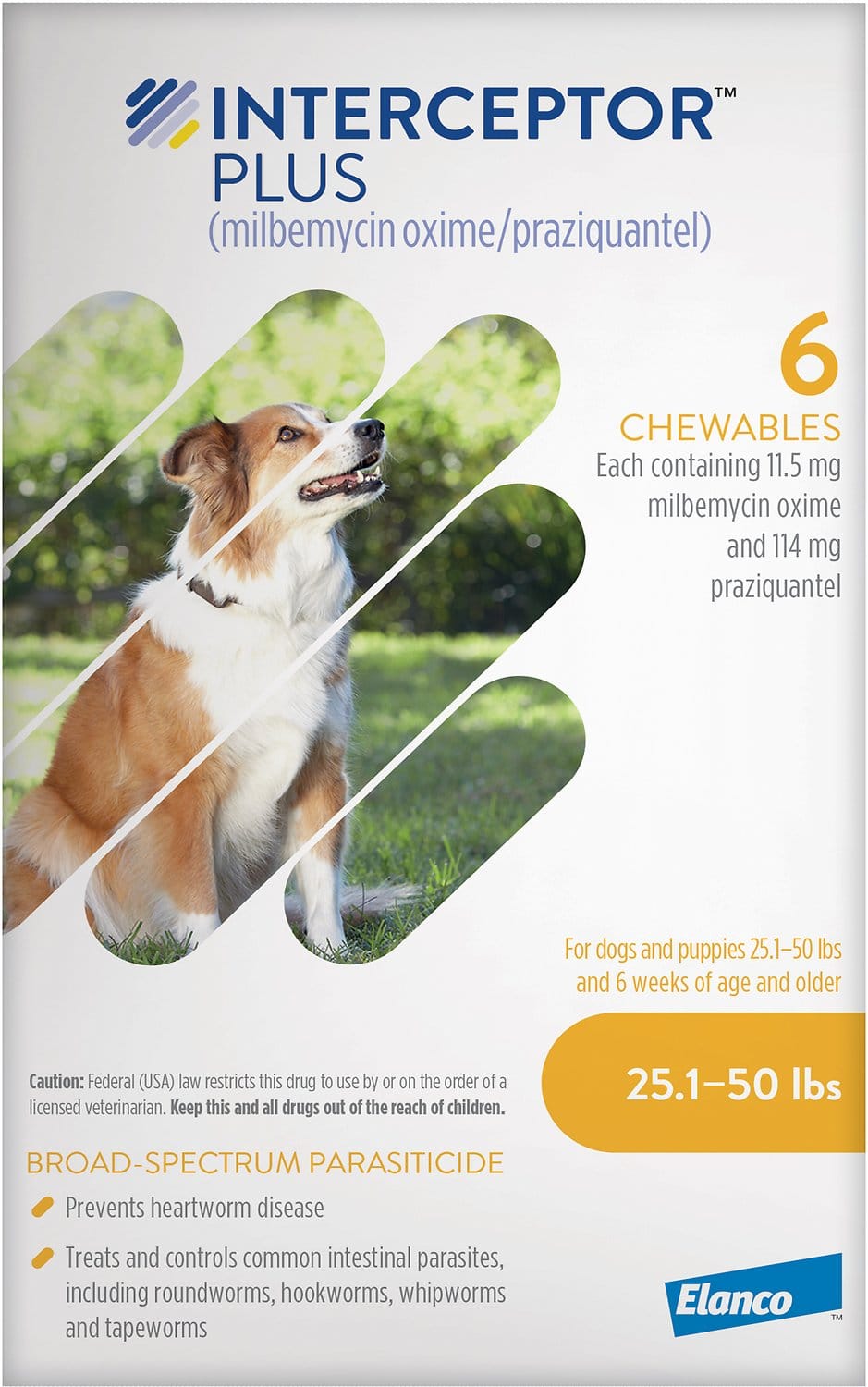
Preventing heartworm disease and controlling common intestinal parasites is a cornerstone of responsible pet ownership. Interceptor® and Interceptor® Plus are two popular monthly medications designed to offer this crucial protection for dogs and cats. This guide aims to provide a thorough understanding of these medications, their active ingredients, how they work, and important administration and safety information.
Interceptor® is a monthly chewable medication containing milbemycin oxime, primarily used for the prevention of heartworm disease in both dogs and cats. In dogs, it extends its protective reach to include the control of hookworms, and the treatment and control of roundworms and whipworms. This medication is suitable for dogs and puppies weighing over 2 pounds and aged 4 weeks or older. For cats and kittens weighing over 1.5 pounds and aged 6 weeks or older, Interceptor® also offers protection against roundworms and hookworms. For more information on heartworm prevention for your dog, consult resources on dog heartworm disease.
Interceptor® Plus, on the other hand, is formulated for dogs and puppies over 2 pounds and 6 weeks of age, offering a broader spectrum of protection. It contains two active ingredients: milbemycin oxime for heartworm prevention and control of various intestinal parasites, and praziquantel, which adds crucial protection against tapeworms. Interceptor® Plus effectively prevents heartworm disease and treats and controls hookworms, roundworms, whipworms, and tapeworms in dogs. Understanding the specific needs of your feline companions is also vital, and information on cat heartworm disease can provide further insights.
How Interceptor® and Interceptor® Plus Combat Parasites
The efficacy of both Interceptor® and Interceptor® Plus lies in their active ingredients. Milbemycin oxime, the primary component, functions by increasing the chloride permeability of the parasite’s cell membranes. This influx of chloride disrupts the electrical activity within the nervous system of susceptible worms, including heartworms, roundworms, and hookworms, leading to paralysis and eventual death.
Interceptor® Plus is further enhanced by the inclusion of praziquantel, which targets tapeworms. While the exact mechanism of praziquantel is still under investigation, it is believed to severely disrupt the tapeworms’ muscle integrity, causing paralysis and making them vulnerable to elimination from the host’s system.
Administration Guidelines for Interceptor® and Interceptor® Plus
Both Interceptor® and Interceptor® Plus are designed for once-monthly oral administration. They can be given with or without food. The chewable tablets can be broken into smaller pieces to facilitate easier administration for pets that may be reluctant to take a whole chew. It is important to ensure that the medication is fully consumed. If you suspect your pet has not consumed the entire chewable, it is recommended to administer a new one.
What to Do If a Dose is Missed
If you forget to administer a dose of Interceptor® or Interceptor® Plus, it is advised to give the missed dose as soon as you remember. While the medication is intended for monthly administration, try to maintain a schedule as close to every 30 days as possible between doses. If your veterinarian has prescribed a different dosing schedule, or if you have concerns about a missed dose, please contact them for specific guidance. It is crucial not to administer extra or double doses to compensate for a missed one.
Potential Side Effects and Safety Precautions
While generally well-tolerated, Interceptor® and Interceptor® Plus can cause side effects in some pets. These may include vomiting, diarrhea, loss of appetite, lethargy, lack of coordination, drooling, weakness, convulsions, and salivation.
It is strongly recommended that all pets be tested for existing heartworm infections before starting treatment with Interceptor® or Interceptor® Plus. Dogs already infected with heartworms should be treated to eliminate adult heartworms prior to commencing this medication. In heartworm-positive dogs, Interceptor® can kill microfilariae (larval heartworms), but this may trigger an allergic reaction. The safety of Interceptor® in heartworm-positive cats has not been established.
Your veterinarian may recommend additional monitoring or routine testing while your pet is on this medication, based on their individual health needs. If you observe any severe side effects, if your pet’s condition worsens or does not improve, or if you suspect an overdose, contact your veterinarian immediately.
Human Side Effects and Overdose Information
These medications are intended for veterinary use only and should not be administered to humans. If accidental ingestion occurs, contact your physician or the national Poison Control Center hotline immediately.
In cases of overdose, the most common symptoms observed include vomiting, incoordination, lethargy, drooling, and tremors. If an overdose is suspected, immediate veterinary attention is required. Contact your veterinarian, an emergency veterinary clinic, or an animal poison control center. Consultation fees may apply.
- Pet Poison Helpline: (855) 764-7661
- ASPCA Animal Poison Control: (888) 426-4435
Storage Instructions
Interceptor® and Interceptor® Plus should be stored at controlled room temperatures, typically between 59°F and 77°F (15°C to 25°C). To protect the medication from moisture and light, it should be kept in its original blister pack until ready for administration. Always store these medications out of reach of children and pets.
Frequently Asked Questions
What is the difference between Interceptor® and Interceptor® Plus for dogs?
The key difference lies in their active ingredients. Interceptor® Plus contains praziquantel in addition to milbemycin oxime, providing enhanced protection against tapeworms. Interceptor® primarily focuses on heartworms and other common intestinal parasites like hookworms, roundworms, and whipworms.
Can Interceptor® Plus and Bravecto® be given concurrently?
Yes, Interceptor® Plus and Bravecto® are often used together safely in dogs. Interceptor® Plus offers protection against internal parasites, while Bravecto® targets external parasites like fleas and ticks. It is essential to consult with your veterinarian to establish the most appropriate and comprehensive parasite prevention plan for your dog’s specific needs.
How long does Interceptor® Plus remain effective in a dog’s system?
Interceptor® Plus is administered once monthly. After oral administration, its active ingredients typically remain in a dog’s system for approximately 1-2 days, providing continuous protection throughout the month.
Disclaimer: The content of this article was written and reviewed by veterinary professionals. It is intended for informational purposes and should not replace professional veterinary advice. No compensation from medication manufacturers was received for the creation of this article. All information is sourced from public data and manufacturer information.
Featured Image: iStock.com/Evrymmnt
WRITTEN BY
Stephanie Howe, DVM
Veterinarian
Dr. Stephanie Howe graduated from the University of Florida College of Veterinary Medicine in 2011, after receiving a Bachelor of Science…
