
Encountering an injured bird can be a distressing experience for any nature enthusiast or homeowner. To minimize harm and prevent further injury, it’s crucial to follow a specific set of steps. Understanding bird behavior and the natural world is key to making the right decisions.
Observe First, Act Second
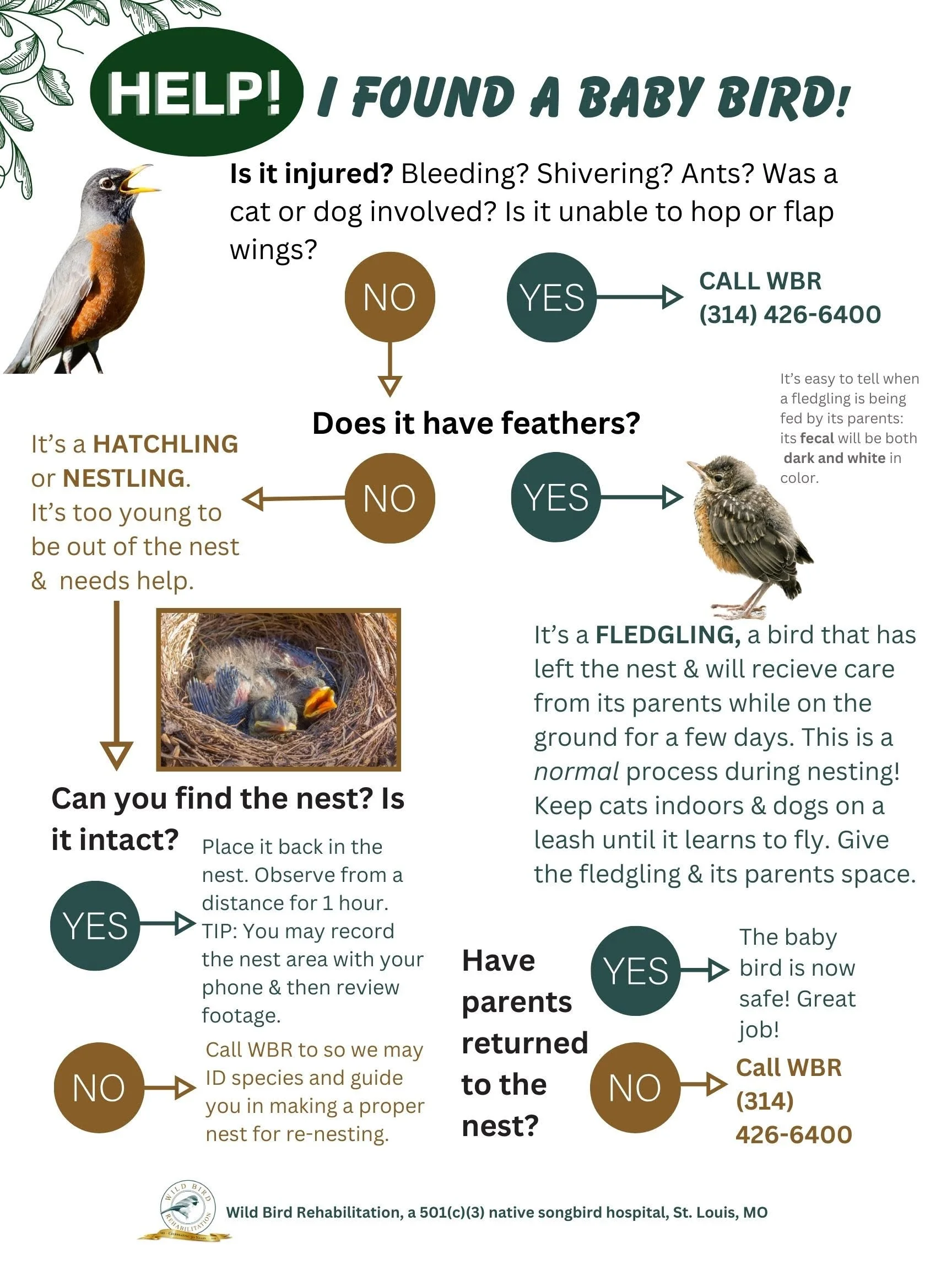
During the late spring and summer months, it’s common for baby birds to leave the nest before they are fully capable of flight. These nestlings are often mistaken for injured birds. Before intervening, observe the bird for a couple of hours. If the bird can walk, hop, and flap its wings, or if adult birds are seen nearby, it’s best to leave it undisturbed. The parent birds will continue to care for it.
It’s also normal for birds of prey, like hawks, to perch on tree branches for extended periods, either hunting or digesting their prey. This behavior doesn’t indicate injury; the bird is likely waiting or resting and will fly off in due time.
However, during the fall, winter, and early spring (September to mid-May), a bird found on the ground and unable to fly is probably injured. Approach the bird slowly. If it doesn’t attempt to fly away when you are within approximately 10 feet, you can reasonably assume it needs assistance.
Window collisions can cause temporary incapacitation due to swelling in the brain. In some cases, the bird may recover on its own. If predators like cats are present, gently place the bird in an enclosed, ventilated box or under a colander to ensure its safety. Handle the bird as little as possible and refrain from offering it food or water. As the swelling reduces and the bird becomes more active, you can attempt to release it. If the bird does not recover, you will need to seek professional help.
Contact a Licensed Wildlife Rehabilitator
If you confirm a bird is genuinely injured, your next step should be to contact a licensed wildlife rehabilitator. These professionals can assess the bird’s condition, determine if further care is possible, and provide guidance on the best course of action. Many rehabilitators are volunteers who dedicate their personal time to this cause, so reaching one immediately might be challenging.
If there’s a risk of predators, place the bird in a small, ventilated box. Keep the box in a dark, quiet location, away from drafts and noise. You can include a shallow dish of water, but do not force-feed the bird. Remember to remove the water dish before transporting the bird to a rehabilitator.
Should you be unable to reach a wildlife rehabilitator, the most humane approach is to place the bird in a safe, secluded spot with minimal handling and allow nature to take its course.
The Reality of Wild Animal Death
Well-intentioned efforts to help an injured or sick wild animal can sometimes lead to prolonged suffering and distress. While the intention is good, allowing the animal to die naturally is often the more humane option.
The natural world operates under different principles than our human society. Predation is a fundamental aspect of survival for most wild creatures. Many small birds subsist on insects, while larger birds of prey hunt smaller birds or mammals. A sick or injured bird will inevitably become prey for another animal, thus contributing to the predator’s survival.
Mortality rates in wildlife populations are naturally very high. Studies indicate that for many species, less than 50 percent of baby birds survive to adulthood. While this may seem harsh to humans, it’s nature’s mechanism for regulating populations to sustainable levels within the environment.
Learn More About Bird Situations & Solutions
You will likely encounter various bird-related situations throughout the year. Familiarizing yourself with common bird species in your area and understanding appropriate responses when human and bird lives intersect is beneficial. Resources are available to help you learn more about bird behavior and effective solutions for common challenges.
