
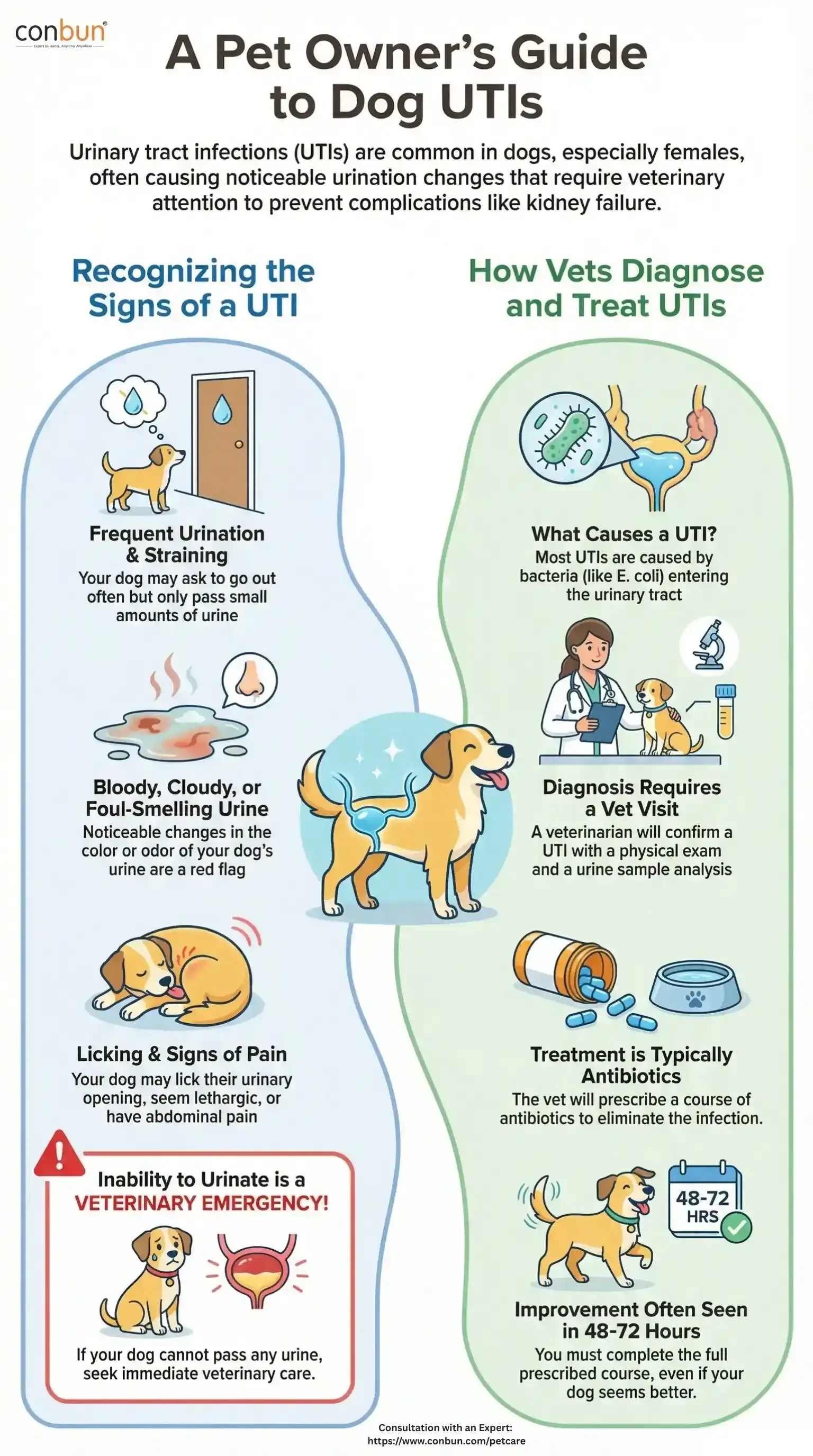
Urinary tract infections (UTIs) are a common ailment affecting dogs, with approximately 14% of the canine population experiencing at least one in their lifetime. While older dogs (7 years and above) are more susceptible, younger pups can also develop UTIs. Both male and female dogs can be affected, though female dogs are more prone due to their shorter urethra, which allows bacteria to ascend more quickly.
What is a UTI in Dogs?
A urinary tract infection occurs when bacteria enter the bladder through the urethra, the tube that carries urine from the bladder out of the body. These bacteria then multiply, leading to an infection within the urinary tract. The bladder is normally a sterile environment, and the presence of these multiplying bacteria disrupts its normal function.
Recognizing the Signs and Symptoms of UTIs in Dogs
While dogs may not always display obvious symptoms of a UTI, several signs can indicate an infection:
- Increased thirst and urination frequency.
- Difficulty or discomfort when urinating, often straining to pass small amounts of urine.
- Changes in urine appearance, such as cloudiness or the presence of blood.
- Accidents or incontinence, where a dog is unable to hold their urine for their usual duration.
- Loss of appetite and general lethargy.
- Excessive licking around the genital area.
- Fever.
Certain health conditions and treatments can put dogs at a higher risk for UTIs. These include diabetes, endocrine disorders like Cushing’s Disease, and dogs undergoing chemotherapy or long-term corticosteroid therapy. In such cases, regular urine tests may be recommended by a veterinarian.
Causes of Urinary Tract Infections in Dogs
Bacteria, most commonly E. coli, can enter the urinary tract from the area around a dog’s genitalia. Factors such as a weakened immune system, common in very young, elderly, or ill dogs, can make it harder for the body to fight off these bacterial invaders. If left untreated, the infection can spread to the kidneys, potentially causing serious issues like pyelonephritis (kidney infection), kidney stones, or even kidney failure.
Predisposition to UTIs in Dogs
While any dog can develop a UTI, certain factors increase the likelihood. Female dogs are more susceptible than males. Dogs with pre-existing health conditions, including chronic kidney disease and Cushing’s disease, are also at a higher risk.
Diagnostic Process: Urinalysis and Urine Culture
Diagnosing a UTI involves collecting and analyzing a urine sample. A urinalysis (UA) examines the urine’s chemical properties and allows for a visual inspection for abnormalities like crystals, cells, or bacteria. This test can often be performed by your veterinarian, with results usually available within 24 hours.
However, a UA may not always detect an infection, especially if the urine is very dilute. In such instances, or to confirm a diagnosis, a urine culture is essential. This test involves incubating the urine sample to detect bacterial growth and identify the specific type of bacteria. It also helps determine the most effective antibiotics through an antibiotic sensitivity profile. Urine culture results typically take 3 to 5 days.
Urinary tract infections are categorized as:
- Uncomplicated UTIs: Typically the first occurrence in a healthy dog, usually treatable with a short course of antibiotics.
- Complicated UTIs: Occur due to an underlying anatomical or functional abnormality in the urinary tract, leading to persistent or recurrent infections. Conditions like pyelonephritis, bladder stones, and prostatitis fall into this category. Treating these requires addressing the underlying issue alongside antibiotics.
Recurrent UTIs, occurring three or more times within a year, can be classified as reinfection (with a different bacteria) or relapse (with the same bacteria) within six months of treatment.
Treatment and Management of UTIs in Dogs
Treatment for UTIs varies based on the type and severity of the infection.
- Uncomplicated UTIs: Usually treated with a 7 to 14-day course of appropriate antibiotics. Visible improvement should occur within a few days, but completing the entire course is crucial. A follow-up urine culture is typically recommended about a week after treatment completion to ensure the infection is eradicated.
- Complicated UTIs: Also treated with antimicrobial agents, but the duration is longer, often 3 to 6 weeks, though shorter courses may be effective with the right antibiotic. Increasing a dog’s water intake is vital during treatment to help flush out bacteria.
While some may consider natural remedies, there is no scientific evidence to support their efficacy in curing UTIs, and some may even be unsafe for dogs. It is essential to always consult a veterinarian if you suspect your dog has a UTI, as symptoms can mimic other serious health conditions, and an untreated infection can lead to severe complications.
Can UTIs in Dogs Be Cured?
Yes, urinary tract infections in dogs can be effectively cleared with antibiotics.
Contagion of UTIs
Urinary tract infections are not contagious to humans or other pets.
Cost of Treating UTIs in Dogs
The cost of treating a UTI can vary significantly based on geographic location and the specific veterinary services required. Factors include:
- Office visit fees: Varies between regular and emergency veterinary clinics.
- Antibiotics: Prices range from approximately $25 to over $100, depending on the type, duration, and the dog’s size.
- Diagnostic tests: Urinalysis and urine cultures can cost up to a few hundred dollars.
Recovery and Ongoing Management
Recovery time depends on the infection’s severity. Most uncomplicated cases resolve quickly with treatment. To aid recovery and manage UTIs:
- Ensure constant access to fresh, clean water and consider incorporating wet food into the diet to increase fluid intake.
- Administer all prescribed medications exactly as directed, even if symptoms improve. Do not stop medication early.
- Provide frequent opportunities for urination to prevent dogs from holding their urine for extended periods.
- Monitor your dog’s behavior and contact your veterinarian if there is no improvement within 48 hours of starting treatment.
Consequences of Untreated UTIs in Dogs
If left untreated, UTIs can lead to more severe health problems, including kidney infections (pyelonephritis) and the development of struvite bladder stones. These stones, often correlated with UTIs, can cause significant pain and predispose the dog to further infections.
Preventing Urinary Tract Infections in Dogs
Preventing UTIs involves several key practices:
- Provide fresh, clean water daily to help flush bacteria from the urinary tract.
- Maintain good hygiene, particularly around the urinary opening, through regular grooming and bathing to prevent bacterial entry.
- Offer frequent opportunities for bathroom breaks, as holding urine for long periods can contribute to infections.
- Feed a healthy, well-balanced diet.
- Consider probiotic supplements to promote healthy gut bacteria.
- Ensure regular veterinary check-ups to identify potential issues early.
While Vitamin C can support the immune system, consult your veterinarian before administering supplements, as high doses can alter urine pH and potentially lead to bladder stones.
There is currently no vaccine available for urinary tract infections in dogs.
When UTI Symptoms Signal a More Serious Condition
It is crucial to remember that UTI symptoms can overlap with more severe conditions. Seek immediate veterinary attention if your dog exhibits:
Bloody Urine
Blood in the urine can indicate a UTI but may also signal serious issues like poisoning, kidney disease, trauma, cancer, or bladder stones.
Difficulty Urinating
Struggling to urinate or an inability to pass urine at all is a medical emergency that could indicate urinary tract obstructions, scar tissue, spinal cord issues, trauma, cancer, or prostate disease, and can be fatal if left untreated.
Changes in Urination Habits
Any sudden or significant changes in urination habits, including accidents in the house or increased frequency, warrant a veterinary discussion. These changes can be symptoms of various conditions, including diabetes, hypothyroidism, Cushing’s disease, cancer, trauma, and UTIs.
In Conclusion
Urinary tract infections are common in dogs, sometimes presenting with subtle or no symptoms. If symptoms appear, such as frequent urination, discomfort, or increased thirst, prompt veterinary treatment is essential to prevent complications like kidney infections and to alleviate discomfort. Implementing preventive measures like ensuring adequate hydration, regular potty breaks, and consistent veterinary care can significantly reduce the risk of UTIs in your canine companion.
