
Finding worms in your dog’s stool can be a distressing experience for any pet owner. While alarming, it’s important to know that intestinal parasites are a common issue in dogs and, fortunately, most are treatable. This guide will walk you through the potential causes, common symptoms, and how veterinarians diagnose and treat these infections, helping you ensure your dog stays healthy.
Understanding Why Your Dog Has Worms
The presence of worms in your dog’s poop typically indicates an intestinal parasite infection. You might notice these worms as white, thread-like strands or small white segments resembling rice grains.
How Dogs Contract Intestinal Parasites
Dogs most commonly acquire worms by ingesting infected feces or consuming raw meat containing parasite eggs or larvae. The heat from cooking effectively kills these parasites, making raw meat a primary vector.
Puppies are particularly vulnerable and can contract parasites from their mother. This transmission can occur before birth through the placenta or after birth via the mother’s milk. Additionally, hookworms can infect dogs through simple skin contact with contaminated feces, meaning ingestion isn’t always necessary for transmission. Understanding how these parasites spread is crucial for prevention. For instance, learning about the natural way to treat worms in dogs can offer alternative or complementary approaches to conventional treatments.
The Four Most Common Types of Intestinal Parasites in Dogs
While numerous parasites can affect dogs, four types are particularly prevalent. Recognizing their symptoms is key to timely intervention.
Roundworms (Toxocara canis and Toxascaris leonina)
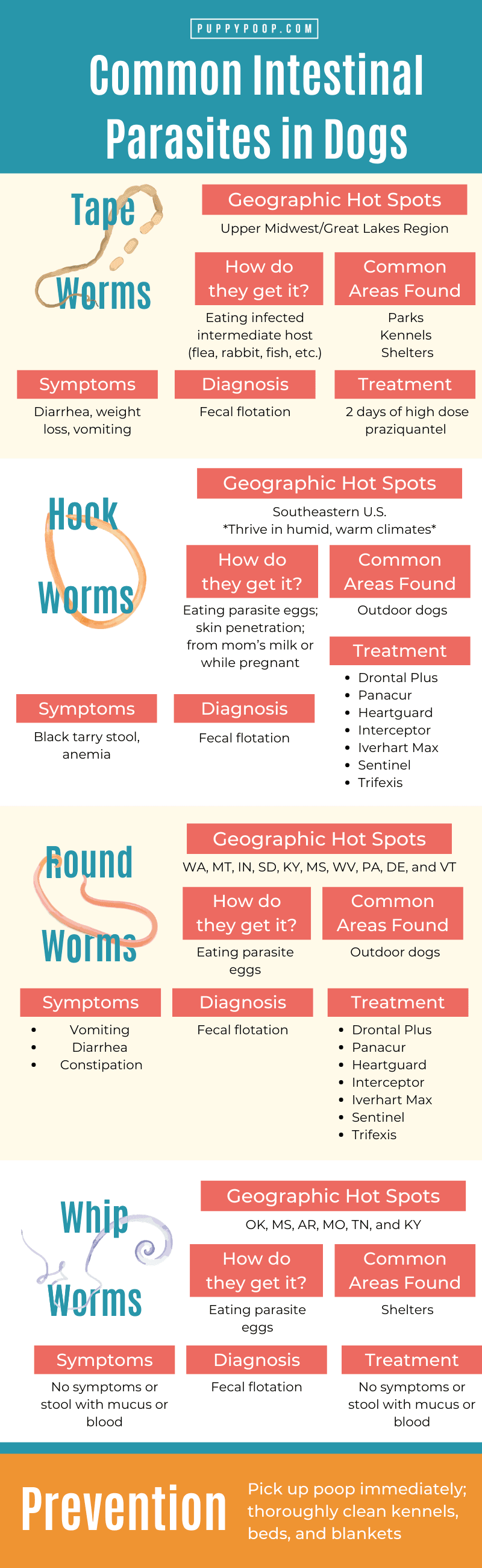
Roundworms are highly common, often transmitted through feces and from mother dogs to their puppies. Adult dogs may show mild symptoms like diarrhea, vomiting, or visible worms in their stool. However, puppies are more severely affected and can develop a distended abdomen and stunted growth. Severe roundworm infections can be life-threatening for puppies.
Tapeworms (Dipylidium caninum, Taenia species, Echinococcus species)
Tapeworms are typically contracted when a dog ingests infected fleas or eats raw meat from an infected animal. While less common, consuming commercially prepared raw meat can also pose a risk. The most noticeable sign of tapeworms is the presence of small, white, rice-like segments in the dog’s feces or around their anus. Understanding best over counter flea treatment for dogs is essential, as fleas are a common intermediate host for tapeworms.
Hookworms (Ancylostoma caninum, Uncinaria stenocephala)
Hookworms are transmitted through ingestion or skin contact with infected feces or contaminated soil. Due to their small size, hookworms themselves are rarely seen in stool. However, infected dogs often exhibit lethargy, diarrhea (which may be bloody), black or tarry stools, weight loss, and signs of anemia. Hookworm infections are particularly dangerous for puppies and require immediate veterinary attention.
Whipworms (Trichuris vulpis)
Whipworms are another common intestinal parasite transmitted through the ingestion of infected feces. While sometimes visible as small, thin worms in the stool, other symptoms can include a pot belly, anemia, dehydration, weight loss, and diarrhea that may contain blood or mucus. Puppies are at a higher risk for severe, life-threatening whipworm infections.
Preventing Worms in Your Dog
The most effective way to prevent worm infections is to keep your dog away from the feces of other animals and to limit their exposure to wildlife. High-traffic areas like dog parks can be hotspots for parasite transmission due to the concentration of dogs.
Regular administration of a monthly dewormer, prescribed by your veterinarian, can help prevent common parasites like roundworms and hookworms. This proactive approach is a cornerstone of canine parasite control.
Diagnosing Intestinal Parasites
Veterinarians typically diagnose intestinal parasites through a fecal examination. Even if worms aren’t visible to the naked eye, a microscope can reveal parasite eggs or larvae in the stool sample. Your vet will also consider any symptoms your dog is exhibiting.
Treating Worm Infections in Dogs
Dewormer medication is the standard treatment for parasitic infections in dogs. The specific dewormer and dosage will depend on the type of parasite identified and the severity of the infection. It is crucial to follow your veterinarian’s treatment plan precisely. For ongoing prevention, discuss flea and worm treatment for dogs monthly options with your vet.
The Seriousness of Untreated Parasitic Infections
Intestinal parasitic infections can indeed become life-threatening if left untreated, particularly in young puppies and dogs with compromised immune systems. Prompt diagnosis and treatment are vital for your dog’s health and well-being. If you suspect your dog has worms or other parasites, consult your veterinarian immediately. Also, remember that ear mites can affect both cats and dogs, so learning about home remedies for ear mites in cats and dogs can be beneficial for comprehensive pet care.
If you are in the Fort Washington, Maryland area and have found worms in your dog’s poop, Indian Head Animal Hospital offers expert veterinary care for diagnosis, treatment, and prevention of parasites. Contact them at (301) 292-1150 or Request an Appointment Online.
