
Montana’s Flathead Valley, home to the pristine South Fork Flathead River and Hungry Horse Reservoir, has offered anglers a unique recreational opportunity to target bull trout for two decades. However, this apex native fish species, listed as threatened under the Endangered Species Act since 1998, faces significant population declines. These declines are exacerbated by the pervasive presence of introduced species that have decimated native trout populations throughout the Flathead River system. The South Fork, however, remains an isolated haven, shielded from these competitive pressures below Hungry Horse Dam, making it one of North America’s most productive wild trout fisheries.
Despite this isolation, bull trout in the South Fork continue to face mounting stressors, including the impacts of climate change which have led to reduced stream flows, warmer water temperatures, and disrupted migratory patterns. This confluence of factors has resulted in the lowest bull trout population counts in the South Fork recorded since 1993, a trend that has alarmed fisheries managers and spurred proposed changes to the upcoming fishing regulations.
“The reality is, these fish are facing lots of stressors,” stated Leo Rosenthal, fisheries management biologist for Montana Fish, Wildlife and Parks (FWP) in Region 1. “We’ve had low flows and warmer stream temperatures these last few years, but many of the typical stressors that we’ve identified as having the biggest impacts on bull trout in the Swan and Flathead River systems are directly related to nonnative species. And we don’t have that in the South Fork or in Hungry Horse Reservoir. Bull trout don’t have predators like lake trout and northern pike to compete with. And while we can’t control the climate, the one thing we do have control over is the number of native fish that are allowed to be caught and released out there.”
Following the bull trout’s ESA protection in 1998, most Montana waters were closed to their recreational fishing. However, in 2004, a permit from the U.S. Fish and Wildlife Service (FWS) allowed portions of the South Fork, Hungry Horse Reservoir, and Lake Koocanusa to reopen for catch-and-release fishing, with an allowance for harvesting two bull trout annually on Hungry Horse. Rosenthal has been instrumental in monitoring the success of these angling opportunities through a catch card system. This system requires anglers to record their bull trout catches, followed by a post-season survey. FWP staff then compile and summarize this data. Recent surveys indicate a growing number of anglers are focusing their bull trout fishing efforts in the wilderness segment of the South Fork and near Hungry Horse Reservoir. Despite the catch-and-release limitation on the South Fork fishery, Rosenthal noted, “there is concern for handling stress impacting the population.”
On November 12th, the Montana Fish and Wildlife Commission is set to consider four amendments to the 2025 Fishing Regulations. These proposed changes, championed by FWP, include a significant alteration to the bull trout angling season on the South Fork. Currently, the season runs from the third Saturday in May through July 31st. The proposed amendment aims to limit intentional bull trout angling on the South Fork to a more focused period, from July 1st to July 31st. Rosenthal emphasized the urgency of this request, hoping the Commission will recognize the critical state of the bull trout population.
“We want to narrow the season and reduce the amount of handling. The reason for that is we know these fish come out of the reservoir in the spring and migrate into the South Fork to spawn, and we want to give them every opportunity to get up the river,” Rosenthal explained, referring to the stretch of the South Fork between Crossover Boat Ramp and Meadow Creek Pack Bridge, an area that experiences substantial angling use during the current season.
Data reveals that approximately 60% of all bull trout caught occur in the lower South Fork, with 40% of catches happening in May and June. In 2023, an estimated 973 bull trout were caught and released in Hungry Horse Reservoir and the South Fork Flathead River, with the South Fork accounting for 582 of those releases. Rosenthal highlighted that the proposed change would effectively eliminate about 40% of the fishing pressure on bull trout in the South Fork, based on the previous year’s catch card estimates.
Additional proposed modifications include a complete prohibition of all angling within a 300-yard radius of the mouths of Little Salmon and Gordon creeks—two critical spawning tributaries of the South Fork—as well as around the inlet of Big Salmon Lake, from June 15th to September 30th. Furthermore, the annual allowable harvest of bull trout would be reduced from two to one per angler. “Our data show that harvests are already very low, with an average of about 50 bull trout harvested from Hungry Horse Reservoir annually,” Rosenthal stated. “This would cut that in half.”
These proposed changes are viewed by Rosenthal, fellow fish ecologists, and anglers as a crucial step in assessing the impact of angling pressure on local bull trout populations, rather than a permanent restriction. “We feel it’s important to keep bull trout on the landscape as a valued sport fish,” Rosenthal asserted. “The overarching goal of this package of amendments is to make sure we still have this fishery for future generations.”
Wade Fredenberg, former FWS bull trout recovery coordinator for the region and current president of the Flathead Valley chapter of Trout Unlimited, recalled the collaborative effort in developing the catch-card system two decades ago. “When we started collaborating on the catch cards, the argument was that the biggest threat to bull trout in our area are these nonnative fish that have been spread around, so our thinking was that if we can make people value bull trout from a sport-fishing perspective, that would at least blunt some of the incentive of bucket biologists to plant other fish where we don’t want them,” Fredenberg explained. “I don’t think that thinking has changed. But part of our assessment was that a healthy bull trout fishery like what we had in the South Fork could withstand that kind of angling pressure. If that is no longer true, that’s troubling.”
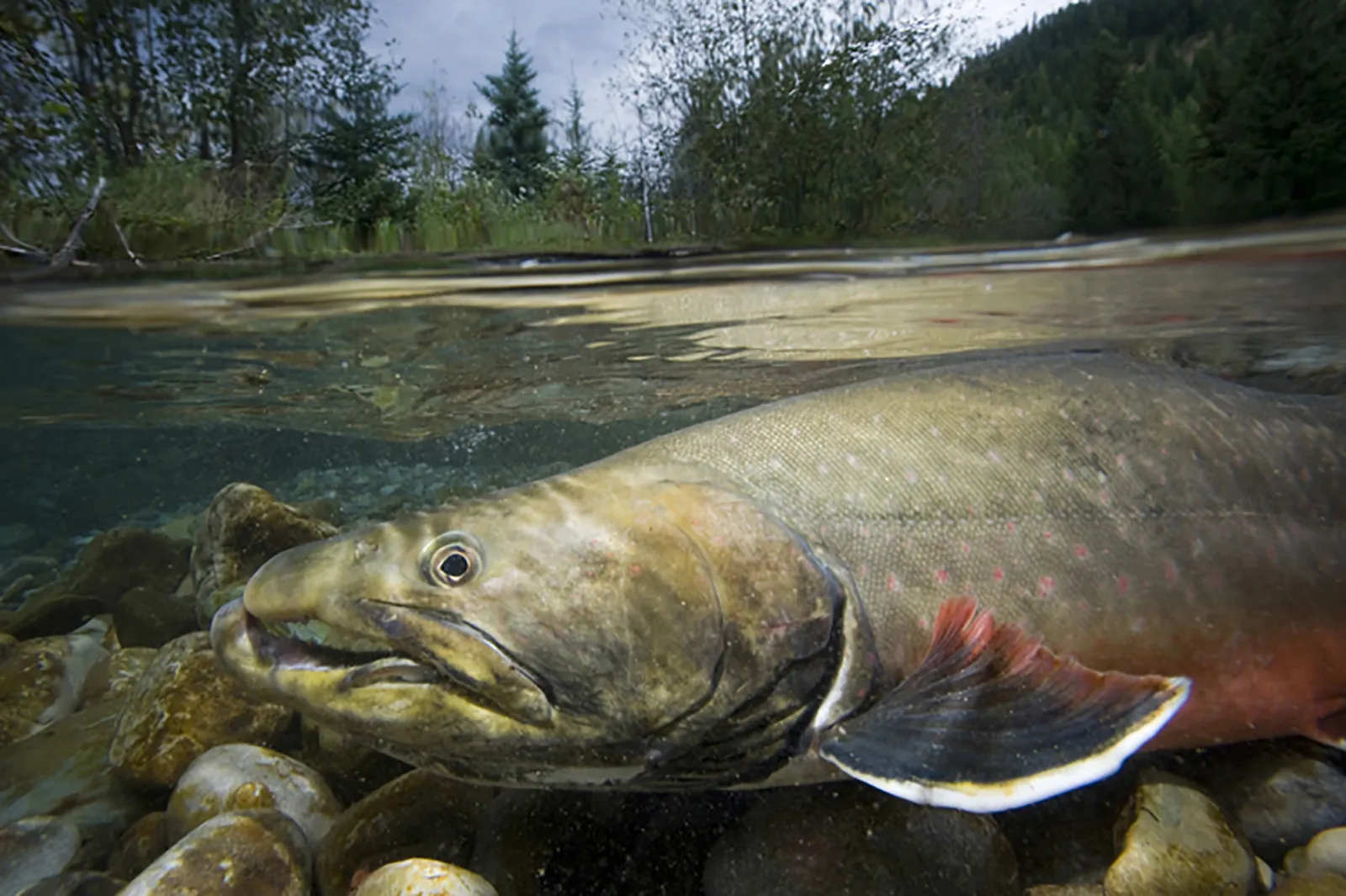
Clint Muhlfeld, an aquatic ecologist with the U.S. Geological Survey’s Northern Rocky Mountains Science Center, described the South Fork Flathead River as representing “the last of the best for bull trout.” His research supports the urgent need for conservation, highlighting the river as some of the most intact habitat in the lower 48 states. “The South Fork really represents Montana’s natural heritage where we have this protected watershed that’s got cold, clean, complex and connected habitat,” Muhlfeld stated. “This migratory populations of bull trout swims from Hungry Horse Reservoir up the South Fork and into the Bob Marshall Wilderness to spawn. Ecologically, it’s the best stronghold for bull trout and other native species in the northern Rockies. And recreationally, it’s one of two places in Montana where you can still legally fish for bull trout. That’s unique, to have a recreational fishery for a threatened species.”
Muhlfeld further emphasized the limited management options available: “There’s only so many levers these fisheries managers can pull as management tools to help the populations rebound, and tweaking these fishing regulations is really the only tool available on the South Fork because it’s in a wilderness area,” he added. “This is one tangible management action they can take to try and reduce mortality, and with the redd counts at the lowest on record since 1993, we have to let them try.”
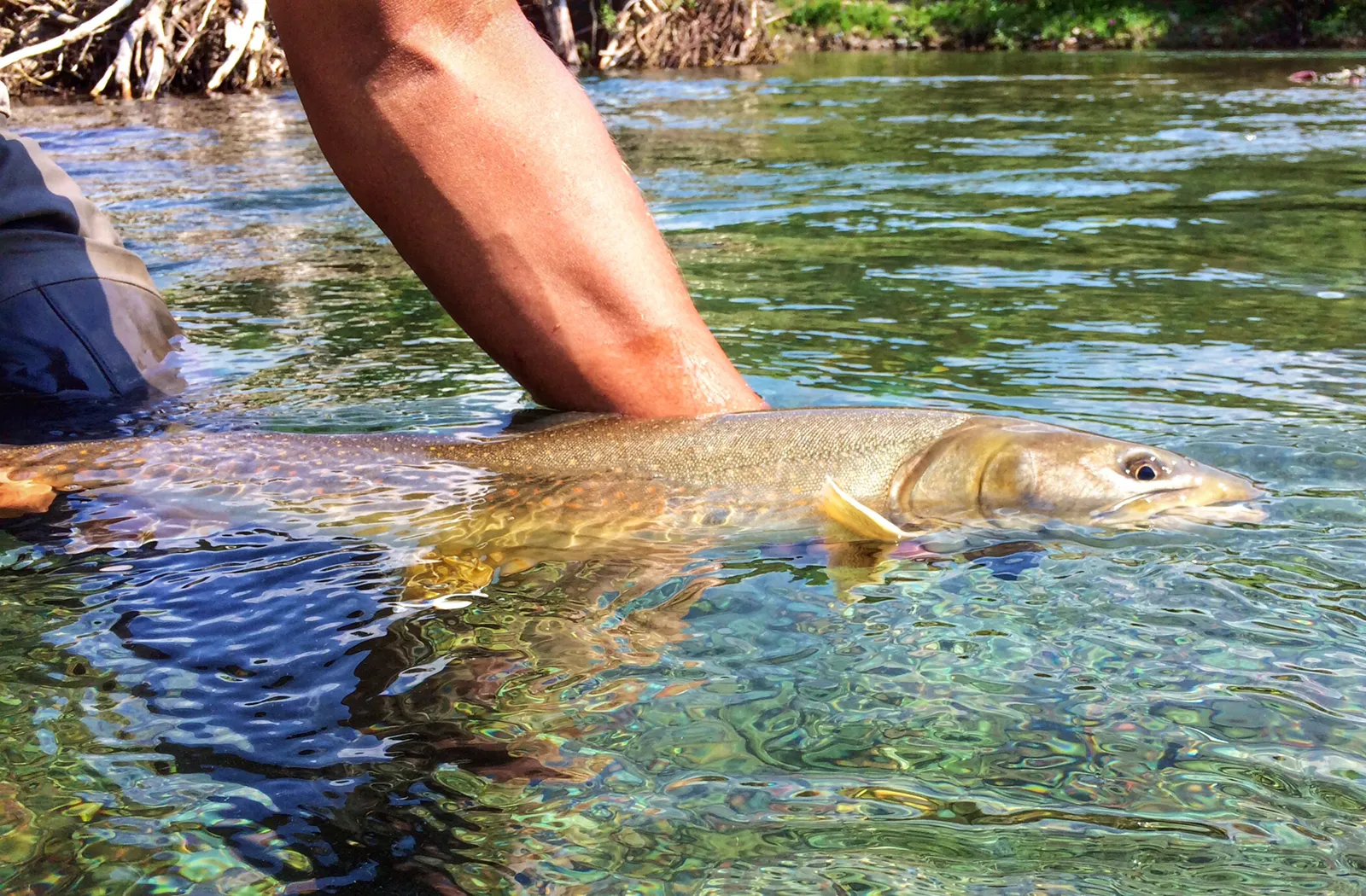
The critical need to curtail recreational angling pressure became starkly apparent to Rosenthal this fall. For the second consecutive year, fisheries biologists observed a dramatic decrease in the number of bull trout spawning beds, known as redds, in the South Fork. “The trips to do these surveys is no small task, but it’s the best data we have for adult bull trout abundance,” Rosenthal explained. “Because of the logistics, we only monitor the wilderness section of the South Fork every three to five years. But last year we did a survey that showed really low numbers, so we went back again in 2024 to confirm that it wasn’t a fluke or a one-off. And what we found this year was even lower numbers, the lowest we’ve recorded going back to 1993.”
In 2006, fisheries biologists counted 588 redds across the South Fork’s eight tributaries. This year, that number plummeted to just 171. “The redd counts in the South Fork are 30% what they were in 2006,” Rosenthal stated. “That’s why we’re asking for these changes. It’s the one thing we can control.”
“In the case of the South Fork, we like having this recreational fishery for bull trout,” he continued. “It keeps bull trout relevant as a desirable sport fish. These are the largest trout species we have that are native to Montana and they are also an iconic species ecologically. This proposal is a compromise of not wanting this fishery to go away. It’s a compromise that we hope will lead to being able to preserve them as a sport fish and minimize the stress of handling them for conservation purposes.”
