
Hummingbirds, despite their diminutive size, are known for their surprisingly aggressive nature, especially when it comes to defending their territory. This can pose a challenge for those who wish to enjoy feeding these vibrant birds. Witnessing aggressive encounters can be disheartening, but understanding the reasons behind this behavior and implementing simple strategies can help create a more peaceful feeding environment. This guide will explore why hummingbirds fight and how to manage their territorial disputes.
Why Do Hummingbirds Behave Aggressively?
The aggressive tendencies of hummingbirds stem from the fundamental need to defend their territory, whether it’s for feeding or breeding. When a hummingbird perceives an intrusion into a space it has claimed, it may react with hostility. Certain species, like the Rufous Hummingbird, are particularly notorious for their aggressive temperaments. This territorial behavior is often more pronounced in male hummingbirds compared to females.
Recognizing territorial aggression in hummingbirds involves observing several distinct behaviors:
- Aggressive Noises: A territorial hummingbird will often initiate encounters with warning sounds, such as rapid chirping and buzzing. These vocalizations serve as an alert to other hummingbirds that the area is already occupied.
- Body Language: Hummingbirds can alter their posture to appear larger and more intimidating to intruders. For instance, Rufous hummingbirds famously flare their iridescent gorgets. Other species might puff up their feathers, spread their wings, or flick their tails in a display of dominance. These threat displays are designed to emphasize their size.
- Dives: A common sight at feeders, aggressive hummingbirds will hover over intruders and then dive directly at them. This dive is frequently accompanied by a sharp chirp, reinforcing the warning.
- Chases: If warnings are ignored, a territorial hummingbird may actively pursue and chase away intruders from its claimed area, including feeders.
- Fighting: Although less common and typically a last resort, direct physical altercations can occur. Aggressive hummingbirds may use their bills and talons to attack, which can lead to serious injury or even death for the intruder if they do not retreat.
These behaviors typically escalate, starting with less confrontational actions like vocalizations and progressing to more aggressive tactics if the “invader” persists. Each action, however, serves the same purpose: to ward off unwanted visitors and protect their resources.
Strategies to Minimize Hummingbird Aggression
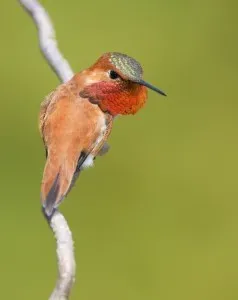 A territorial Rufous hummingbird displaying its gorget
Historically, separating hummingbird feeders was a common recommendation to mitigate conflicts. However, this approach can inadvertently encourage more bully hummingbirds to establish and defend individual territories. A more effective strategy for fostering harmony among hummingbirds is to increase the number of feeders and strategically place them in clusters throughout your yard.
By providing multiple feeding zones, including some that are not easily visible to others, a dominant hummingbird cannot effectively defend all the feeders. Furthermore, the sounds of hummingbirds interacting at feeders can attract more birds to your yard, ultimately benefiting all visitors.
According to Bob Sargent, an experienced hummingbird bander and bird expert, increasing the number of feeders around early July is advisable. This period coincides with the end of nesting season and the arrival of southbound migratory hummingbirds in larger numbers.
If a particular hummingbird consistently exhibits bully behavior, it’s helpful to identify its preferred vantage point. Aggressive hummingbirds often select a spot that offers a clear view of their territory, enabling them to easily monitor and defend it. Consider removing perches or pruning branches that these birds frequently use. This action can deter them from chasing away other hummingbirds attempting to feed.
Shop Our New Perky-Pet® Top-Fill Hummingbird Feeders »
Additional Tips for Hummingbird Enthusiasts
Maintaining multiple feeders requires a heightened commitment to regular cleaning to prevent the spread of diseases and spoilage of nectar. Sargent also advises against overfilling feeders initially. Waiting until feeders begin to empty is a reliable indicator that a significant number of hummingbirds are visiting your yard.
For more insights and advice on birding, consider joining the Perky-Pet® community on Facebook. Signing up for their e-newsletter will also keep you informed about birding news and exclusive offers on Perky-Pet® products.
