
Toilet training a cat can seem like a daunting task, but with patience and the right approach, it’s achievable. This guide will walk you through a proven 7-step method to help your feline friend transition from the litter box to the toilet. By following these steps gradually and allowing your cat to set the pace, you can encourage them to adopt this cleaner habit. Remember, consistency and positive reinforcement are key to successful toilet training for your cat.
Step One: Relocate the Litter Box
Begin by moving your cat’s current litter box to a location directly beside the toilet. Ensure your cat is comfortable and consistently using the litter box in this new spot before proceeding. It’s crucial to let your cat acclimate to this change at their own speed. Rushing the process can lead to confusion and potential accidents elsewhere in your home, which can be difficult to correct. Patience is paramount during this initial stage of toilet training a cat.
Step Two: Gradually Elevate the Litter Box
Once your cat is comfortable with the litter box next to the toilet, begin to gradually raise its height. Use sturdy materials like phone books or stacks of newspapers to elevate the box incrementally. Each time you add height, you can slightly reduce the amount of litter in the box. Secure the litter box firmly to prevent it from shifting or tipping when your cat jumps on it. This gradual elevation helps your cat get used to jumping up to do their business.
Step Three: Position Over the Toilet
Continue moving the litter box closer to the toilet, advancing it by about one inch each day. The goal is to have the litter box positioned directly over the toilet seat. Simultaneously, continue reducing the litter depth, aiming for no more than a one-inch layer. This step bridges the gap between the litter box and the toilet, preparing your cat for the final transition.
Step Four: Introduce a Training Box
Transition from the regular litter box to a specialized training box. This training box should be designed to fit over the toilet seat and be sturdy enough to support your cat’s weight. You can purchase commercial training systems or create your own. A DIY option involves taping wax paper over the toilet seat, then placing a bowl or aluminum pan on top, securing it with the toilet seat. Fill this pan with flushable litter. It’s recommended to clean the training box after each use and consider adding a pinch of catnip to the fresh litter to create a positive association.
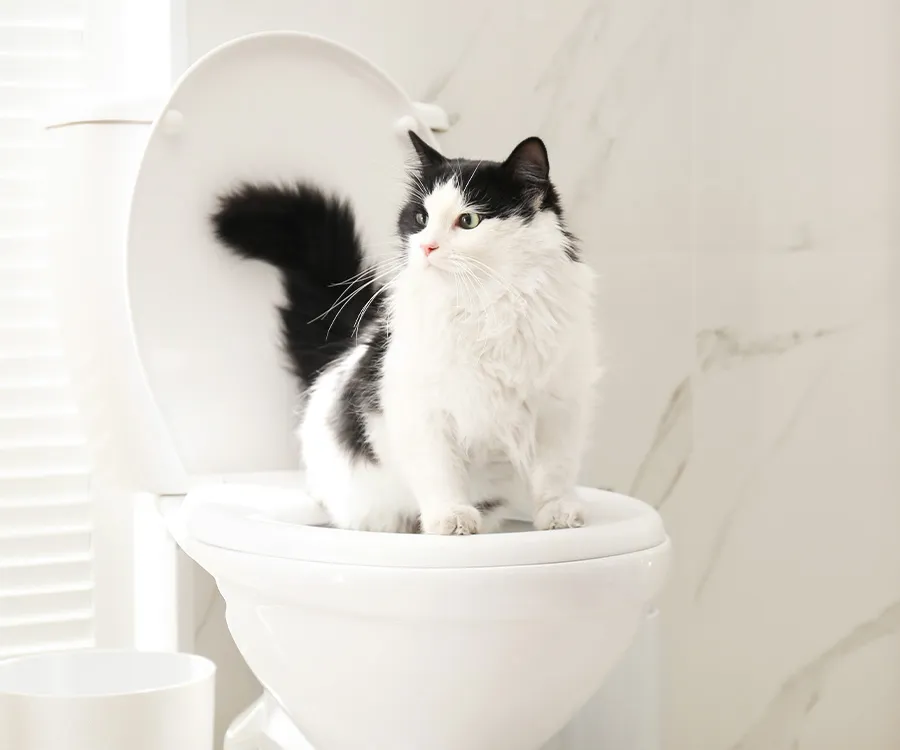 A cat standing on a toilet seat, looking into the bowl. Rewarding your cat with treats after successful attempts can significantly aid the toilet training process.
Step Five: Create the Opening
Begin to gradually introduce an opening in the center of the wax paper or training pan. Start with a small hole, about one inch in diameter, and slowly increase its size over time. As the opening gets larger, you’ll also decrease the amount of litter used, eventually reaching a point where no litter is needed when the paper or pan is removed. This encourages your cat to aim for the water in the toilet bowl.
Step Six: Encourage Flushing and Cleanliness
Once your cat is consistently using the toilet, the next step is to flush it after each use. It’s generally advised not to teach your cat how to flush the toilet themselves, as this can lead to them playing with the flush mechanism and wasting water. Focus on reinforcing the act of using the toilet and then flushing it for them.
Step Seven: Reward Success
Positive reinforcement is crucial for successful cat toilet training. Offer your cat a treat or praise immediately after they successfully use the toilet. This helps them associate the toilet with positive experiences. If your cat seems hesitant about the water, adding a small amount of flushable litter to the water can help them associate the scent with their litter box, easing their apprehension.
Toilet training a cat requires dedication and understanding of your pet’s behavior. By following these seven steps patiently and consistently, you can successfully teach your cat to use the toilet, making cleanup easier for both of you. Remember to celebrate small victories and provide plenty of positive reinforcement throughout the process.
