
Proper leash training is essential for enjoyable walks with your dog, ensuring they walk calmly by your side, respond to your cues, and don’t pull ahead. While challenging, teaching your dog to walk on a leash without pulling is a rewarding process that strengthens your bond. This guide will walk you through effective techniques to achieve this.
Prior to Leash Training a Puppy
Before beginning formal leash training, consider using aids like a head collar or a front-attachment harness. These tools can help discourage pulling, but they are temporary solutions. A front-attachment harness is user-friendly and effective for many dogs, while a head collar offers more control, particularly for dogs with aggressive tendencies or for handlers with larger breeds. These tools should be used with leashes no longer than six feet to prevent sudden stops that could cause injury.
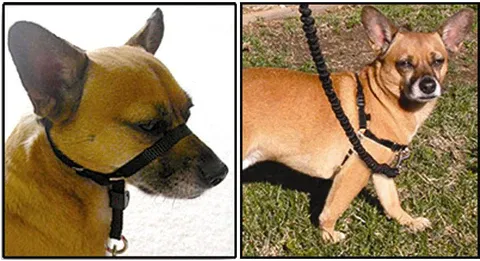 A small tan dog wears a head collar on the left and a front-attachment harness on the right*Gigo wearing a Comfort Trainer head collar (left) and an Easy Walk front-attachment harness (right)*
Stop and Reward
A core principle in leash training is to stop moving forward whenever your dog pulls and to reward them with treats when they walk calmly beside you. Keeping a treat bag handy can be very helpful during this process. If your dog isn’t highly food-motivated, praise, a favorite toy, or a game of fetch can serve as equally effective rewards.
[picture of a dog on a leash]Dog Leash Training Step by Step
The following steps provide a detailed approach to teaching your dog polite leash manners.
Step 1: Walking with My Human Is Delicious!
Begin by attaching your puppy to a long leash (10-20 feet, not retractable) while they wear a standard harness. In a familiar, enclosed area like your backyard, use small, high-value treats (like pieces of meat or cheese) placed by your thigh on your preferred walking side (traditionally the left). Walk briskly and unpredictably. When your dog naturally walks beside you, reward them with praise and a treat. Gradually increase the distance between rewards as they improve. If your dog shows no interest, it may be best to try again later when they are more focused. Continue practicing until your dog consistently stays by your side.
Gigo walking by my side. Feeding Gigo a treat by my side.
Step 2: It’s Worth My While to Watch Where My Human Is Going and Go Along, Too!
When your dog starts to lag behind or wander off, use an upbeat tone to say “let’s go,” perhaps patting your thigh to get their attention, and turn to walk in the opposite direction. When your dog catches up, reward them with praise and a treat on your preferred side. If they were lagging due to sniffing or needing to potty, allow a brief moment before resuming. If the leash is tight and they don’t come towards you, apply gentle leash pressure as a reminder, releasing it as soon as they move towards you. Reward their return with praise and treats. Practice this until your dog reliably returns to your side after you say “let’s go.”
“Let’s go”, and walking away.
Step 3: I Know When It’s Time to Smell (Or to Pee On) the Roses
To help your dog learn better manners, you should control when they have opportunities to sniff or relieve themselves. When you would normally give a food reward, instead say “go sniff” and allow them this privilege. If they pull on the leash during this time, say “let’s go” and walk in the opposite direction, ending the free time. When you’re ready to resume walking, say “let’s go” and begin moving. This teaches them that structured sniffing and potty breaks are earned rewards.
Authorized sniff break!
Step 4: Sometimes I Really Need to Pay Attention to Where My Human Is Going!
Continue practicing in your yard with a shorter leash, gradually reducing it to six feet. Incorporate faster and slower paces, as well as sudden stops and changes in direction. Reward your dog for staying by your side during these variations. Begin to reward less frequently for normal walking, but continue to offer ample rewards when they successfully navigate these challenges or when distractions like other animals or people are present.
Taking It to the Street
Apply the same techniques used in your yard during neighborhood walks, being mindful of increased distractions. Consider using a front-attachment harness or head collar for added control and have high-value treats readily available. If your dog pulls or becomes distracted, use the “let’s go” command and change direction. Reward them generously for maintaining focus and walking beside you, especially in challenging situations. Remember to grant permission for sniff breaks as a reward.
Challenge Your Dog During Leash Training
To further enhance your dog’s focus, hold their leash and toss a ball or treat a short distance away. If they pull towards it, use the “let’s go” command and walk in the opposite direction. If they remain by your side as you walk towards the object, allow them to retrieve it as their reward. Initially, you might use a longer leash or a less enticing object to make this exercise easier.
Troubleshooting
If your dog crosses in front of you, stomp or shuffle your feet to draw their attention back to your presence. If they lag significantly behind, they may be fearful or unwell; offer encouragement rather than pulling. If lagging is for sniffing or potty breaks, continue walking with gentle leash pressure, and ensure ample rewards are given when they walk with you. If your dog alternates between pulling and walking nicely, focus on rewarding longer stretches of consecutive steps by your side, rather than rewarding their return after pulling.
How to Train a Dog to Walk On a Leash and Heel
Heeling is a useful skill for situations requiring your dog to be very close and attentive. Practice this indoors initially. Place a treat in your fist and let your dog sniff it. As you take a couple of steps, keep the treat near your thigh, saying “let’s go.” Reward them when they follow your fist with their nose. Progress to practicing with an empty fist, rewarding each step they follow. Gradually increase your expectations and practice in distracting environments. Your closed fist can serve as a visual cue for “heel.”
Consistent practice and positive reinforcement are key to successful leash training. By implementing these steps, you can foster a more enjoyable and cooperative walking experience with your dog. Explore our leash training aids for dogs, puppy supplies, treats, and other unique dog products to further support your training journey.
The Author:
Jess Rollins
Jess Rollins and Pet Expertise are dedicated to helping you maximize your dog’s potential. With a focus on expert selection and testing of products, they aim to provide safe and effective solutions for dog owners.
