
Many new puppy parents often assume that their furry friends instinctively know how to walk politely on a leash. However, teaching a puppy to walk with you is a skill that requires patience, consistency, and positive reinforcement. This fundamental training is invaluable, creating a more enjoyable experience for both you and your canine companion during every outing. According to renowned dog training expert and AKC Family Dog columnist Kathy Santo, mastering this skill can build a strong bond and prevent future behavioral challenges. Learning how and when to leash train a puppy from an early age sets the foundation for a lifetime of happy and controlled walks.
Laying the Groundwork for Leash Walking
Establishing a solid foundation is key to successfully teaching your puppy to walk politely by your side. These initial steps are crucial for creating positive associations with their walking gear and the training process itself.
Introduce Collar, Harness, and Leash
Begin by familiarizing your puppy with wearing a collar or harness and a leash. Introduce these items in short bursts while you’re inside the house, during playtime, or when offering treats. The goal is for your puppy to associate their gear with positive experiences, linking collar-and-leash time with fun and food. This helps them view these items as comfortable and exciting, not restrictive.
Teach a Positive Reinforcement Cue
Introduce a consistent sound cue that signals an incoming reward. This could be a clicker, a verbal marker like “yes,” or even a distinctive tongue cluck. The method remains consistent: in a quiet, distraction-free environment with your puppy wearing their collar and leash, make your chosen sound. The instant your puppy turns towards or looks at you, reward them with a delicious treat. Through repetition, your puppy will quickly learn to not only look at you but also eagerly approach you for the treat, understanding that your cue means good things are coming.
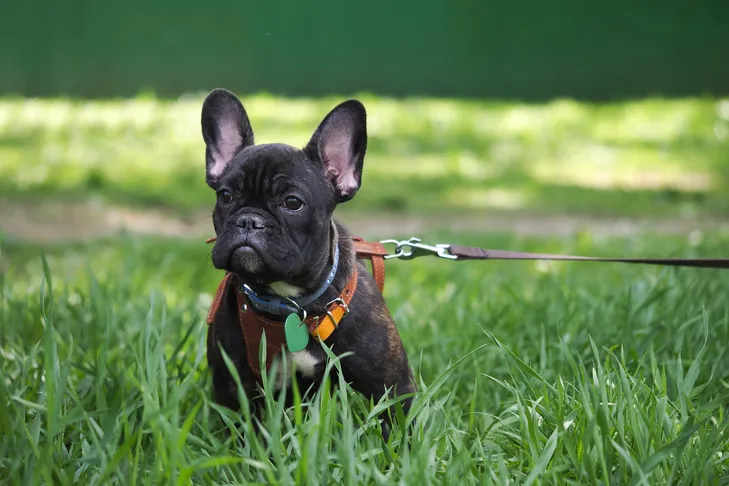 A French Bulldog puppy in a comfortable harness sits attentively in tall green grass, ready for a walk on its leash.
Encourage Your Puppy to Come to You
Once your puppy understands the cue, start encouraging them to come closer. As they respond to your sound cue and begin to approach, take a few steps backward while they are still wearing their leash and collar. Reward them immediately upon reaching you. Gradually increase the number of paces you back up, so your puppy learns to follow you for several steps after hearing the cue. Remember that puppies have limited attention spans, so keep your training sessions brief and engaging, ending before they become mentally fatigued and lose interest. Consistent practice builds their understanding of how to train your puppy to walk calmly.
Practice Walking Indoors
With a basic understanding of coming to you, it’s time to practice walking a few steps in a low-distraction indoor environment. The sensation of the leash and collar will be a sufficient challenge at this stage. Continue to offer praise and treats as your puppy learns to walk alongside you, even for short distances, while connected to the leash. This controlled setting allows them to focus on the task without being overwhelmed by external stimuli.
Transition to Outdoor Walks
Once your puppy demonstrates proficiency indoors, they are ready to venture outside. This step introduces a new level of complexity due to the myriad of sounds, smells, and sights that will naturally intrigue them. Exercise patience and keep these initial outdoor walks very short. During your walk, maintain constant vigilance. If you notice your puppy is about to lunge towards an object or get distracted – indicated by their body language or focus shifting – immediately use your cue sound and take a few steps away. Reward them generously with a treat for refocusing on you and following your movement. This redirection helps them learn to prioritize you over environmental distractions. For more focused guidance, explore tips for training a puppy to walk on a leash.
Addressing Common Leash-Training Challenges
Even after your puppy begins to walk nicely on a leash, you will likely encounter challenges as they mature, explore new places, and face increasing distractions. Teaching them loose-leash walking is essential for a pleasant experience for both of you and is also a prerequisite for tests like the Canine Good Citizen. The AKC GoodDog! Helpline offers valuable advice for overcoming common leash-training issues.
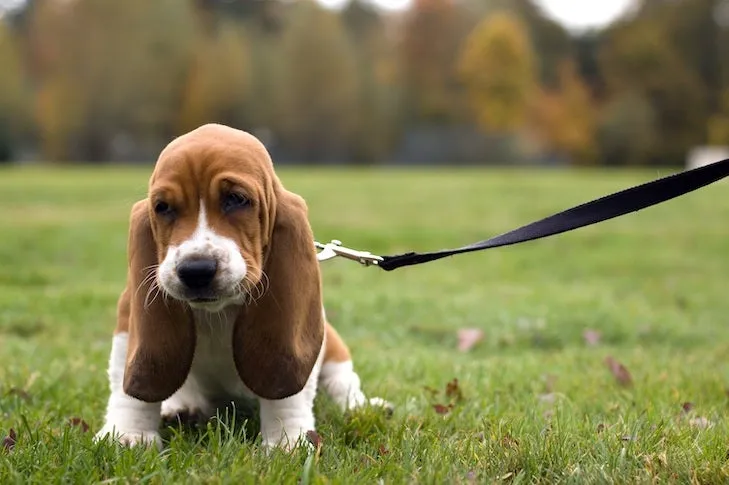 A Basset Hound puppy sits patiently in green grass, connected to a leash and collar, awaiting its next command.
What to Do If Your Puppy Pulls
If your puppy begins to pull aggressively in a different direction, act like “a tree.” Stop moving completely and stand still until your dog returns to your side. Never yank, jerk the leash, or drag your dog along. For puppies that are persistent pullers, alternative training tools such as front-hook harnesses and head halters can be highly effective in encouraging them to walk more calmly. Understanding how to train puppy to stop pulling on leash is vital for enjoyable walks.
How to Manage Puppy Lunging
When your puppy fixates on something during a walk – be it another dog, a car, or a skateboarder – and appears ready to lunge, proactive intervention is key. Try to redirect their attention with a treat before they have the opportunity to lunge. Increase the distance between your puppy and the distracting target. Remain alert and prepare for potential triggers before they get too close. While this behavior might be more common in certain breeds like herding dogs, any puppy can be startled or over-excited by unfamiliar sights or sounds.
Addressing Puppy Barking on Walks
Some puppies develop a habit of barking at other dogs or stimuli while on walks. Often, this behavior stems from insufficient mental and physical exercise. Ensure your puppy receives the appropriate amount of stimulation for their age and breed. If barking persists, employ a similar strategy to lunging: create distance and offer treats before they start to bark. This teaches them to associate the presence of other dogs with turning their attention back to you for a reward, gradually changing their reactive behavior. Consistent reinforcement of training your puppy to walk on a lead can make a significant difference.
Over time, you will find yourself needing fewer treats and less intervention during your walks as your puppy develops excellent leash manners. However, it’s always a good practice to keep some treats on hand to randomly reinforce positive leash-walking behavior, ensuring long-term success and a happy walking partnership.
Conclusion
Training your puppy to walk politely by your side is a rewarding journey that strengthens your bond and makes outdoor adventures enjoyable for both of you. By patiently introducing their gear, using positive reinforcement cues, and gradually practicing in various environments, you can instill excellent leash manners. Addressing common issues like pulling, lunging, or barking with proactive strategies will further refine their behavior. Remember, consistency and positive reinforcement are your best tools in teaching your puppy to walk with you confidently and happily. If you encounter persistent challenges, seeking guidance from a professional trainer can provide personalized support to ensure your puppy becomes a well-behaved walking companion.
