
Teaching your dog to walk politely on a leash is a fundamental aspect of responsible dog ownership. This comprehensive guide will walk you through the essential steps to ensure your dog walks happily by your side, stopping when you stop, and turning when you turn. We’ll address common challenges like leash pulling and provide effective, humane training methods suitable for puppies and adult dogs alike.
Understanding the Leash Training Process
Before diving into specific techniques, it’s important to understand the goal: a dog that walks calmly and attentively with its handler. While aids like head collars or front-attachment harnesses can be helpful in managing pulling, they are not a substitute for proper leash training. These tools can provide immediate assistance, but consistent training is key to long-term success. For immediate management, a front-attachment harness is a safe and effective no-pull device suitable for most dogs. For dogs with more challenging pulling behaviors or those requiring maximum control, a head collar can be beneficial. It is crucial to use these tools with leashes no longer than six feet to prevent potential injury if the dog lunges suddenly.
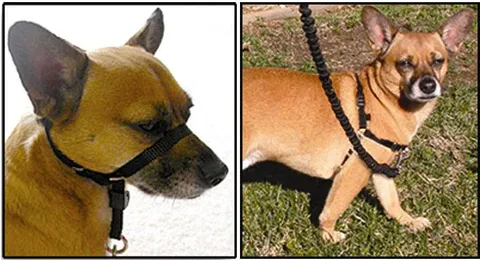 A small dog wearing a head collar on the left and a front-attachment harness on the right.*Gigo demonstrating a head collar and a front-attachment harness.*
The “Stop and Reward” Method
A highly effective approach to leash training a puppy or dog that pulls involves a simple yet powerful technique: stop moving forward whenever your dog pulls on the leash, and reward them with a treat when they return to your side. This positive reinforcement method teaches your dog that walking with you is more rewarding than pulling ahead. A treat bag worn around your waist can be incredibly useful for quick access to rewards during training sessions. If your dog isn’t highly food-motivated, consider using praise, a favorite tug toy, or a quick game of fetch as rewards instead.
Step-by-Step Leash Training for Dogs
The following steps provide a detailed breakdown of how to train your dog to walk politely on a leash:
Step 1: Make Walking Beside You Rewarding
Begin by attaching a long leash (10-20 feet, non-retractable) to a standard harness. In a familiar, outdoor area like your backyard, have high-value treats ready (small pieces of cheese or meat work well). Decide on which side you want your dog to walk (traditionally the left) and consistently offer treats on that side, near your thigh. This encourages your dog to stay close to you. Start walking briskly and randomly, rewarding your dog with praise and a treat whenever they are by your side. As your dog improves, gradually decrease the frequency of treats. If your dog seems uninterested, try training again later when they are hungrier. Practice until your dog is consistently walking beside you.
Rewarding your dog for walking by your side.
Step 2: Encourage Following Your Lead
When your dog wanders off or lags behind, use an upbeat voice to say “let’s go” and gently encourage them to rejoin you. Slapping your thigh can help get their attention. Reward them with praise and a treat on your preferred side when they catch up. Continue rewarding them for every few steps they stay with you. If they lag, stop walking and apply gentle leash pressure as a reminder of your presence. Reward them the moment they begin to move towards you. Continue practicing until your dog readily returns to your side after being prompted.
“Let’s go” encourages your dog to follow.
Step 3: Establish Permission for Sniffing and Potty Breaks
It’s essential to allow your dog time to sniff and relieve themselves. During training, designate specific times for these activities. When you would typically offer a food reward, instead say “go sniff” and allow your dog to explore or use the potty. This becomes a privilege. If your dog pulls during this “free time,” calmly say “let’s go” and walk in the opposite direction, ending the break. When you’re ready to resume walking, give the “let’s go” cue and begin moving.
Designated sniff breaks are a reward.
Step 4: Reinforce Focus Amidst Shorter Leash Use
As your dog progresses, transition to a shorter leash, eventually aiming for a standard six-foot leash. Practice varying your walking pace, stopping abruptly, and changing directions. Reward your dog for maintaining their position by your side during these changes. Begin to reduce rewards for simply walking beside you in normal circumstances. Instead, focus rewards on instances where your dog successfully stays with you during challenges, distractions, or changes in your pace and direction.
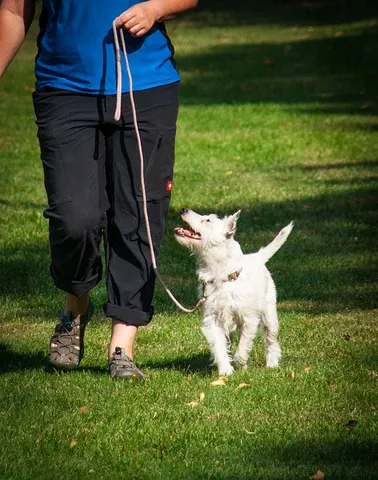 A white dog on a leash attentively watches its owner.*Maintaining focus is key.*
Transitioning to Outdoor Walks
Apply the same techniques used in your yard during neighborhood walks, being mindful of increased distractions like people, other animals, and interesting scents. Consider using a front-attachment harness or head collar for added control. Continue to use “let’s go” to redirect your dog if they pull and reward them generously for staying by your side, especially when faced with challenges. Remember to permit sniff breaks and use high-value treats to maintain your dog’s engagement.
Challenging Your Dog During Training
For an added challenge, use a standard harness and a six-foot leash. Toss a ball or treat 20 feet away. If your dog pulls towards the object, use the “let’s go” cue and walk in the opposite direction. If they walk calmly beside you as you approach the object, allow them to reach it as their reward. Initially, you might use a less desirable object or a longer leash to make this exercise easier.
Troubleshooting Common Issues
If your dog consistently crosses in front of you, shuffle your feet slightly to make your presence more noticeable. If your dog lags significantly, they might be fearful or unwell; use encouragement rather than force. If lagging is for sniffing or potty, continue walking with gentle leash pressure. Always reward your dog when they walk with you. If your dog alternates between pulling and walking nicely, shift your focus from rewarding them for returning to you after pulling, to rewarding longer sequences of consecutive steps taken by your side.
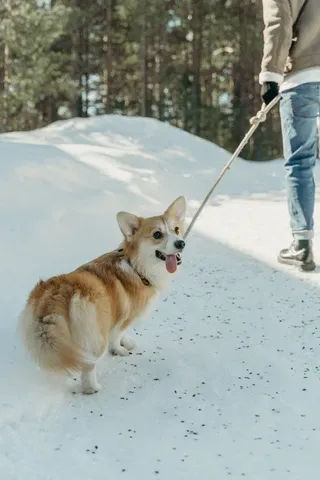 A small white and brown dog on a leash in the snow.*Patience and consistency are vital.*
Achieving a Heel
Teaching your dog to “heel” is beneficial for short periods when you need them close and attentive, especially in distracting environments. Start by practicing in your home. Hold a treat near your thigh and say “let’s go” as you take a few steps, guiding your dog with the treat. Reward them for following your hand with their nose. Progress to using an empty fist as a hand signal and reward them for following it. Gradually increase your expectations and practice in more distracting situations outside. Your closed fist will serve as the hand signal for “heel.”
We hope this guide empowers you to enjoy more harmonious walks with your canine companion. Explore our leash training aids and other unique dog products to further enhance your training journey.
