
Bringing a new dog home, like the recently adopted 1-year-old Pitbull Daisy, is an exciting time. However, ensuring your Pitbull listens to you, especially in distracting environments like walks, is crucial for a harmonious relationship. This guide, inspired by real-life training scenarios, will walk you through the essential steps and proven techniques to help your Pitbull become a well-behaved companion. Understanding and implementing these principles can significantly improve your dog’s responsiveness, making walks more enjoyable for both of you and helping you explore how to keep my dog from pulling on the leash.
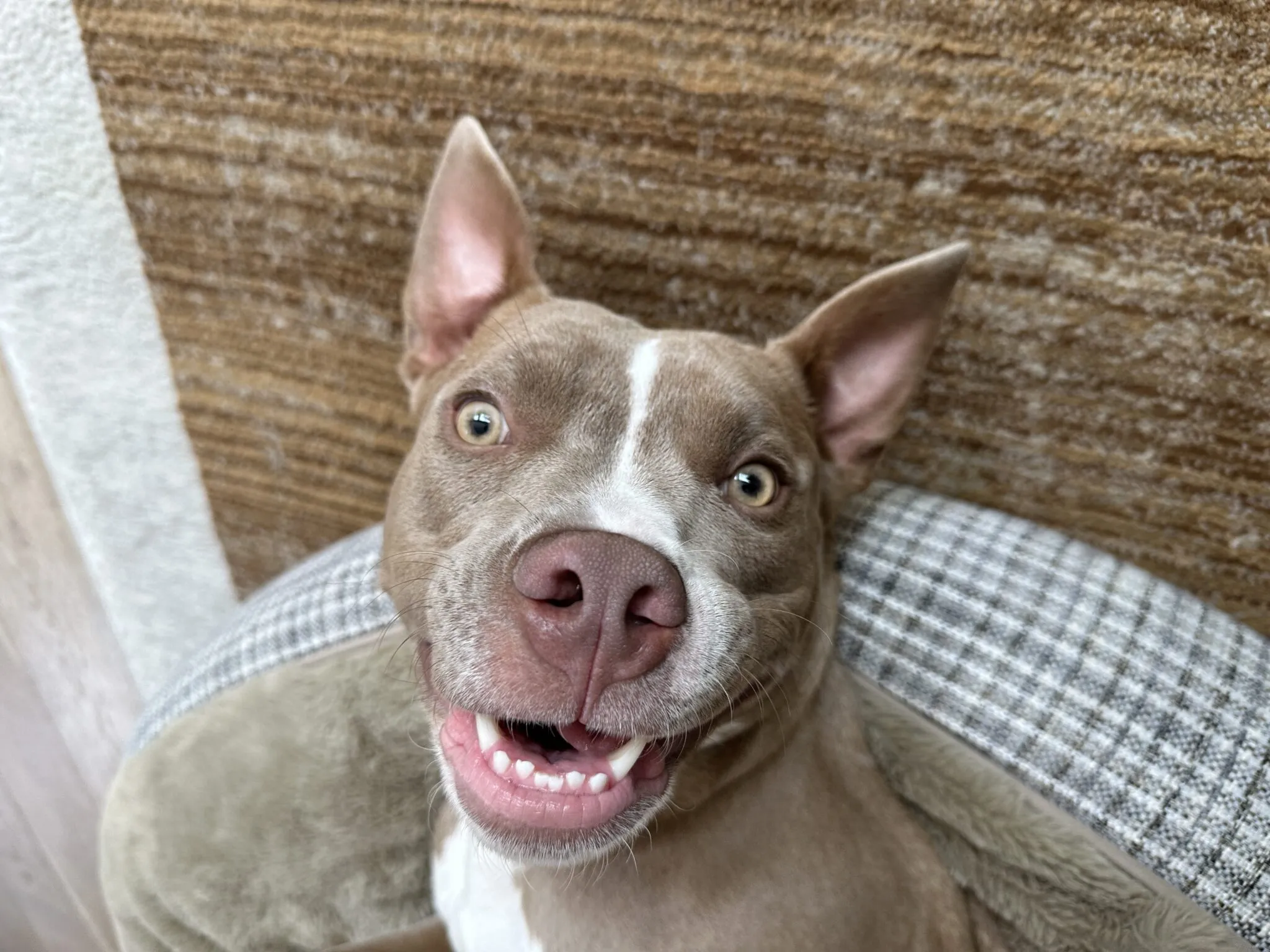 Daisy the Pitbull
Understanding Dog Behavior Fundamentals
Before diving into specific commands, it’s vital to grasp some core dog behavior fundamentals. These foundational elements play a significant role in a dog’s overall responsiveness and are especially important when you aim to train dog to walk on leash without pulling. These include introducing a marker word, practicing hand targeting, understanding the best way to introduce command cues, and the importance of celebrating desired behaviors to instill good manners. These techniques boost confidence and strengthen the bond between you and your dog.
Physical exercise and mental stimulation are also non-negotiable components of any dog’s daily routine, particularly for high-energy breeds or younger dogs like Daisy. Simple yet effective strategies, such as feeding from a snuffle mat, can provide valuable mental engagement. Consistent, short training sessions throughout the day can greatly enhance your dog’s learning and reinforce learned skills for everyday life.
Common Difficulties When Training a Pitbull to Listen
One of the most significant challenges guardians face is getting their Pitbull to listen during walks. Walks present a vastly different environment compared to the home. Inside, dogs have explored their surroundings, and the environment is familiar, leading to better focus. However, stepping outside often triggers a sensory overload—new smells, sights, and sounds can be overwhelming. This barrage of stimuli makes it difficult for dogs to tune into their owners. It’s not a matter of unwillingness, but rather the sheer volume of interesting new things competing for their attention.
Effective Strategies to Train a Pitbull to Listen
Many owners inadvertently increase their dog’s excitement before a walk by using an overly enthusiastic voice or repeating commands excessively. This can make it challenging to capture your dog’s attention effectively. A more effective approach involves teaching your dog to remain calm before walks.
Consider the process of leashing your dog as a series of steps. The first step might be simply walking towards the leash. If your dog becomes overly excited at this point, it’s crucial to pause. Instead of proceeding, sit down and wait for your dog to calm down before moving forward. This simple act of stopping when excitement escalates is a powerful technique to get a dog to listen.
Once your dog can calmly observe you approach the leash, the next step is to reach for it without actually picking it up. If your dog begins to show signs of overstimulation, stop again. While this might seem frustrating initially, pausing when excitement rises is key to helping your dog learn self-control and respond to your cues. Practicing these steps at times other than immediate walk times can help your dog associate these actions with calmness, rather than just pre-walk frenzy.
A fantastic way to reinforce a dog’s attention is the “treat toss game.” When your dog makes eye contact with you, toss a tasty treat. This positive reinforcement encourages your dog to check in with you frequently. This game, alongside consistent practice and understanding how to teach your dog off leash walking (which requires a high level of attentive listening), builds a strong foundation for obedience.
Key Tips for Pitbulls on Walks
To summarize, here are three essential tips to train a Pitbull to listen on walks:
- Teach Calmness Before Leashing: Practice the desensitization exercise of approaching and handling the leash without immediately starting the walk.
- Encourage Check-Ins: Periodically pause during the walk, wait for your dog to look at you, and then mark and reward this “check-in” behavior.
- Reward Eye Contact: Utilize the treat toss game whenever your dog makes eye contact, reinforcing their focus on you.
Implementing these strategies can transform your dog’s walk experience. You’ll notice your formerly distracted Pitbull paying more attention, checking in frequently, and responding to your guidance. These techniques are not exclusive to professional trainers and can be applied to any dog breed, proving that learning to train a Pitbull to listen is achievable with patience and the right methods.
Daisy, a lovely dog, is sure to become even more settled as she adjusts to her new home. With these dog behavior tips and tricks, her guardians are well-equipped to foster a stronger connection and better obedience.
Need Help with Your Pitbull’s Behavior, Click Here for a Free Quote
