
As cat owners, we understand the importance of providing a comfortable and convenient toileting area for our feline companions. While most cats readily adapt to indoor litter boxes, some may benefit from or prefer the option of an outdoor toilet. This guide will walk you through the process of teaching your cat to use an outdoor toilet, drawing on their natural instincts and providing the ideal conditions for them to do so.
Understanding Your Cat’s Natural Instincts
Domestic cats, like their African wildcat ancestors, possess an innate instinct to bury their waste. This behavior stems from a need for survival, allowing them to conceal their presence from potential predators. While your house cat may not face the same threats as its wild relatives, this deep-seated instinct remains. They require specific environmental conditions to feel secure and comfortable while toileting. Our modern gardens, with elements like decking and concrete, often fall short of providing the natural terrain they instinctively seek.
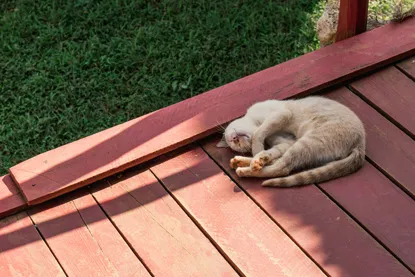 A ginger cat is curled up and relaxing on a garden deck.
Modern gardens with decking and concrete don’t make great cat toilets.
Creating the Perfect Outdoor Toilet
To encourage your cat to adopt an outdoor toileting routine, you need to create an environment that mimics their natural preferences.
Toilet Type and Material
The key to a successful outdoor toilet lies in providing suitable material for your cat to dig and bury their waste. Soft soil or fine play sand are ideal choices, as they are easy for your cat to manipulate. You can achieve this in a couple of ways:
- Outdoor Litter Tray: Place a standard litter tray in your chosen outdoor location and fill it with your selected digging material.
- Dedicated Pit: Alternatively, you can dig a small pit in your garden, roughly the size of a litter tray or larger, and fill it with soil or sand.
It’s crucial to ensure this outdoor facility is accessible year-round. If the area freezes over during winter, you will need to provide an alternative, accessible toilet to prevent your cat from reverting to unsuitable indoor locations. You can find more advice about training a cat to use the litter box which can provide foundational knowledge.
Strategic Location
For a cat, toileting is a vulnerable activity. Therefore, they need a location that offers privacy, safety, and a sense of security. Consider the following when choosing a spot:
- Proximity to the House: Position the outdoor toilet as close to your house as possible, ideally within their core territory.
- Edge of the Garden: Placing it at the edge of your garden, rather than in the center, often provides a greater sense of security.
- Natural Screening: Incorporate plants or other natural elements around the toileting site to offer visual cover and shield your cat from view.
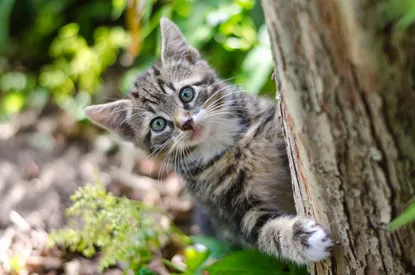 A tabby kitten peeks around a tree.
Your cat will prefer a private toilet obscured from view.
Optimal Timing
When introducing your cat to their new outdoor toilet, it’s most effective to do so during warmer, drier months. The appeal of an outdoor facility diminishes in cold, wet weather. To mitigate this, you can consider erecting a small shelter or windbreak around the outdoor toilet to provide some protection from the elements. For kittens, it’s also essential to help litter train a kitten indoors first to establish good habits.
Maintaining Indoor Toilet Options
Introducing an outdoor toilet is a gradual process, and it’s vital not to disrupt your cat’s established indoor toileting habits. Always ensure their indoor litter box remains clean and accessible. By providing a choice, your cat can transition to the outdoor option at their own pace, hopefully finding the new facility appealing over time. For those seeking advanced techniques, learning to teach cat to pee in toilet might be a future consideration, although mastering the outdoor toilet is a significant step. Remember, a content cat is often a result of understanding their natural behaviors and providing appropriate facilities, whether indoors or out. You can also learn how to get outdoor cat to use litter box if you have a cat that is already accustomed to being outside. This guide can help reinforce good habits. It’s also worth noting that some cats can be successfully cat trained to use the toilet.
By understanding and catering to your cat’s natural instincts, you can successfully encourage them to utilize an outdoor toilet, providing a convenient and enriching option for your feline friend.
