
Dealing with a horse that exhibits aggressive hind-end behavior, such as kicking, can be a dangerous situation for any handler. These horses can pose a significant risk, but with a consistent and understanding approach, their dangerous habits can be corrected. The key lies in understanding the horse’s perspective and responding with non-violence and clear communication.
Understanding Your Horse’s Perception
When a horse kicks out violently, it’s easy to perceive this behavior as disrespectful, dangerous, and unsafe. However, from the horse’s point of view, this is often a response to feeling threatened, unsafe, or cornered. If a horse’s only learned response to perceived threats is violence, then responding with more violence, such as punishment or excessive force, will not resolve the issue. For horses exhibiting extreme kicking behavior without warning, seeking assistance from a highly skilled trainer is strongly recommended. Retraining these horses requires specialized skills that emphasize non-violence alongside a judicious use of necessary force.
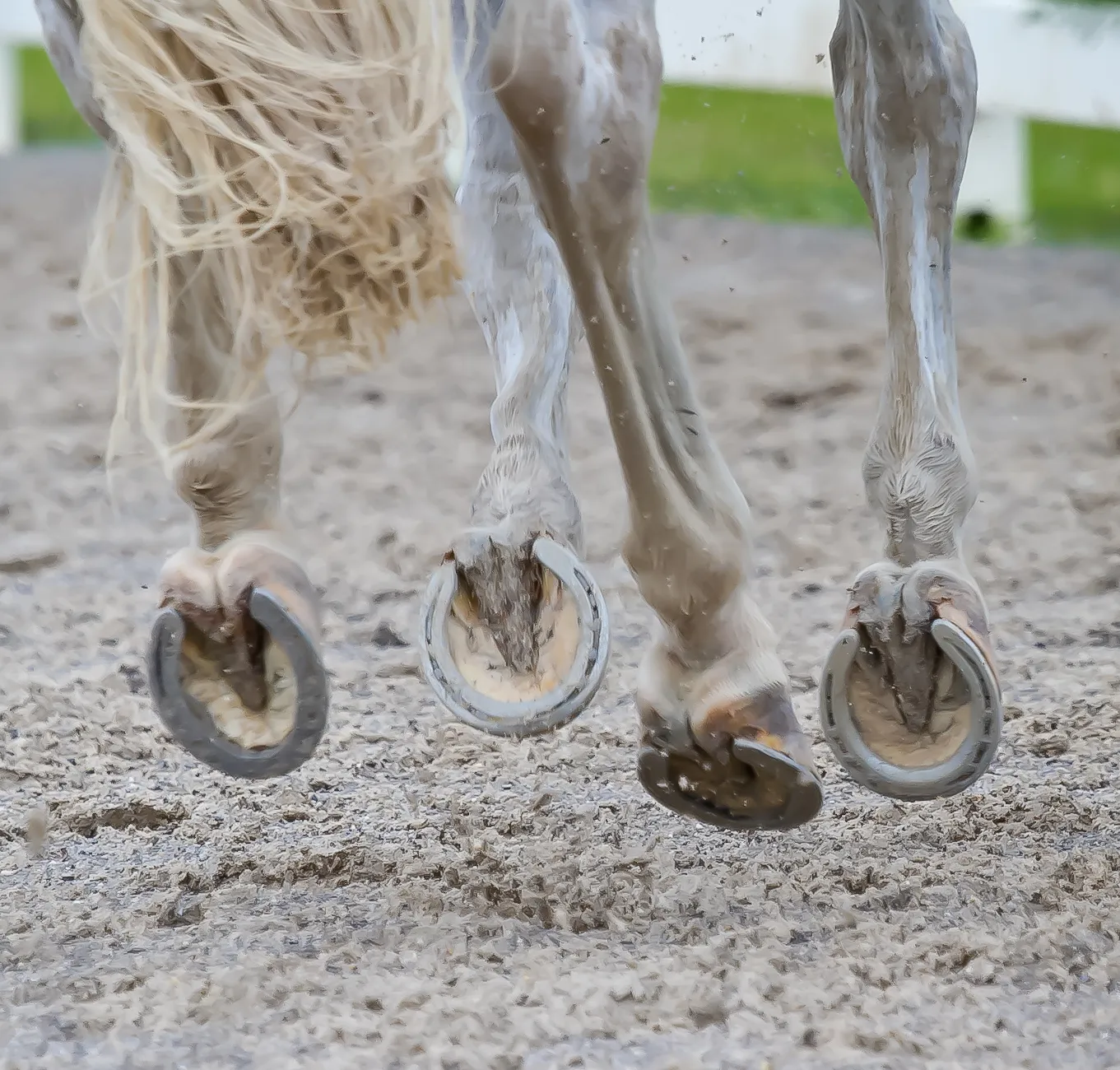 A horse kicking its hind legs.©flickr/carterse
Cultivating Emotional Composure
Approaching a horse known for kicking requires a high degree of self-awareness and emotional control. Before initiating any interaction, check in with yourself. Is your mind clear? Are you free from distracting thoughts? Are you feeling angry or fearful, or are you focused on the task at hand? It is crucial not to approach or handle a horse with a history of kicking if you are experiencing emotions like anger or fear.
Controlling the Feet Without Violence
The cornerstone of rehabilitating a horse that kicks is the ability to control its feet in a non-violent manner. The following exercise is designed to instill this understanding in your horse:
The objective is to teach your horse to stand quietly in front of you. This is achieved by using a dressage whip as a visual aid to create a barrier, guiding the horse to move sideways when it starts to shift or “dance.” This technique helps an anxious horse become more aware of its feet and grants you control over its movement.
Begin this exercise in an arena. The most critical element is your own conduct and how you respond to your horse’s actions. If you are uncertain about the timing or effectiveness of this exercise, it is advisable to hire a professional trainer.
What to Avoid:
Do not allow your horse the opportunity to look around, observe its surroundings, or react to anything startling. This can lead to the horse moving its feet independently. If your horse enters the arena exhibiting anxiety-driven movements, this is where the training truly begins. Your primary goal is to teach the horse to halt, thereby controlling its feet, without resorting to force.
Refrain from yanking on the lead rope, yelling, or striking the horse with the whip. The horse needs to stand still and focus its attention on you.
Recommended Approach:
Stand directly in front of your horse, using strong body language to block its head position.
Utilize your dressage whip as a visual deterrent. If the horse moves to the left, raise the whip vertically in your left hand, creating a visual barrier that the horse should not cross. If the horse attempts to move past the whip, you can gently tap its shoulder.
Ensure you provide ample space on either side of the horse, holding the whip approximately 3-4 feet away from its shoulder.
Should the horse move to the right, cross your whip under your arm and use it on the right side as a visual cue to stop.
Repeat this process until the horse pauses, even for a brief moment, to stand, process, and connect with its feet. Be prompt in lowering the whip and offering praise when the horse stands still. Continue this exercise repeatedly.
Important Caution:
Your horse may exhibit significant resistance. If it is accustomed to controlling the handler and moving freely, expect a strong reaction. This might include rearing or kicking out. This is a normal “temper tantrum” behavior when horses accustomed to getting their way are presented with new rules. It is analogous to a child crying in a store when told they cannot have cookies. This reaction is normal. However, if this type of behavior causes you fear, it is essential to engage a trainer experienced in managing such reactions without losing emotional control.
The “Eyes on Me” Game
If your horse turns its head away during this exercise to look at something else, gently poke it to redirect its head back towards you. This technique can be referred to as the “Jealousy Game” or “Eyes on Me.” Looking away often signifies avoidance behavior; therefore, insist that the horse maintains focus towards you.
Never Back Up
Under no circumstances during this exercise should you back up, thereby inviting the horse into your personal space. If the horse approaches too closely, tap it on the chest and encourage it to move away from you. Take a lunge step, use your hands in a dynamic manner, and ask the horse to create distance. When a horse pushes its shoulders or chest into your personal space, it should be considered impolite behavior. Do not permit it to enter your personal space, and never back away.
 A horse's hindquarters and tail.©flickr/netg15
Encouraging Submission
After establishing boundaries with the whip as a visual aid, you can shift your approach to a more friendly one. This is appropriate once the horse consistently halts in front of you politely, solely based on the visual cue of the whip. At this stage, the horse should exhibit signs of relaxation, such as licking and chewing. If these behaviors are present, it is time to foster submission.
To do this, kneel on one knee in front of your horse. This posture is less threatening and can help build rapport and trust. Offer your hand for the horse to sniff, but do not physically touch its nose. Allow the horse to initiate contact first. The key principle here is to reciprocate touch only when initiated by the horse. If, at this point, you touch the horse too much and it turns its head away, it indicates discomfort with your touch and suggests further work is needed to gain its trust. Conversely, if the horse sniffs your hand, you touch its nose, and it maintains the connection, you are progressing well.
Safely Picking Up the Feet
Do not attempt to pick up your horse’s feet until you can confidently perform the aforementioned exercises. This is because you are transitioning to direct physical contact. If the horse is not yet respectful enough to allow you to control its feet or engage with you, it is unlikely to permit physical touch.
However, if you have successfully completed the previous exercises and approach the task of picking up the feet with trepidation, consider the following exercise to help your horse become more comfortable with touch and yielding a hind foot:
Take a long lead rope and create a loop at the end. Place this loop around the horse’s pastern and apply gentle pressure, asking the horse to yield and give its hoof.
Immediately release the pressure on the rope the moment the horse yields its hoof. This should be treated as a game, and can even be practiced while the horse is in motion. It is also recommended to pair a verbal cue with the pressure of the rope. Most horses that are resistant to having their hind ends handled show improvement after a short period of this game.
Conclusion
When your horse exhibits problematic behavior, avoid falling into the victim mentality by thinking, “Oh no, it’s being bad!” Instead, take a moment to analyze the reason behind its violent response. As the responsible handler, respond to a violent horse with non-violence. Punishing a horse that kicks or bites offers no solution. Instead, find a centered state of mind within yourself and teach the horse to respond to you by controlling its feet. While it may present challenges initially, this method offers a simple and effective way to transform distrust into trust.
About the Author
Ashley Haffey is a dressage trainer and instructor at Lane Cove Dressage in Beaver Dams, NY. She specializes in retraining Off-the-Track Thoroughbreds (OTTBs) and starting young horses under saddle.
