
Just like us, our canine companions thrive when they have the freedom to stretch their legs without restrictions. Learning How To Train Your Dog To Walk Off Leash is a rewarding endeavor that can strengthen your bond and enhance their quality of life. However, it requires careful preparation and understanding of both your dog’s temperament and local regulations. This comprehensive guide will walk you through the essential steps, from mastering basic obedience to ensuring a safe and enjoyable off-leash experience for everyone involved.
Understanding Off-Leash Dog Training
Off-leash dog training involves teaching your dog to remain attentive and responsive to your commands even when they are not physically tethered. This skill is crucial for walks, hikes, camping trips, or visits to nature parks and other unfenced areas where off-leash activity is permitted. While it builds upon basic obedience, it’s a distinct discipline that focuses on reliable control in varied environments.
Ideal Dog Breeds for Off-Leash Training
Certain dog breeds, particularly those historically bred for hunting roles like Retrievers and Spaniels, often possess a natural eagerness to please and high trainability. This makes them excellent candidates for off-leash activities, as they are more likely to develop good recall skills quickly. If you’re considering taking your pup on wilderness adventures, camping, or engaging in therapy work, breeds such as Border Collies, Labrador Retrievers, Golden Retrievers, Australian Shepherds, and German Shorthaired Pointers are often well-suited.
Conversely, breeds with a very strong prey drive, including Siberian Huskies, Shiba Inus, Rhodesian Ridgebacks, or Coonhounds, may present greater challenges for off-leash training due to their natural instinct to chase. Similarly, dogs with aggressive tendencies might not be suitable candidates for off-leash environments where uncontrolled interactions could occur. While it’s not impossible to train these dogs, be prepared for a more intensive and potentially longer training process.
Is Your Dog Ready to Walk Off Leash?
Before embarking on off-leash training, it’s vital to assess your dog’s readiness. A thorough evaluation ensures both your dog’s safety and the success of the training. Ask yourself the following questions:
- Does your dog consistently respond to basic obedience commands? This forms the bedrock of off-leash control.
- Do they have a reliable recall? Your dog must come back to you every time you call, regardless of distractions.
- Do they exhibit good impulse control? Can they resist the urge to chase a squirrel or greet every passerby without permission? For example, learning how to stop my dog from jumping on the couch and how do i stop a dog from jumping on me are good indicators of their overall impulse control.
- Do they interact positively with strangers, other dogs, and children? Socialization is key to preventing unwanted incidents.
- Are they microchipped and wearing an ID tag? This is a crucial safety measure in case they get lost.
- Are their vaccinations and flea/tick prevention up to date? Health and safety are paramount.
- Are you familiar with your local leash laws? Always know the rules before going off-leash.
- Is your dog spayed/neutered? The strong canine mating instinct can cause intact dogs to run off if they detect a female in heat.
If you can confidently answer “YES!” to all these points, you and your dog are likely ready to begin the journey of off-leash training.
Potential Risks of Off-Leash Adventures
Even with thorough training, going off-leash carries inherent risks that responsible pet parents must acknowledge and prepare for. If your dog has a history of running off due to prey drive, incomplete obedience training, or even boredom, off-leash excursions necessitate a proactive emergency plan.
Allowing your dog to run off-leash significantly increases the possibility of them running away. A sudden noise, an unfamiliar scent, or an unexpected encounter can spook your dog, causing them to bolt. Without a physical tether, you rely solely on voice commands for recall or to stop them. Your dog could face various hazards, such as being hit by a car, engaging in conflicts with other dogs or wildlife, getting lost, or ingesting toxic substances.
Furthermore, a loose dog poses risks to people and other animals. They might get into a fight with another dog, inadvertently bite a person, or dash into the path of a cyclist, leading to an accident. It’s also important to remember that some individuals are afraid of dogs and may not appreciate an enthusiastic pup running towards them.
The Importance of Local Leash Laws
Understanding and respecting local leash laws is non-negotiable for any dog owner considering off-leash activities. Many states, cities, and towns have specific ordinances that may prohibit or restrict dogs from roaming off-leash. Some laws require a dog to be “under control,” which doesn’t always specify a leash but implies the pet parent must have immediate voice command authority. Certain locations, such as city parks, may mandate leashes no longer than six feet. Violators can face significant fines.
International travel with your dog also requires awareness of varying regulations. Some countries may forbid off-leash dogs entirely, while others might require both a leash and a muzzle in public spaces like public transport. Always research and confirm the leash laws in your area and any destination you plan to visit with your furry friend.
How to Train Your Dog to Walk Off Leash: Getting Started
1. Build a Foundation of Obedient Behavior
Before attempting to train your dog to walk off lead, they must be proficient in basic obedience commands. Mastering these behaviors is crucial for their safety, as it can prevent them from dangerous situations like encountering wild animals, consuming harmful items, or walking on thin ice. Key commands include:
- Sit: Your dog stops, sits, and looks at you attentively.
- Stay: Your dog remains in place until released, even amidst distractions.
- Down: Your dog lies down at your feet.
- Go: Your dog moves to a designated spot, such as their bed or crate.
- Heel: Your dog walks calmly beside you, matching your pace.
- Recall: Your dog immediately returns to you when called.
- Look: Your dog makes eye contact or focuses on an object you indicate.
- Drop It: Your dog releases an object from their mouth.
- Leave It: Your dog disengages from and walks away from an object or chase.
You can teach these commands using voice cues, hand signals, whistles, or even a clicker. Always reward your dog with treats or praise to reinforce the desired behavior. Incorporate a short 10-minute training session into your dog’s daily routine to keep their skills sharp. If you encounter difficulties, consider hiring a professional dog trainer or exploring online training resources. Do not begin off-leash training until your dog has truly mastered these foundational skills. Your role is to be a patient, calm, and assertive leader who can maintain control and intervene if unexpected situations arise.
2. Motivate with High-Value Treats
Treats are powerful motivators in dog training. Always carry a supply of high-value treats on your off-leash outings. If your dog is nearby and you need their attention, show them the treats in your hand. If they are further away, crinkling the bag can often capture their attention, signaling that a reward is available.
3. Practice with a Long Leash
Before fully removing the leash, transition to a long line or a retractable leash attached to your dog’s harness. This allows your pup some freedom to explore while you maintain a safety connection. As your dog roams, practice calling them back, asking them to heel, or getting them to look at you using your basic commands. Repeat this frequently during your walks, always having treats ready.
After several outings with the long leash, evaluate your dog’s responsiveness. If they consistently ignore your commands because they are too absorbed in exploring, more practice is needed before you can confidently go fully off-leash.
4. Test Off-Leash in a Safe, Enclosed Space
When your dog seems ready, practice off-leash behavior in a secure, fenced area like your backyard. Unclip the leash, remain confident, give frequent commands, and praise them enthusiastically when they obey. Repeat this exercise on subsequent days, gradually introducing distractions by inviting family members or friends. Focus on issuing commands and observe your dog’s reactions closely. If these sessions go well, your dog may be ready for real-world off-leash environments.
5. Master Emergency Commands
In addition to regular check-ins, practice emergency “Sit” and “Down” commands. Practice these when your dog is both nearby and at a distance. For instance, if you see a horse and rider approaching on a trail, recall your dog or command them to “Sit” until the situation is clear. Importantly, never chase after your dog if they run off; this can make them think you want to play, encouraging them to run further away.
What to Do if Your Dog Runs Away
Despite all training efforts, there’s no absolute guarantee that an off-leash dog won’t run off. If this happens, follow these steps:
- Stay Calm: As the leader, maintain a calm and assertive demeanor. Call your dog in a firm, even tone, avoiding any sounds of anger or fear.
- Don’t Chase: Chasing can backfire, making your dog think it’s a game and encouraging them to run faster. You’ll rarely catch them by running. Rely on your training to get them to come back to you.
- Use Treats: Show your dog treats from your pocket or crinkle the bag to grab their attention.
- Turn Away: Walk in the opposite direction while calling your dog’s name. Their curiosity might prompt them to follow you.
How a Smart Dog Tracker Can Prevent an Emergency
Even the most impeccably trained dogs can surprise us. One moment they’re by your side, the next they’ve picked up an intriguing scent, been startled by a sudden noise, or spotted a fast-moving squirrel – and they’re gone. This is precisely where a smart dog tracker with real-time GPS tracking can transform a heart-stopping moment into a simple “Oops, there they are!”
 Brown dog wearing a Tractive GPS dog tracker collar, with an app screenshot showing live tracking.
When strapped securely to your dog’s collar, a reliable GPS device like Tractive provides invaluable peace of mind:
- Real-Time Location Tracking: With LIVE tracking, you can see your dog’s precise position updating every few seconds directly on your phone. If they decide to take an unexpected detour, you’ll know their every move. Unlike an AirTag, a dedicated GPS tracker isn’t limited by network range or reliance on compatible devices.
- Escape Alerts with Virtual Fences: From your app, you can establish “safe zones” around your yard or specific areas in a park. If your dog crosses this invisible boundary, you’ll receive an instant escape alert, giving you a crucial head start to recall them.
 Smartphone screenshot showing a Tractive app notification for a dog entering a safe zone.
 Smartphone screenshot showing a Tractive app notification for a dog entering a no-go zone.
- Understand Their Habits: Review their Heat Map and Location History, where Tractive logs their past adventures. In an emergency, knowing their favorite spots can guide your search efforts.
- Durable and Waterproof Design: Tractive trackers are built to withstand the elements, being 100% waterproof and durable. They are ready for muddy puddles, unexpected downpours, and whatever else your adventurous explorer encounters.
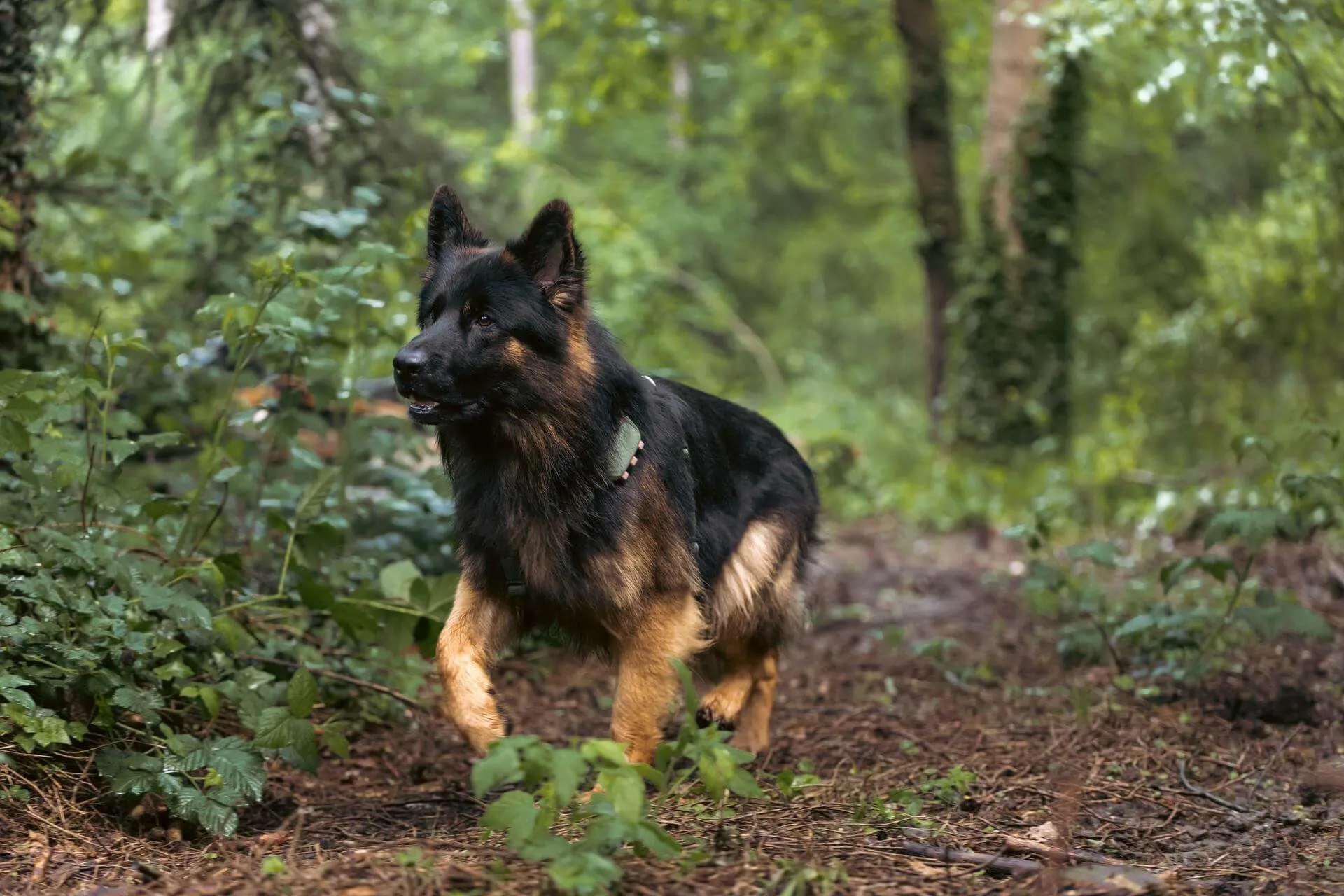 A black dog running through a sun-dappled forest, wearing a collar.
With dedication, patience, consistent application of basic commands, and a generous supply of treats, you’ll be well on your way to confidently letting your dog enjoy off-leash freedom. This process builds a lifelong bond of trust and allows you both to enjoy outdoor adventures more fully. Remember to always verify local leash laws, start with controlled environments using a long line, and gradually introduce your dog to quiet public spaces. By following these steps, you’ll be well-prepared to master how to train your dog to walk off leash.
