
Running with your dog can be an incredibly rewarding experience, fostering a deeper bond and contributing to both your physical well-being. A canine running companion provides motivation and a shared outlet for energy. However, before you embark on your first trail run or jog around the block, it’s crucial to ensure your dog is adequately prepared for this activity. This guide will walk you through the essential steps to train your dog to run comfortably and safely by your side, focusing on building a strong foundation of obedience and conditioning.
It’s important to recognize that not all dogs are naturally suited for long-distance running or high-intensity activities. Several factors, including breed predisposition, age, and individual health, play a significant role. Understanding these prerequisites is the first step in creating a successful running partnership.
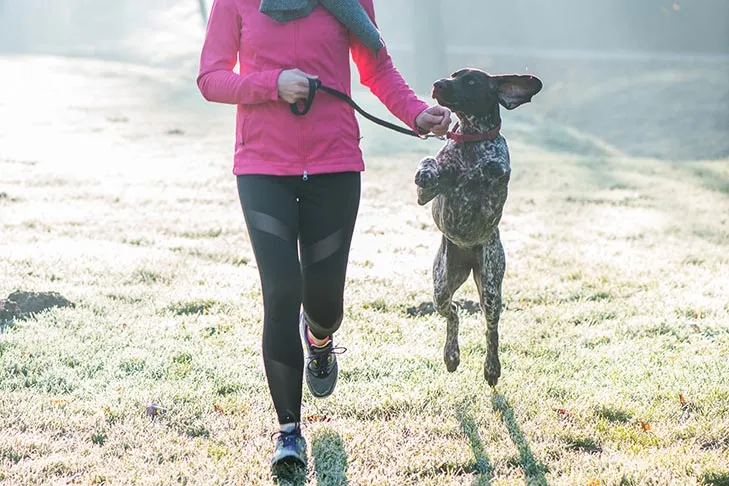 A woman jogging with a German Shorthaired Pointer in the early morning.
Assessing Your Dog’s Suitability for Running
Before you even think about lacing up your running shoes, a thorough assessment of your dog’s suitability for running is paramount. This involves considering their physical capabilities, age, and overall health.
The Right Breed and Age for Running
Certain breeds are genetically predisposed to endurance activities, possessing the physical structure and stamina for running. Breeds like Greyhounds, Weimaraners, and Australian Shepherds often excel in this area. Conversely, brachycephalic (short-nosed) breeds, such as Pugs and Bulldogs, can struggle with respiratory issues and are generally not recommended for strenuous running.
Age is another critical factor. Puppies are still developing, and their bones and joints are growing. High-impact activities like running can lead to long-term skeletal damage. For most breeds, it’s advisable to wait until they are at least 18 months old before introducing them to regular running. Even then, start slowly and gradually increase the duration and intensity. Always consult your veterinarian for breed-specific advice and to confirm your dog is physically ready.
Temperament and Health Check
Beyond breed and age, an individual dog’s temperament and health are crucial. Some dogs are naturally more energetic and enthusiastic about outdoor activities, while others may be more hesitant. Observe your dog’s general behavior and their response to walks and other physical exertions.
A comprehensive veterinary check-up is non-negotiable. Your veterinarian can assess your dog’s cardiovascular health, joint condition, and overall fitness level, ensuring there are no underlying issues that could be exacerbated by running. This proactive step is essential for preventing injuries and ensuring your dog’s well-being.
Building the Foundation: Loose-Leash Walking Mastery
The journey to running with your dog begins with mastering basic obedience, particularly loose-leash walking. A dog that pulls aggressively on the leash while walking can become a significant safety hazard at faster speeds. The goal is for your dog to walk calmly by your side with a slack leash, which will translate directly to them running in the desired position.
Teaching Loose-Leash Walking
Start by reinforcing your dog for walking beside you without pulling. The leash should hang in a relaxed “J” shape. Utilize positive reinforcement techniques such as treats, praise, and toys to reward your dog whenever they are walking nicely. Be consistent with your rewards, ensuring they are delivered when your dog is in the correct position. If your dog lunges ahead or pulls, stop walking until the tension on the leash releases, then resume. This teaches them that pulling stops progress.
Establishing a Preferred Side
It’s essential to train your dog to stay on one specific side while walking. This prevents them from weaving back and forth, which can be dangerous and lead to tripping. Whether you choose the left or right side is a matter of personal preference, but be consistent. When rewarding your dog, always present the treat on the side you want them to stay. For example, if you’re training them to be on your left, deliver the treat near your left leg. Once they’ve mastered one side, you can gradually introduce training for the other side if desired. Consider using a hands-free dog leash to maintain better control and keep your hands free for better balance while running.
This foundational skill is critical and will pave the way for more advanced training, such as teaching your dog to lay down on command, which can be useful for brief rests during longer outings.
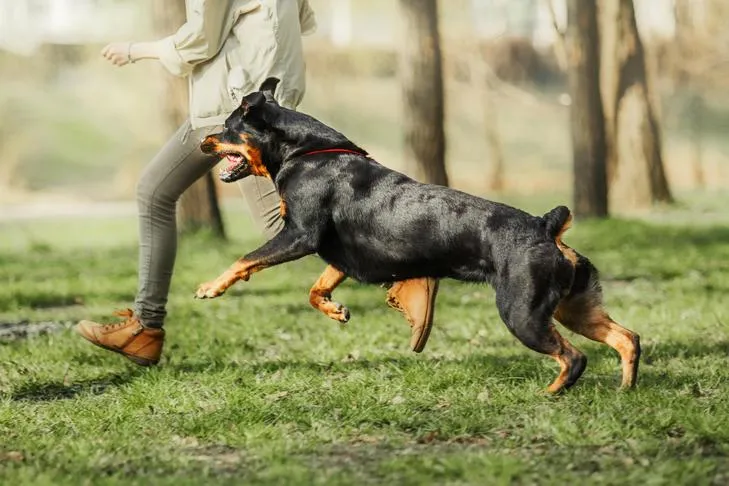 A Rottweiler running in a park and playing with its owner.
Introducing Speed Cues for Running
Once your dog consistently walks politely by your side with a loose leash, you can begin to introduce cues for increasing speed. Just as you might have a cue for “sit” or “stay,” having a specific verbal cue for running will help your dog understand your intentions.
Teaching the “Go Faster” Cue
Choose a clear and distinct cue, such as “Let’s run,” “Go,” or “Faster.” During your walks, gradually incorporate short bursts of jogging or running. Immediately before you pick up your pace, give your chosen cue. When your dog naturally matches your increased speed, offer immediate praise and a reward. This positive association will help them understand that the cue means it’s time to run.
Teaching the “Slow Down” Cue
Equally important is teaching your dog a cue to slow down, such as “Whoa” or “Easy.” This is crucial for maintaining control and preventing your dog from overexerting themselves. Practice this by slowing down your pace during your walks and giving the cue simultaneously. Reward your dog when they respond by slowing their pace. This is a vital part of teaching a dog to walk, ensuring they can control their speed.
Building Stamina and Endurance Gradually
With your dog understanding speed cues and maintaining position, the next step is to build their stamina and endurance for longer runs. This process should be gradual and progressive, mirroring how human athletes train.
Incremental Increase in Running Time
Start by integrating short running intervals into your existing walks. For example, on a 30-minute walk, you might run for 1-2 minutes and then walk for 5 minutes, repeating this pattern. Over subsequent walks and weeks, gradually increase the duration of the running segments while decreasing the walking time. Pay close attention to your dog’s signals and avoid pushing them too hard too soon. This methodical approach helps their cardiovascular system and muscles adapt without risking injury.
Monitoring for Signs of Fatigue
It’s crucial to be vigilant for signs that your dog is getting tired. Excessive panting, lagging behind, or a noticeable decrease in enthusiasm can indicate fatigue. Remember that dogs often want to please their owners and may continue running even when they are tired. Be proactive in recognizing these cues and shortening your runs if necessary. Building their endurance should be a collaborative process, ensuring it’s enjoyable for both of you.
Essential Tips for a Safe and Enjoyable Run
Once your dog is conditioned and comfortable running alongside you, adhering to safety guidelines will ensure every run is a positive experience.
Pre-Run Warm-up and Post-Run Cool-down
Just as with human athletes, a warm-up and cool-down period are vital for dogs. Before starting your run, engage in a 5-10 minute brisk walk to gradually increase your dog’s heart rate and warm up their muscles. After your run, a similar cool-down walk helps to gradually lower their heart rate and prevent muscle soreness.
Weather Awareness and Hydration
Dogs are more susceptible to heatstroke and cold-related issues than humans. Always check the weather conditions before heading out. If temperatures are extreme, opt for indoor activities or shorter runs during cooler parts of the day. Carry water with you on longer runs and offer it to your dog at regular intervals, especially in warm weather.
Frequent Breaks and Environmental Awareness
Incorporate short breaks during your runs, allowing your dog to rehydrate, relieve themselves, and explore their surroundings. This also prevents overexertion. Be mindful of the terrain and potential hazards, such as sharp objects, uneven surfaces, or toxic plants.
Leash Control and Recall Reliability
Only allow your dog to run off-leash in designated, safe areas where it is legal and appropriate. Critically, your dog must have a highly reliable recall command, meaning they will come back to you immediately when called, even with distractions. If your dog’s recall isn’t perfect, it’s best to keep them on a leash. Teaching your dog to not jump on furniture can be a good indicator of their ability to follow commands, which is transferable to leash work.
Maintaining Fitness During Extreme Weather
There will be times when outdoor running isn’t feasible due to extreme weather conditions. Fortunately, you can maintain your dog’s physical conditioning with indoor exercises, ensuring they remain fit and ready for your runs when the weather improves.
Indoor Exercise Options
For smaller dogs or limited spaces, games of fetch down a hallway or up and down carpeted stairs can provide a good cardiovascular workout. You can also create a simple obstacle course using household items like hula hoops or cardboard boxes for them to navigate. Many training facilities offer indoor agility classes that involve running, jumping, and weaving, providing an excellent outlet for energy.
Treadmill Training for Dogs
A treadmill can be an effective tool for indoor exercise, especially for larger breeds. If you have a treadmill, you can gradually introduce your dog to it. Start by placing them on the stationary belt with treats and praise, then progress to very short, slow speeds. Never leave your dog unsupervised on a treadmill, and always ensure the treadmill is long enough for your dog to comfortably walk or run without their back legs hanging off. Research proper treadmill training techniques or consult a professional trainer for guidance on how to do this safely and effectively. This can be a great way to help your dog to lay down and rest after a good workout.
By following these comprehensive steps, you can train your dog to be an excellent running companion, enhancing your shared adventures and promoting a healthy, active lifestyle for both of you. Remember that consistency, patience, and positive reinforcement are key to success in any dog training endeavor.
