
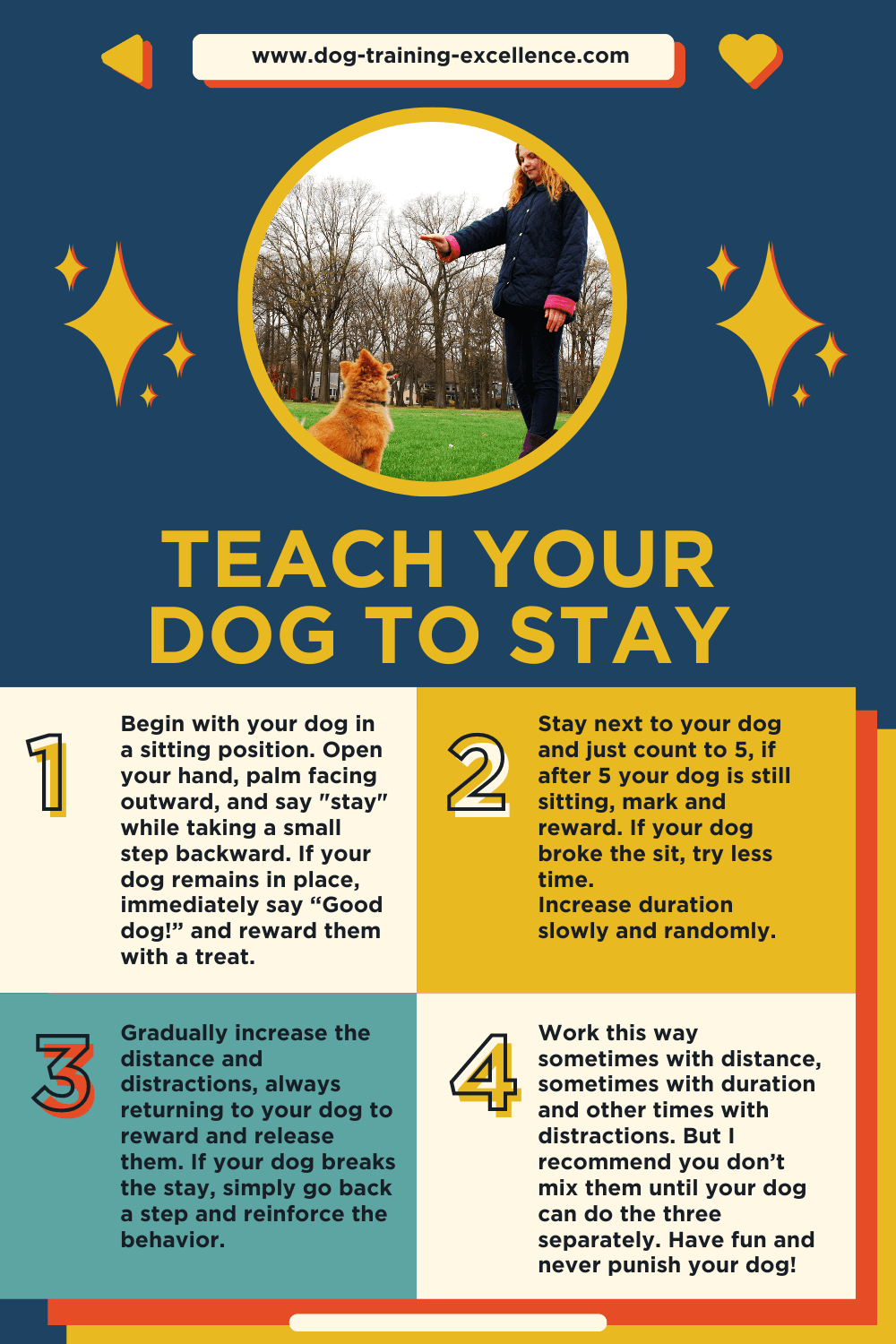
Teaching your dog to “stay” is a fundamental aspect of obedience training, crucial for ensuring good manners, household control, and even success in dog sports. While many owners find this command challenging, a systematic approach can lead to a reliable “stay” in any situation. This guide will walk you through the essential steps, from understanding the release cue to gradually adding duration, distance, and distractions.
A solid “stay” is more than just a trick; it’s a behavior that makes everyday life with your dog easier. Whether it’s for grooming, answering the door, or simply managing your dog’s impulses, a well-executed “stay” builds a stronger bond and understanding between you and your canine companion. This training method can be adapted for various commands, reinforcing the core principles of positive reinforcement.
Understanding the Release Cue
The “stay” command is distinct from a simple “wait.” “Stay” requires your dog to maintain a specific position until you explicitly release them. This release cue is a word that signals the end of the behavior, allowing your dog to move freely. Consistency is key when choosing and using a release word; common choices include “okay,” “free,” or “release.” It’s important to use your chosen word exclusively for releasing your dog from a behavior to avoid confusion.
Building the Foundation: Teaching the Release
Begin by teaching your dog the meaning of the release word. This foundational step is crucial before introducing the “stay” cue itself.
- Initiate a Position: Ask your dog to sit or lie down.
- Introduce the Release: After approximately one second, calmly offer your dog a treat and immediately say your chosen release word.
- Encourage Movement: Prompt your dog to move by walking away, patting your legs, or clapping your hands.
- Positive Reinforcement: Praise your dog enthusiastically once they move.
- Repetition: Repeat these steps until your dog reliably understands that the release word signifies they are free to move.
Gradually Adding Duration
Once your dog understands the release cue, you can begin incorporating the “stay” command and building duration. This is the first of the three critical Ds of dog training: duration, distance, and distraction.
- Cue the Position: Ask your dog to sit or lie down.
- Issue the “Stay” Command: As soon as they assume the position, present a hand signal (like a stop sign) and clearly say “stay.”
- Short Wait: Wait for one or two seconds, then calmly reward your dog with a treat.
- Release and Praise: Use your release word and praise your dog for moving.
- Increase Time: Gradually increase the duration of the stay by a few seconds each time before offering a treat and releasing.
- Multiple Treats: Once your dog can hold a stay for 10 seconds or more, begin offering intermittent treats during the stay. Remind them to stay with your cue and hand signal.
It’s vital to progress slowly, setting your dog up for success. Remember, the goal is to make the act of staying rewarding. Avoid rewarding the release itself, as this can make moving more appealing than staying put. If you use a clicker, click during the stay just before rewarding, but refrain from clicking when your dog is released. Repeating the stay cue and hand signal after clicking can help prevent your dog from associating the click with the end of the behavior. For further insights into positive reinforcement techniques, explore no nonsense dog training.
Troubleshooting Common “Stay” Issues
During training, be mindful of your body language. Any movement from you can inadvertently encourage your dog to break their stay. If your dog does break the stay before being released, avoid punishment. Instead, calmly repeat the cue and hand signal, and shorten the duration to ensure success in the next attempt. This often means you may have asked for too much, too soon.
Incorporating Distractions and Distance
Only introduce distractions and distance once your dog can reliably hold a stay for at least 30 seconds. Because distance naturally includes an element of distraction, it’s best to introduce distance last.
When adding distractions, lower your expectations for duration. Even if your dog can stay for extended periods, start with very short stays (a few seconds) when a distraction is present. Begin with mild distractions, like clapping your hands, and gradually increase the intensity, eventually progressing to throwing a ball. Once your dog can maintain a stay through various distractions, you can begin rebuilding duration.
To introduce distance:
- Initial Step Back: Ask your dog to stay, then take a single step back.
- Return and Reward: Immediately return to your dog and give them a treat.
- Release: Use your release word.
- Increase Steps: Repeat, gradually increasing the number of steps you take away before returning to reward and release.
- Advance: Continue increasing the distance until you can walk to the edge of the room.
Always return to your dog to deliver the reward and release them. Releasing from a distance can prevent your dog from associating a certain distance with being released, and you won’t be able to reward them for holding the stay. When your dog can confidently handle duration, distance, and distractions individually, you can begin combining them, even to the point of leaving the room or going outdoors. With patience and consistent practice, your dog will develop a rock-solid stay. For more advanced training, consider learning how to off leash train your dog.
