
Bringing a service dog into your life is a profound decision, one that offers the potential for incredible companionship and invaluable assistance. But the journey from a beloved pet to a fully-fledged service dog is a dedicated process, requiring patience, consistency, and a deep understanding of canine behavior. This guide is crafted to illuminate the path, offering insights and actionable steps for aspiring handlers and their canine partners. We’ll delve into the core principles of service dog training, exploring the essential qualities of a successful candidate and the meticulous steps involved in shaping them into capable assistance animals. Whether you’re just starting to consider this rewarding endeavor or are further along in the process, our aim is to equip you with the knowledge and confidence to navigate this transformative journey.
Understanding the Role of a Service Dog
Before embarking on the training journey, it’s crucial to grasp what distinguishes a service dog from a therapy dog or an emotional support animal. A service dog is specifically trained to perform tasks that directly mitigate a person’s disability. These tasks can be highly varied, tailored to the individual’s needs. For instance, a service dog might be trained to detect a drop in blood sugar for someone with diabetes, retrieve dropped items for an individual with mobility impairments, provide deep pressure therapy for someone with anxiety, or alert a deaf individual to sounds. Unlike therapy dogs, which provide comfort and affection to multiple people in settings like hospitals or nursing homes, service dogs work with a single handler and have public access rights under laws like the Americans with Disabilities Act (ADA) in the United States. This specialized training and role are foundational to understanding the commitment involved.
Essential Qualities of a Service Dog Candidate
Not every dog is suited for the rigorous demands of service work. While breed can play a role, temperament is paramount. Ideal service dog candidates often exhibit a calm, confident, and adaptable disposition. They should be naturally eager to please, possess a good work ethic, and display a high degree of trainability. Furthermore, a service dog must be resilient, able to handle diverse environments, loud noises, unfamiliar people, and other animals without becoming overly stressed or reactive. Early socialization is key; a puppy exposed to a wide variety of positive experiences from a young age is more likely to develop into a well-adjusted and confident adult dog. A dog that is easily startled, overly anxious, or prone to aggression is generally not a good candidate for service work, as these traits can interfere with their ability to perform tasks and pose potential risks in public settings.
The Foundation: Basic Obedience and Socialization
The bedrock of any successful service dog training program is a solid foundation in basic obedience and comprehensive socialization. This phase is critical for all dogs, but especially for those destined for service work. Training should begin early, focusing on establishing clear communication and a strong bond between handler and dog. Commands such as “sit,” “stay,” “come,” “down,” and “leave it” must be mastered in a variety of environments and with increasing distractions. Positive reinforcement methods, such as using treats, praise, and play, are highly effective and build trust.
Socialization during this period is not just about meeting other dogs; it’s about exposure to a wide array of sights, sounds, smells, and experiences. This includes navigating crowded places, experiencing different floor surfaces, encountering various modes of transportation, and interacting calmly with people of all ages and appearances. The goal is to ensure the dog remains comfortable and focused, regardless of the external stimuli. This early work lays the groundwork for the more advanced task-specific training to come, ensuring the dog can remain a reliable partner in any situation. You can find great resources for dog training killeen tx that emphasize these foundational skills.
Task-Specific Training: The Core of Service Work
Once a dog has a strong grasp of basic obedience and is well-socialized, the focus shifts to training the specific tasks required to mitigate the handler’s disability. This is where the individualized nature of service dogs truly shines.
Identifying Necessary Tasks
The first step is to work with a medical professional to identify the specific tasks the dog will need to perform. This requires a clear understanding of the handler’s disability and how a dog can assist. For example:
- Mobility Assistance: Tasks might include fetching dropped objects, opening and closing doors, providing counterbalance, or retrieving medication.
- Medical Alert: This involves training the dog to recognize physiological changes associated with medical conditions like epilepsy (seizure alert), diabetes (blood sugar alert), or a pending allergic reaction. This often requires specialized training to detect subtle cues.
- Psychiatric Support: Tasks can include deep pressure therapy, interrupting self-harming behaviors, guiding the handler through panic attacks, or acting as a buffer in crowds.
- Hearing Assistance: Alerting the handler to important sounds such as doorbells, smoke alarms, or a dropped item.
Implementing Task Training
Task training is a gradual process that builds upon the dog’s existing foundation. It often involves:
- Shaping: Rewarding successive approximations of the desired behavior. For instance, to teach a dog to retrieve an item, you might start by rewarding them for sniffing it, then for touching it, then for picking it up, and finally for bringing it to you.
- Luring: Using a treat or toy to guide the dog into the desired position or action.
- Targeting: Teaching the dog to touch a specific object or body part with another (e.g., touching a hand with their nose).
- Generalization: Practicing the task in various locations and under different conditions to ensure the dog can perform it reliably anywhere.
This phase demands immense patience and creativity from the handler. It’s essential to break down complex tasks into smaller, manageable steps and celebrate each small success.
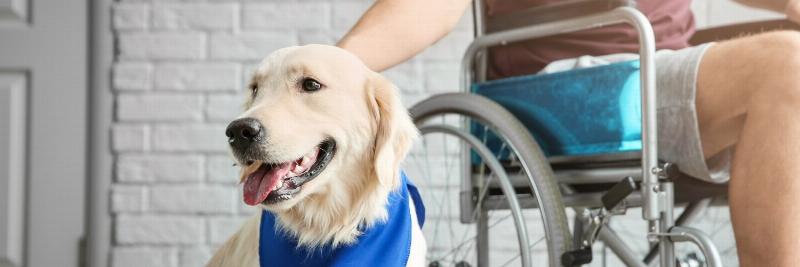 A patient handler teaching a service dog to retrieve a dropped medication bottle in a home setting.
Public Access Training: Navigating the World
A service dog must be able to accompany its handler anywhere the public is allowed. This requires extensive public access training, which goes far beyond simply being well-behaved in a store. The dog must remain calm, focused, and unobtrusive in all environments, from quiet libraries to bustling airports.
Key aspects of public access training include:
- Controlled Behavior: The dog should not bark excessively, jump on people, sniff indiscriminately, or solicit attention from others.
- Environmental Awareness: The dog must be aware of its surroundings and the handler’s needs, such as navigating obstacles, avoiding crowds, or staying close to the handler.
- Task Performance in Public: The dog must be able to perform its trained tasks reliably, even with the distractions of a public setting.
- Hygiene: The dog must be impeccably clean and house-trained, with no accidents in public places.
Practicing in a variety of public settings—grocery stores, restaurants, public transportation, parks, and even medical facilities—is crucial. The goal is for the dog to become a seamless extension of the handler, providing assistance without drawing undue attention or causing disruption. For those seeking expert guidance, resources for service dog training jacksonville fl can offer tailored programs for public access.
Advanced Skills and Generalization
As the dog progresses, it’s vital to generalize their skills. This means practicing obedience and task work in increasingly challenging environments and with more significant distractions. A dog that can sit politely in a quiet park might struggle in a noisy shopping mall. Therefore, handlers must gradually introduce their dogs to a wide range of stimuli. This might include:
- Noisy Environments: Sirens, construction sounds, crowds.
- Busy Places: Shopping malls, airports, public transit.
- Unfamiliar Scenarios: Sporting events, concerts, busy restaurants.
- Interactions with People and Animals: Ensuring the dog remains focused on their handler and task, not on passing strangers or other dogs.
Advanced skills might also include specific “civility” cues, such as learning to disengage from distractions or to settle quietly under a table for extended periods. The handler must also be adept at reading their dog’s body language to recognize signs of stress or fatigue and know when to take a break or leave a situation. This continuous learning and refinement are what make a service dog truly reliable. Considering washington state service dog training can provide access to programs that excel in this advanced generalization phase.
Handler Training and Partnership
The success of a service dog team hinges not just on the dog’s training but equally on the handler’s skills and understanding. The handler must learn to effectively communicate commands, read their dog’s cues, manage the dog in public, and maintain the dog’s training throughout its working life.
- Communication: Clear and consistent verbal and non-verbal cues are essential for a strong working relationship.
- Observation: Handlers must be attuned to their dog’s physical and emotional state, recognizing signs of stress, fatigue, or the need for a potty break.
- Management: This includes properly fitting the dog’s harness or vest, ensuring the dog has opportunities for appropriate exercise and downtime, and advocating for their rights in public.
- Continued Training: Service dogs require ongoing practice to maintain their skills and adapt to changes in the handler’s needs or environment.
The partnership between handler and service dog is a unique and deeply rewarding one, built on mutual trust, respect, and a shared commitment to navigating life’s challenges together. If you’re looking for specialized assistance, programs like dog training westminster md can offer support for handlers throughout this process.
Legal Rights and Responsibilities
Understanding the legal framework surrounding service dogs is crucial for handlers. In many countries, specific laws grant service dogs access to public places with their handlers. In the United States, the ADA defines a service animal as a dog individually trained to do work or perform tasks for the benefit of an individual with a disability. Businesses are generally not permitted to ask about the nature of the disability but can inquire if the dog is required because of a disability and what task the dog is trained to perform.
It is the handler’s responsibility to ensure their dog is well-behaved, under control at all times, and poses no direct threat to the health or safety of others. A poorly behaved or untrained dog can jeopardize access rights for all service dog teams. Maintaining a service dog’s training and public manners is an ongoing commitment. Similarly, if you’re in Arizona, exploring dog training goodyear az can provide local insights into handler responsibilities and rights.
Conclusion: A Rewarding Journey
Training a dog to become a service animal is a significant undertaking, demanding dedication, consistency, and a profound understanding of canine behavior and individual needs. It is a journey that fosters an unparalleled bond between human and animal, culminating in a partnership that enhances independence, provides critical assistance, and enriches lives immeasurably. While the path requires effort, the rewards of having a well-trained service dog by your side—offering unwavering support and performing vital tasks—are truly transformative. The commitment to this process is a testament to the incredible capabilities of dogs and the enduring human-animal connection.
