
One of the most rewarding aspects of dog ownership is enjoying serene walks together. However, this joy can quickly diminish when your canine companion transforms into a miniature sled dog, pulling you relentlessly down the street. If your daily strolls feel less like a peaceful outing and more like an unpredictable tug-of-war, it’s time to equip your dog with essential loose leash walking skills. Teaching your dog not to pull on the leash is not only possible but can transform your relationship and make every walk a pleasure. Many owners find themselves frustrated by this common behavior, but with patience and the right positive reinforcement techniques, every dog can become a delightful walking partner. This guide will provide you with all the comprehensive steps and insights needed to achieve pleasant, pull-free walks, ensuring you understand how to stop a dog from pulling while walking.
This article aims to be a definitive resource, diving deep into the psychology behind leash pulling, effective positive training methods, and practical tips to troubleshoot common issues. We believe that walks should be an enjoyable experience for both you and your furry friend, fostering a stronger bond and healthier lifestyle. Forget the outdated, punitive methods; we advocate for positive training only, focusing on what you want your dog to do, rather than punishing what you don’t. By understanding your dog’s natural instincts and learning capabilities, you can build a foundation of trust and clear communication, leading to a lifetime of harmonious adventures together.
Why Does Your Dog Pull on the Leash? Unpacking Common Misconceptions
Despite popular belief, your dog pulling on the leash has nothing to do with dominance, an attempt to control you, or them simply “being bad.” These are harmful misconceptions that often lead to impatience and punitive training methods. In reality, the reasons behind leash pulling are far simpler and rooted in a dog’s natural behaviors and instincts. Understanding these underlying causes is the first step towards effectively addressing the behavior.
There are three primary reasons why dogs tend to pull on the leash:
Not Enough Exercise: A significant number of dogs do not receive sufficient physical exercise for their breed and energy levels. For many, their daily walk is their only opportunity to burn off pent-up energy. When a dog has a surplus of energy, it’s unrealistic to expect them to calmly walk beside you. To set your dog up for success, ensure they are adequately exercised before attempting loose leash training. This could involve off-leash play, chasing a ball, or even doggy daycare. Meeting your dog’s exercise needs is a fundamental part of responsible dog ownership.
Humans are Slow: Dogs, by nature, generally walk at a faster pace than humans. To them, we are the slow-moving turtles! Imagine being forced to walk at a snail’s pace when your natural gait is much quicker; it requires significant effort to slow down. Recognizing that slowing their natural pace is challenging for your dog can foster empathy and patience during the training process. While it’s unnatural for them, dogs are absolutely capable of learning to match your speed.
Outside Smells are Irresistible: The world outside is a symphony of scents for dogs. Their olfactory sense is incredibly powerful, with up to 50 times more scent receptors and 40 times more brain space dedicated to processing smells than humans. What looks like a simple patch of grass to you is a complex, rich tapestry of information for your dog’s nose. These environmental stimuli are incredibly distracting during the “job” of polite walking.
When a dog pulls towards an intriguing smell, and is then allowed to sniff it, this act inadvertently rewards the pulling behavior. For months or even years, your dog may have learned that pulling leads to the reward of exploring fascinating scents. Changing this established behavior requires time, consistency, and new, equally compelling rewards to teach them that polite walking, not pulling, leads to good things.
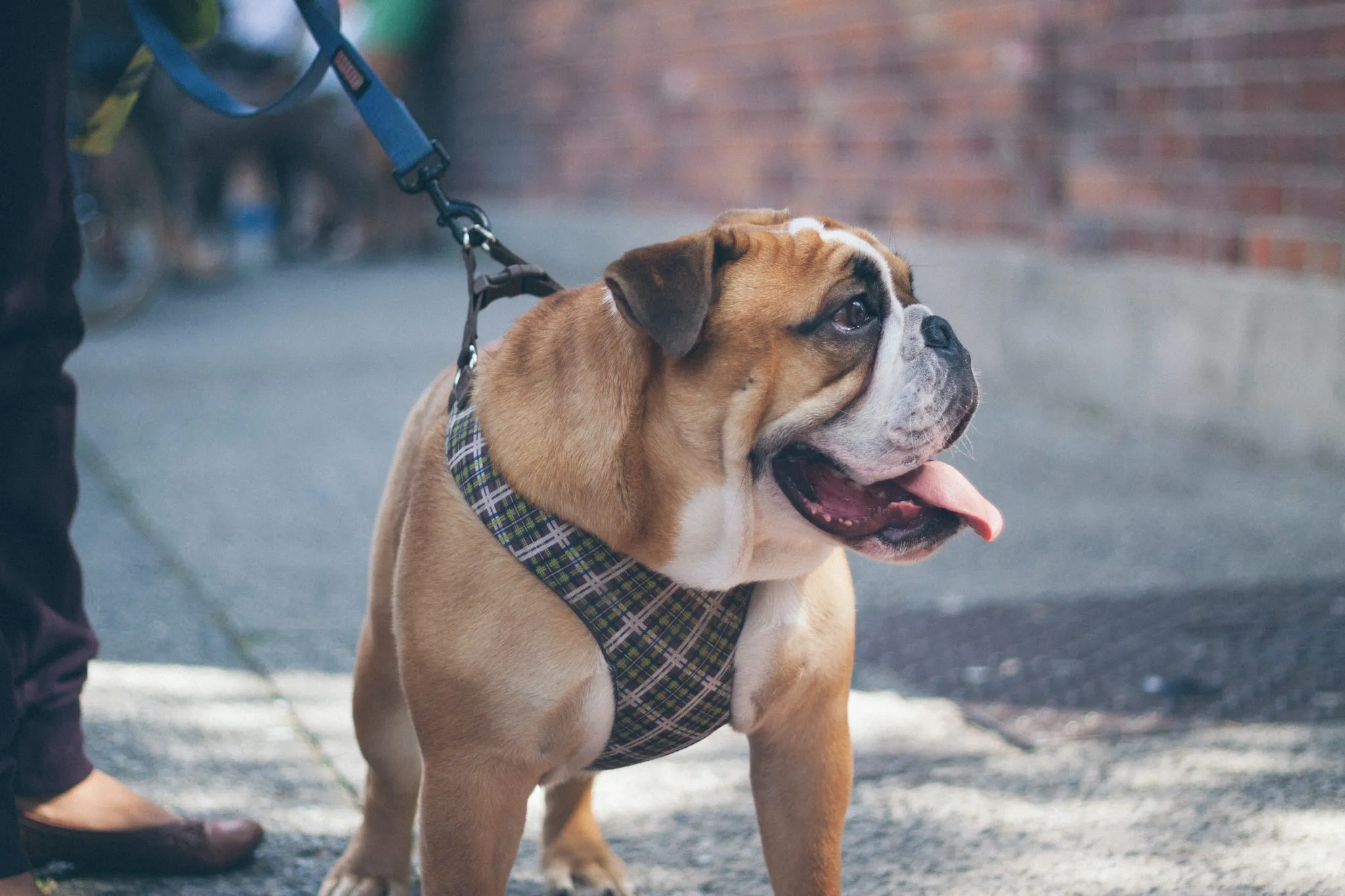
 A bulldog looking curiously ahead while on a leash, illustrating a dog's natural instinct to explore their surroundings outdoors
Understanding How Dogs Learn: The Power of Positive Reinforcement
Effective dog training hinges on understanding how dogs learn. Broadly, there are two primary methods: rewarding desired behaviors and punishing undesired ones. As positive reinforcement trainers, our philosophy centers on teaching dogs what we want them to do, rather than punishing them for what they shouldn’t do. Imagine trying to learn a new skill if your teacher only reprimanded you for mistakes without ever showing you the correct way; it would be incredibly stressful and inefficient. Positive training fosters a strong bond built on trust and clear communication, making the learning process enjoyable for both dog and owner.
Punishment-based techniques often focus on suppressing behaviors through fear or discomfort, which can lead to anxiety, aggression, and a damaged relationship with your dog. In contrast, positive reinforcement emphasizes creating positive associations with desired actions. When a dog performs a behavior you like, you reward them (e.g., with treats, praise, or play). This increases the likelihood that they will repeat that behavior in the future.
To successfully teach your dog not to pull, it’s crucial to begin training in an environment where they can succeed and be frequently rewarded. For many dogs, this means starting indoors where distractions are minimal. Think about it: if you’re asked to recite the alphabet, you could easily do it silently to yourself. It’s a bit harder to tell it to a spouse, and nearly impossible to sing it on a stage in front of thousands of people. Dogs are no different. They need to master a skill in a calm, controlled setting before they can perform it reliably amidst the overwhelming distractions of the outside world. Building up the difficulty level slowly and giving your dog ample opportunity to practice and be rewarded in various settings is key to cementing their skills. Do not punish your dog for struggling in a challenging environment; instead, adjust the environment to set them up for success.
Essential Skills to Master Before Leash Training
Before diving directly into loose leash walking, there are three foundational skills that will significantly enhance your training success and save you a lot of frustration. These skills cultivate impulse control, teach your dog to focus on you, and build a strong communication channel. When you eventually transition to more distracting outdoor environments, these prerequisites will be invaluable for keeping your dog engaged and less likely to pull. Consistent practice of these skills for at least a few days prior to starting leash training is highly recommended. Mastering them ensures your dog understands the basics of self-control and the rewards of paying attention to you. Patience and positive reinforcement are critical here, as with all dog training, particularly when facing the challenge of training behaviors that may not come naturally, such as with how to train a stubborn dog to pee outside.
Sit
The “sit” command is a fundamental obedience skill every dog should know. It’s not just a party trick; “sit” is incredibly useful in leash training. It provides a natural pause point, acting as a transition between different walking styles or offering a “time-out” break in highly distracting settings. When your dog sits, they are in a calmer, more focused state, making them more receptive to your next command. This simple command can be a powerful tool for regaining your dog’s attention and managing their excitement.
Focus
Teaching your dog a “focus” command is paramount for building advanced obedience skills and strengthening your overall bond. “Focus” teaches your dog that looking at you yields positive results. Eye contact is a cornerstone of effective communication between you and your dog. In distracting environments, a well-trained “focus” command can help calm your dog, redirect their attention away from environmental stimuli, and bring it back to you. When your dog understands that engaging with you is highly rewarding, they are far less likely to be overwhelmed by external temptations to pull.
Leave It
“Leave it” is an indispensable skill for both training and safety. It’s incredibly useful during distraction training, such as loose leash walking, by teaching your dog to ignore tempting objects or smells. More importantly, a solid “leave it” command can be a lifesaver, preventing your dog from ingesting dangerous items they might find on the ground. This command communicates to your dog to disengage from something without you needing to physically intervene. “Leave it” is essentially a promise: if they ignore the tempting item, you will reward them with something even better.
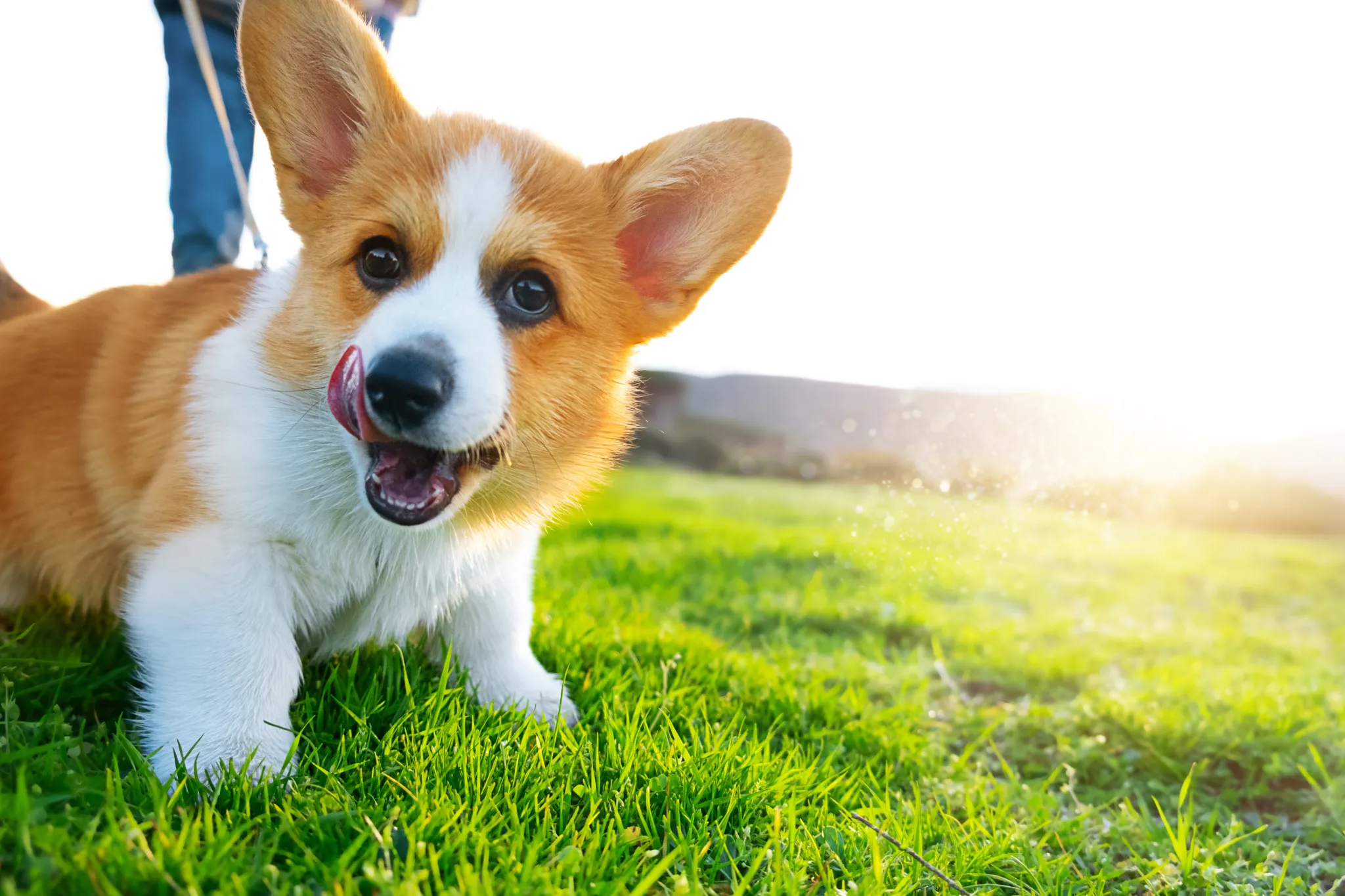 A dog attentively looking at its owner during a training session, highlighting the importance of focus and engagement
Heeling vs. Loose Leash Walking: Defining Your Expectations
When discussing leash walking, it’s important to differentiate between two distinct styles: heeling and loose leash walking. Both are valuable skills, but they serve different purposes and involve different levels of expectation from your dog. Understanding this distinction allows you to clearly communicate what you expect from your dog in various situations.
Heeling
Heeling means your dog walks precisely at your side, typically on your left, without falling behind or advancing beyond your knee. The expectations during a heel are strict: the dog maintains a consistent pace with you, and there are no sniff breaks or greetings with other dogs or people. While heeling might sound incredibly rigid, it’s an excellent way to teach clear boundaries and expectations during the initial stages of training. The defined rules help dogs understand quickly what is required of them.
During the process of teaching your dog not to pull, I recommend incorporating “heel” training about 50% of the time. It offers a structured framework for your dog to learn discipline and focus. Once your dog is fully trained, heeling might only be used about 10% of the time or less, reserved for situations requiring strict control, such as navigating busy sidewalks or crowded areas. It’s a valuable skill to possess and maintain, even if not for constant use. For example, a dog named Kiki, who initially pulled so aggressively her owners feared walking her in winter, learned to heel perfectly within a week using positive reinforcement, demonstrating the effectiveness of this approach.
However, it’s equally important to remember that walks should be enjoyable for your dog. As your dog becomes more proficient, you should gradually increase the amount of time spent in loose leash walking, allowing them more freedom to explore and “be a dog.” How to walk my dog without pulling becomes much easier when you balance structured training with opportunities for natural canine behaviors.
Loose Leash Walking
Once your dog has mastered the heel, the majority of your walks can transition to loose leash walking. I suggest using a 6-foot leash, which provides enough length for your dog to have freedom and sniff around without tension. However, retractable leashes are strongly discouraged as they teach dogs to pull to gain distance.
Loose leash walking, as I define it, means your dog can move freely anywhere within the 6-foot leash boundary without causing any tension or pulling. If I can’t easily hold the leash with one finger, it’s not loose leash walking. There should be no pressure on the leash. If your dog wants to sniff politely (without pulling), allow them to do so! Sniffing is a natural and healthy activity for dogs. If a sniff lasts too long and you wish to move on, a simple verbal cue should prompt your dog to join you again without any pulling from either side. This balance of freedom and control is what makes walks truly enjoyable for both of you.
The Positive Reinforcement Approach to Leash Training
Training your dog to heel and loose leash walk using positive reinforcement requires patience and consistency, but the rewards are immeasurable. Imagine taking your dog everywhere with confidence, barely needing to manage the leash, and simply relaxing into the walk. This level of companionship and ease is achievable for every dog owner willing to invest the time and effort. Every dog has the capacity to walk politely on a leash; they simply need to be taught. The goal is to build a strong association that being close to you and paying attention on walks leads to wonderful things. Treats are initially used to condition this behavior, and over time, their use can be gradually reduced as the desired behavior becomes ingrained.
Important Considerations for Teaching Loose Leash Walking:
Progress Slowly with Distractions: Begin training in a low-distraction environment, like your home, and gradually introduce more stimulating settings. It might take several weeks before your dog is ready for a “real walk.” During this initial period, ensure your dog gets sufficient exercise through fetch, off-leash play in a secure area, or dog parks. Expecting a dog with pent-up energy to walk calmly is unfair.
Never Reward Pulling: From the very first day you begin training, commit to a “no-pulling” policy. Pulling should never result in your dog getting what they want. If your dog pulls you to sniff something, that scent becomes a reward for pulling. Consistency is paramount. If you occasionally give in when your dog pulls hard enough, you inadvertently teach them to pull even harder next time. Ensure that polite walking consistently earns rewards.
Start in a Successful Environment: Always begin training sessions in an environment where your dog can easily succeed and be rewarded for doing things correctly. The house is an ideal starting point with minimal distractions.
Reward Lavishly: You are asking your dog to learn a challenging skill, so reward their efforts generously! Don’t hesitate to use a large quantity of high-value treats during initial training phases. Think of yourself as a “Pez dispenser” for treats. Pre-break treats into tiny pieces to avoid overfeeding, and reduce their meal portions slightly on intensive training days. These treats will eventually be phased out, but ensure this happens gradually to maintain the learned behavior.
A person's hand holding small training treats for a dog, emphasizing the role of positive reinforcement in leash training
 A person's hand holding small training treats for a dog, emphasizing the role of positive reinforcement in leash training
Step-by-Step: Teaching Your Dog to Heel
Teaching your dog to heel lays a crucial foundation for all polite leash walking. Follow these steps carefully:
Get Ready: Start with your dog in a “sit” position on your left side. Hold a small supply of high-value treats in your left hand (to reward on your left side) and the leash in your right. The leash should remain loose, allowing your dog to learn to pace themselves rather than being held in place.
Choose a Movement Phrase: Select a consistent phrase to signal movement, such as “Let’s go!” or “Heel.”
Get Attention: Ask your dog to “focus” on you, rewarding them with a treat when they make eye contact.
Begin Walking: Say your chosen movement phrase. Use the treat in your left hand as a lure, guiding it in front of your dog’s nose to keep them precisely at your side. Take 3 steps, then reward with a treat. As your dog begins to understand, start saying “Heel” as you initiate walking.
Practice Indoors: Practice this in short bursts, gradually increasing the number of steps. Aim to consistently take 10 steps in a perfect heel. Once mastered indoors, you’re ready to move outside.
Move Outdoors, Reduce Difficulty: When you move to your yard, a slightly more distracting environment, revert to luring for 3 steps before rewarding. This incremental approach ensures success. Slowly increase to 10 steps again as they become comfortable. Remember, when increasing distraction, decrease difficulty. Consistency is key when training a dog to reliably perform a specific behavior, much like teaching how to train a dog to only pee outside requires clear, consistent boundaries.
Phase Out the Lure: Once your dog can consistently heel for 10 steps outdoors, start phasing out the constant lure. Reward your dog for sitting, then say “Let’s go!” and “Heel.” Try to increase the steps, using your voice to maintain attention. Reward every instance of eye contact. Work towards heeling for a full minute between treats.
Troubleshooting Heeling:
- Sniffing or Pulling Sideways: Use your chosen “leave it” command and apply the slightest leash pressure to guide them back to your side. Reward them for returning to position.
- Pulling Forward: Say “Let’s go!” and immediately change direction. Reward them enthusiastically when they follow. This teaches your dog to pay attention to your movements and that following you leads to rewards, while pulling does not.
Keep training sessions short (around 20 minutes, twice daily) to prevent frustration. Only add loose leash walking once your dog has reliably mastered heeling for one minute in your yard. Take plenty of sniff and play breaks between heeling sessions to keep it fun and engaging. Once your dog can heel easily in your yard, gradually introduce more distracting environments, always scaling back the difficulty when you introduce a new setting.
Transitioning to Loose Leash Walking
Once your dog understands the fundamental rules of heeling, you can begin to introduce loose leash walking. This is where your dog gets more freedom within the leash boundaries, without any tension.
Initiate Loose Leash: Have your dog sit at your left side. Say “Let’s go,” immediately followed by “Ok!” and gesture forward. Your dog might hesitate, being used to heeling. Keep walking, allowing them to move slightly away from you within the leash’s length.
Allow Sniffing: If they stop to sniff something politely (without pulling), let them! If the sniff becomes prolonged and you wish to continue, say their name followed by “Let’s go!” or “Leave it.” Reward them when they start walking with you again.
Practice Transitions: It’s beneficial to practice switching between heeling and loose leash walking. Initially, you can have your dog sit between these transitions. “Let’s go” always signals movement, while “Heel” or “Ok” clarifies the boundaries of their walk. Consistency in your verbal cues is incredibly important for your dog’s understanding.
Tips for Successful Loose Leash Walking:
- Maintain the No-Pulling Policy: Even with more freedom, pulling is never allowed. Be mindful not to inadvertently reward pulling by allowing your dog to drag you to a desirable scent. Dogs earn their freedom on walks by demonstrating polite leash manners.
- Encourage Check-Ins: You want your dog to remain aware of your presence and actively choose to check in with you. Continue to reward them every time they voluntarily make eye contact.
- Watch Body Language: Learn to recognize your dog’s “tells” before they pull (e.g., eyes locking onto something, ears perking up). If you notice these signs, say “Let’s go!” and change direction before they pull. Reward them for following you in the new direction. Preventing pulling before it happens is the most effective correction.
- Manage Distractions: If an unexpected distraction arises, create distance between it and your dog. Cross the street if you see another dog, or turn and walk the opposite way. If your dog seems overwhelmed, ask them to sit and practice “focus” for high-value treats. Sometimes, they just need a brief mental break.
- Handle Irresistible Smells: If your dog is struggling with an intensely interesting scent, tell them to “leave it” and use a treat to change direction. If they still pull towards it, put them in a “heel” and lure them past. It’s okay to make mistakes, but never reward pulling by giving in.
- Gradual Progression: Slowly increase the time, distance, and distraction levels of your loose leash walks. Always build skills gradually, ensuring your dog has ample opportunities to make the right choices and be rewarded for them. This methodical approach is akin to how you might gradually transition a dog from pee pad training to outside, building comfort and understanding step-by-step.
Make Walks Enjoyable for Both You and Your Dog
The journey to undo ingrained pulling behavior takes time, patience, and unwavering consistency, but the effort is profoundly worthwhile. Imagine the freedom of confidently taking your dog for a walk without any pulling, enjoying the scenery, and simply being present with your beloved companion. This harmonious experience is not a distant dream but an achievable reality for every dog owner. Within a month, with dedication to these positive training methods, you can transform your walks into the peaceful, enjoyable bonding time you both deserve.
We encourage you to embark on this training journey, celebrating every small success along the way. Your commitment to teaching your dog polite leash manners will not only enhance their quality of life but will also deepen the incredible bond you share. Share your success stories with us in the comments below; we love hearing about happy, well-behaved dogs and their owners! Happy training!
