
As cat owners, we understand that our feline companions have unique instincts. One of these is the strong urge to bury their waste, a behavior deeply ingrained from their wild ancestors. Domestic cats evolved from the African wildcat, which thrives in arid, sandy environments where burying waste is crucial for survival, concealing their presence from predators. While our pet cats may not face the same threats, this innate need persists, requiring specific conditions for toileting. Our modern backyards, often featuring decking and concrete, may not naturally cater to this behavior, necessitating some adjustments to make them appealing for our cats’ needs.
The Right Toilet Type for Your Cat
The most critical aspect of encouraging outdoor toileting is providing a suitable medium for your cat to dig and bury their waste. Fine play sand or soil is ideal, as it allows for easy digging and covering. You can achieve this by placing an outdoor litter tray filled with your chosen material, or by digging a dedicated toilet area in your garden, similar in size or larger than a standard litter tray, and filling it with the same materials. It’s essential to ensure this outdoor option is accessible year-round. However, if the toilet freezes over during winter, you must provide an alternative indoor option to accommodate your cat’s needs.
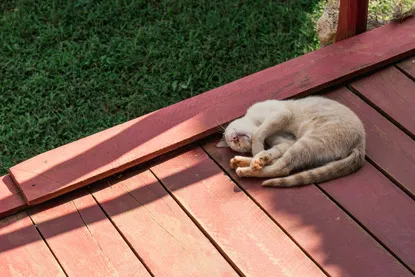 Ginger cat curled up relaxing on garden decking
Modern gardens with decking and concrete don’t make great cat toilets.
Choosing the Ideal Location
For cats, toileting is a vulnerable activity. Therefore, they require a private and secure location, shielded from loud noises and the presence of neighborhood cats. Positioning the toileting site close to your house, within their core territory, is recommended. Placing it at the edge of the garden, rather than in the center, and surrounding it with plants to provide visual cover, will enhance your cat’s sense of security.
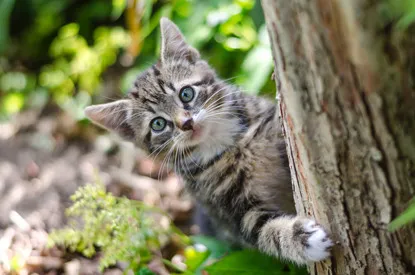 Tabby kitten peering around a tree
Your cat will prefer a private toilet obscured from view.
Timing and Seasonal Considerations
When introducing your cat to an outdoor toilet, it’s most effective to do so during warmer, drier weather. Winter conditions can make outdoor toileting less appealing. To mitigate this, consider providing a shelter or windbreak around the outdoor toilet to protect your cat from the elements. How to train cat to use automatic litter box
Maintaining Their Indoor Toilet Option
Transitioning your cat to outdoor toileting can be a gradual process. It is crucial not to alter their existing indoor toilet setup during this time. Your cat should always have the option to use their indoor facilities if they prefer. By creating an appealing outdoor toilet, you increase the likelihood that they will eventually choose it over time. For further guidance on toileting habits, explore resources on how do u litter train a kitten.
If you’re looking for comprehensive advice on cat training, including various methods for litter box use, understanding how to train cats for litter box is essential. Different approaches may be necessary depending on your cat’s age and personality. For instance, how to potty train an adult cat might require a different strategy than training a kitten.
Remember that consistency and patience are key. By providing the right environment and maintaining their choices, you can successfully encourage your cat to use an outdoor toilet. Consider exploring more on how do you train kittens to use a litter box for specific kitten-related training tips.
This approach respects your cat’s natural instincts while adapting them to a domestic environment. By carefully considering the toilet type, location, and timing, you can guide your cat towards successful outdoor toileting habits, ensuring their comfort and well-being.
