
The heartwarming scene of a therapy cat bringing comfort to a senior resident is a testament to the profound impact these animals can have. Therapy pets, including cats, offer significant emotional, mental, and physical benefits across various settings like retirement communities, hospices, schools, and libraries. While dogs are more commonly seen in therapy roles, the unique appeal and comfort cats provide are undeniable, especially for individuals who may be fearful of dogs or simply prefer feline companionship. This article delves into the essential components of training a cat to become a certified therapy animal, drawing from personal experience and insights from experienced therapy cat handlers.
While the number of certified therapy cat teams may be lower than their canine counterparts, their importance is equally significant. Organizations like Pet Partners and Love on a Leash, though having fewer cat teams, highlight the demand for diverse therapy animals. The suitability of a therapy pet often comes down to personal preference, and cats offer a distinct type of comfort that resonates with many.
Harness and Leash Training: The Foundation
A crucial first step in preparing your cat for therapy work is harness and leash training. Many owners assume their cats would never tolerate such equipment, hindering their pursuit of therapy animal certification. However, this training is vital, especially since key components of therapy cat training are best accomplished outside the home. Patience and persistence are key, as cats often react to new experiences with hesitation.
The process should begin indoors, allowing your cat to acclimate to the harness gradually. Let them sniff and play with it, offering treats as positive reinforcement. Once they tolerate wearing it inside, attach a leash and encourage them to walk with you, again using treats. Only when your cat is completely comfortable indoors should you venture outside, starting with short excursions to the porch and slowly progressing to the yard. This systematic approach ensures your cat develops a positive association with the harness and leash, making them more amenable to future outings. Experienced handlers confirm the efficacy of this method, with many cats becoming adept at walking on a leash and even enjoying excursions.
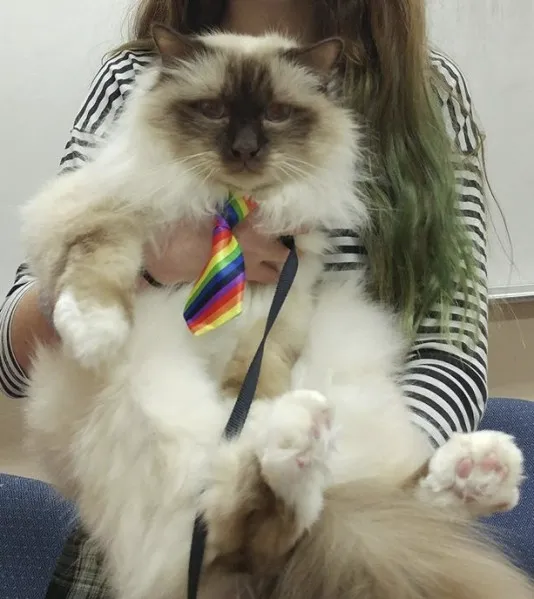 Raul, by Sarah Moor
Husbandry: Maintaining Health and Hygiene
Alongside harness training, husbandry is another critical at-home component. This encompasses essential health and hygiene practices that ensure your cat is presentable and comfortable during therapy visits. Requirements vary slightly between organizations, but generally include keeping the cat’s eyes and ears clean, ensuring odor-free breath, and maintaining groomed fur. Nails should be regularly clipped to prevent accidental scratches.
Daily routines can incorporate aspects of husbandry, such as checking eyes and ears and brushing fur. Nail trimming is particularly important, especially for cats that may jump onto laps, to avoid any discomfort to the recipients of therapy. Regular grooming not only keeps the cat clean but also strengthens the bond between owner and pet through positive interaction and reinforcement with treats.
Socialization: Cultivating a People-Friendly Demeanor
The core of therapy animal work is the ability to provide comfort to people, making socialization paramount. Therapy cats must not only be people-friendly but also comfortable in various environments and situations, which can include encountering elevators, wheelchairs, and other novel stimuli. While some believe a cat’s personality is innate, research suggests that early and consistent handling significantly shapes their temperament.
Exposing kittens, ideally between 2 to 14 weeks of age, to a wide range of people, sights, sounds, and gentle handling can foster a confident and adaptable personality. This period is crucial for developing their ability to remain calm amidst new experiences. Even if you acquire a cat outside this prime socialization window, continued exposure to new environments and positive interactions can still yield significant results.
Taking your cat outdoors on a harness and leash, once they are comfortable, provides ample opportunities for socialization. Attending events like therapy prep classes, visiting pet stores, or simply taking them to parks can expose them to various stimuli in a controlled manner. Many therapy cat owners share success stories of how their cats became well-adjusted through consistent exposure to social settings, demonstrating that even older cats can adapt and thrive with proper training and encouragement.
 Chico, by Cheri Cox
 Smokey, by Jenny Litz
A key characteristic for therapy cats is non-reactivity. Exposing them to various sounds, smells, and touches helps them remain unfazed by common disturbances, such as loud music or even fire alarms. This desensitization process, achieved through consistent positive reinforcement, allows the cat to remain calm and focused on their task of providing comfort, rather than reacting with fear or flight.
Building Trust: The Cornerstone of the Partnership
The final, and perhaps most crucial, component of therapy cat training is building trust between the cat and their handler. This trust is foundational, enabling the cat to look to their owner for direction and reassurance in unfamiliar situations. Understanding feline body language is essential for recognizing your cat’s comfort levels and preferences, ensuring their well-being during therapy visits.
Providing a “safe place,” such as a carrier or stroller, where the cat can retreat when feeling overwhelmed, is vital. Daily training sessions, whether for socialization, husbandry, or desensitization, further strengthen this bond. This consistent effort helps the cat feel secure and understood, fostering a deep trust that allows them to perform their therapy duties with confidence. When a cat knows their handler has their back, they can relax and provide the intended comfort without undue stress.
 Summer, by Janiss Garza
The dedication to training and trust-building ultimately transforms a household pet into a valuable therapy animal. As demonstrated by Rainy’s journey, a once fearful cat can blossom into a confident and capable therapy cat, leading the way and embracing every interaction. The commitment to these training principles not only enhances the cat’s ability to provide comfort but also deepens the invaluable bond between human and animal.
For those interested in learning more, the following Facebook groups offer valuable resources and community support: Therapy Cats and Therapy Cats of the World. This article is a tribute to all therapy cats and their dedicated handlers who bring so much joy and solace to those in need.
