
As bird enthusiasts, we all cherish the unique bond we share with our feathered companions. While their natural instinct to fly is a beautiful part of their being, there are times when we might wish to ensure they stay close, especially when out and about or if they are prone to flying away. The thought of your beloved bird getting lost can be distressing. Fortunately, with patience, consistency, and the right techniques, you can train your bird not to fly away and reinforce their connection to you. This guide will walk you through the essential steps to achieve effective recall training and strengthen your avian friend’s bond with you.
Understanding Your Bird’s Natural Instincts
Before we dive into training, it’s crucial to understand why birds fly. Flight is their primary mode of escape, their way of exploring, and a fundamental aspect of their wild heritage. Even the most domesticated birds retain these instincts. Training your bird not to fly away isn’t about suppressing these natural behaviors entirely, but rather redirecting them and building a strong trust that encourages them to stay near you. We want to foster a positive association with staying close, making it more appealing than a spontaneous flight.
The Importance of a Strong Bond
A solid foundation of trust and affection is paramount for any successful bird training, including recall. Your bird needs to see you as a source of safety, comfort, and positive experiences. Spend quality time with your bird daily, engaging in gentle interaction, offering treats, and speaking in a calm, reassuring tone. The stronger your bond, the more receptive your bird will be to your training cues and the more likely they are to respond positively when called.
Essential Training Steps
Step 1: Building a Reliable Recall Command
The cornerstone of preventing your bird from flying away is a strong recall command. This means training your bird to come to you when called.
- Choose Your Cue: Select a clear, consistent verbal cue, such as “Come!” or your bird’s name followed by “Come.” Some trainers also use a whistle.
- Start in a Safe, Enclosed Space: Begin training in a small, bird-proof room where the bird cannot escape or be distracted by external stimuli.
- Positive Reinforcement: When your bird is near you, say your cue clearly and immediately offer a high-value treat (like a small piece of fruit or a favorite seed). Your bird should associate the cue with a reward.
- Gradual Distance: As your bird starts to understand, gradually increase the distance between you and your bird. Call them, and reward them when they fly or hop to you.
- Use a Target Stick (Optional): Some trainers find a target stick helpful. Teach your bird to touch the end of the stick with their beak, then use the target stick to guide them back to you when you give the recall command. Reward them upon arrival.
- Consistency is Key: Practice this daily in short, frequent sessions (5-10 minutes). Always end on a positive note.
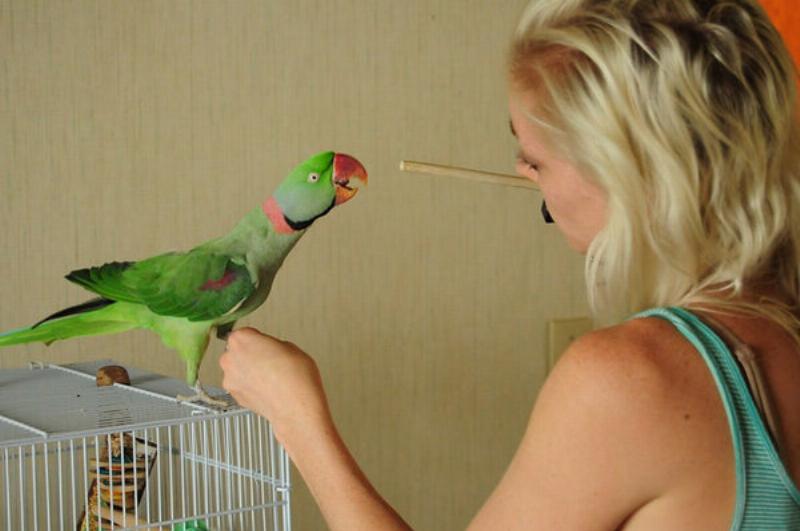 Bird being trained to fly to owner using a treat
Step 2: Recall Training “T-Stand”
A “T-stand” can be an excellent tool for recall training. It provides a designated perch that your bird learns to fly to on command.
- Introduce the T-Stand: Place the T-stand in your training area. Allow your bird to explore it freely and get comfortable with it.
- Associate with Treats: Place a treat on the T-stand, encouraging your bird to fly to it to get the reward.
- Add the Cue: Once your bird reliably flies to the T-stand for a treat, start giving your recall cue just before they fly.
- Practice Recall to the Stand: Gradually move further away from the T-stand and call your bird, guiding them to fly to the stand. Reward them once they are on it.
This method helps your bird understand that flying to a specific location on command is rewarding. You can later transition this to flying to your hand or shoulder. For more on specific training tools, understanding bird training t stand can offer further insights.
Step 3: Preventing Escapes During Outings
When you take your bird outside their usual safe space, extra precautions are necessary.
- Harness Training: Introduce a bird harness gradually and patiently. This allows your bird to enjoy supervised outdoor time safely tethered to you. Ensure the harness fits correctly and your bird is comfortable wearing it. Never force it on them.
- Controlled Environments: Start with short, supervised sessions in a secure outdoor aviary or a very quiet, enclosed garden area.
- Constant Supervision: Never leave your bird unattended outdoors, even if harnessed.
- Be Aware of Predators and Distractions: Loud noises, other animals, or sudden movements can startle your bird and trigger an escape response.
Step 4: Addressing the “Fly Away” Instinct Directly
Sometimes, despite training, a bird might still be tempted to fly off. Here’s how to reinforce the “stay close” behavior.
- “Stay” Command: Teach a “stay” command, reinforcing the idea of remaining in place.
- Recall from a Distance: Practice calling your bird from increasingly longer distances within a safe area. This builds their confidence in their ability to return to you. It’s similar to how to recall train a bird.
- Flight School Analogy: Think of it like “flight school” for your bird. You want them to be proficient flyers, but also to understand that returning to the home base (you) is the ultimate goal. This is different from understanding how to start training a bird dog, but the principles of positive reinforcement and consistent practice apply.
What to Do if Your Bird Flies Away
Despite your best efforts, accidents can happen. If your bird does fly away:
- Stay Calm: Panicking will not help. Your bird can sense your distress.
- Call Their Name: Continue calling them in a calm, encouraging voice.
- Go to Them (If Safe): If you can locate your bird and reach them safely, approach slowly. Offer their favorite treat.
- Bring Their Cage: If possible, bring their cage outside. Birds often feel safer returning to a familiar environment. Place it in an open area where they can see it.
- Don’t Chase: Chasing a flying bird will likely scare them further away.
- Wait and Call: Sometimes, birds will fly to a high point and wait. Continue calling them periodically.
For situations where a bird might have an issue with defecation, learning how to train a bird not to poop everywhere is a separate but important aspect of overall bird behavior management.
Maintaining a Safe Flying Environment
Even with excellent recall training, it’s essential to maintain a safe environment.
- Bird-Proof Your Home: Ensure all windows and doors are closed when your bird is out of their cage. Be mindful of ceiling fans and open fireplaces.
- Educate Household Members: Make sure everyone in the home understands the importance of keeping doors and windows closed when the bird is flying.
- Be Vigilant: Always supervise your bird when they are out of their cage.
Conclusion: A Partnership Built on Trust
Training your bird not to fly away is a journey that requires patience, understanding, and a deep respect for your bird’s natural abilities. By focusing on building a strong bond, employing consistent positive reinforcement techniques, and creating a safe training environment, you can successfully teach your feathered friend to respond to your call. Remember, this isn’t about control, but about building a partnership based on trust and mutual understanding. Enjoy the rewarding experience of having a well-trained companion who loves to stay close.
