
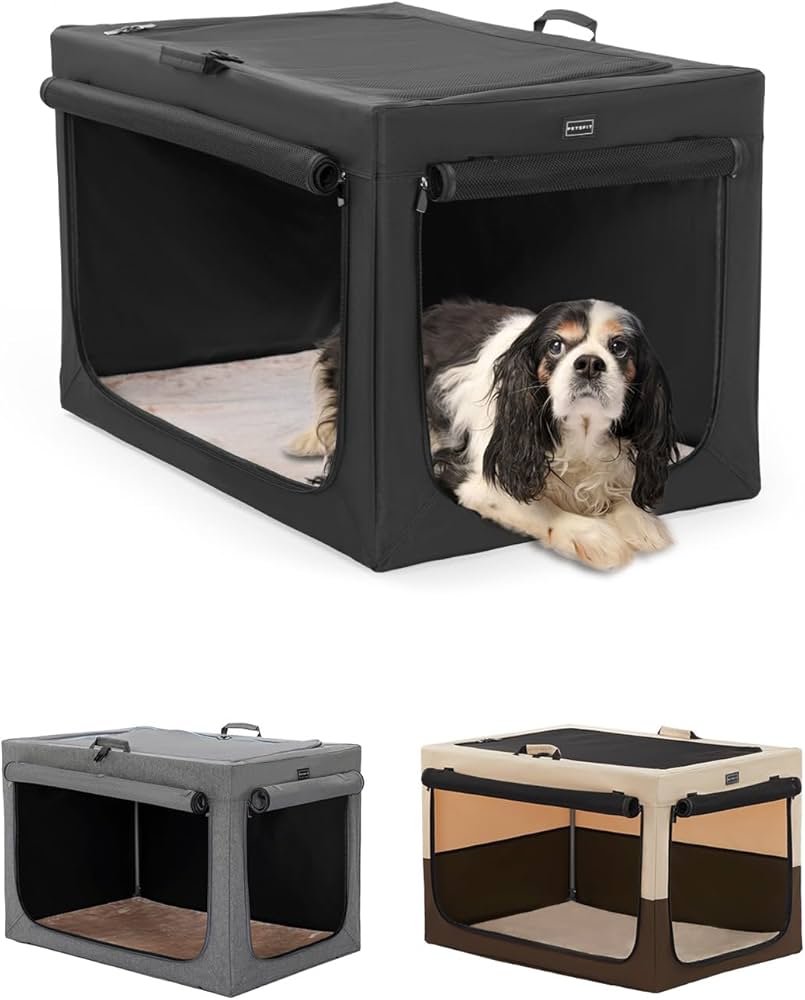
Introducing your dog to a crate or playpen should be a positive experience, turning these spaces into their own safe havens. This guide offers a comprehensive approach to help your canine companion feel comfortable and secure, whether you’re using a crate for relaxation or a playpen for a larger secure area. Consistent, positive reinforcement is key to successful training.
Step One: Prepare the Crate or Pen
A well-prepared crate or playpen can become a cozy retreat for your dog. Set up the crate in a quiet, undisturbed location. Ensure it is sturdy, properly assembled, and large enough for your dog to stand, turn around, lie down, and stretch comfortably. As your puppy grows, you may need a larger crate. Make it inviting with their bed, a blanket, a non-spill water bowl, and favorite toys or treats. Covering the top and sides with a blanket can reduce drafts and outside noise. Keep the door securely open initially.
Playpens offer more space than crates and can be set up around a crate or in another room. Ensure the pen is tall enough, securely fastened, and spacious enough for your dog to rest comfortably, eat, drink, and play. Provide enough room for movement, ensuring water and food bowls are at least a meter apart from their resting space. Fresh water should always be accessible in both crates and playpens.
Step Two: Introduce the Crate or Pen Positively
Begin training with small, favorite treats. With the doors of the crate or playpen fixed open, allow your dog to explore at their own pace. As they sniff or venture inside, reward them with treats for their positive exploration. You can also leave treats around the area for them to discover, further building positive associations. During these initial stages, ensure your dog can exit quickly and easily to maintain their sense of security and confidence. Introducing new things to your puppy should always be a slow, gradual process, respecting their comfort level. Introducing your puppy to new things should always be done slowly, in their own time.
Step Three: Encourage Your Dog to Go Inside
Once your dog is comfortable with the presence of the crate or pen, begin actively encouraging them to enter. Keep training sessions short, fun, and consistent, ideally during calmer parts of the day, such as after a walk or play session.
- Prepare Treats: Have your dog’s favorite treats ready.
- Drop Treats: Start by dropping treats into the crate or pen. Your dog should enter willingly to retrieve them.
- Continue Dropping: Continue dropping treats inside, ideally when your dog is not directly looking at you, to shift their focus to the space itself.
- Guide Them In: If your dog is hesitant, place a treat in the doorway, gradually moving it further inside as they gain confidence.
- Patience is Key: If your dog leaves, stop dropping treats and wait for them to return. Resume dropping treats once they re-enter.
- Encourage Settling: Begin to teach them to settle in the crate or pen.
- Vary Practice Times: Practice at different times of the day. With time and fewer treats needed, your dog will begin to use the crate or pen as a preferred resting spot.
Step Four: Reward Settling Behavior
When your dog voluntarily enters their crate or pen, offer gentle praise and occasional treats to reinforce the positive experience. Providing a long-lasting chew, a food-releasing toy, or even their regular meal inside can encourage them to spend more time comfortably within the space. This continues to build positive associations and extends their duration inside.
Step Five: Gradually Close the Door
Once your dog is content spending time inside with the door open, begin to introduce the concept of the door closing. Progress slowly and watch for any signs of distress, such as whining or scratching. If your dog shows worry, revert to a stage where they were comfortable and repeat it before moving forward.
- Start by closing the door slightly, ensuring they can still exit if needed. Repeat this several times.
- When they are comfortable, secure the door for brief moments before opening it again.
- Gradually increase the duration your dog spends inside with the door closed, offering treats and praise when they are relaxed.
When not actively training, keep the door securely open, allowing your dog free access.
Step Six: Step Away Gradually
As your dog settles comfortably inside, begin your normal daily activities in the same room. This helps them understand that you can be occupied while they remain in their space. Once they are comfortable with this, you can gradually move towards leaving the room.
Start by providing a meal, chew, or toy and closing the door. Then, move towards the room’s exit to observe their reaction. If they remain engaged and content, briefly leave the room and return. Continue to offer occasional treats or praise. Slowly increase the time you are outside the room, always ensuring your dog has an engaging item to occupy them. They will learn to enjoy their time independently.
Incorporate the crate or pen into your daily routine by leaving treats or enrichment items inside. This will encourage your dog to seek out their positive space. Always keep the crate or pen accessible as a safe and welcoming resting spot.
Important Note: You may need to increase your dog’s treat intake during this training. Consider slightly reducing their regular food portions to maintain a balanced diet.
