
Embarking on a hiking adventure with your canine companion can be a rewarding experience, offering shared exploration and bonding moments. However, the presence of dogs on trails can also lead to disruptions for other hikers and impact the natural environment. Many dog owners strive to follow the Leave No Trace Principles, but extending these principles to our four-legged friends requires specific training. This guide provides essential training methods to ensure your dog becomes a well-behaved trail companion, leaving minimal impact on the outdoors. The goal is to train a dog that embodies the spirit of “leaving only pawprints.”
1. The Importance of the Leash
While the idea of your dog running freely on the trail might be appealing, a leash is crucial for minimizing a dog’s impact on vegetation and wildlife. Using a standard, 6-foot nylon leash provides reliable control and keeps your dog on the designated path. Retractable leashes are discouraged due to their inconsistency and potential dangers. For dogs that tend to pull, a front-hook harness can be effective in reducing pulling by redirecting their momentum. For more persistent pullers, a leader designed to loop around the snout offers greater control. Adhering to leash regulations not only ensures your dog’s safety but also demonstrates respect for other trail users and the environment.
2. Mastering the “Come” Command
If your chosen trails permit off-leash activity, ensuring your dog has a flawless recall is paramount. This command can be life-saving and requires consistent reinforcement. To train this, pair the word “COME” with highly desirable treats, such as bacon, cheese, or steak. Start in a distraction-free environment, rewarding your dog immediately after they respond to the command. Gradually increase the distance and introduce a partner for a recall game, rewarding your dog generously each time they return. It is vital to reward your dog every time they respond to the “come” command to build a reliable, subconscious response, especially amidst trail distractions. Always carry high-value, lightweight treats like freeze-dried meat when hiking.
3. Minimizing Barking on the Trail
Barking is a natural dog behavior, but excessive barking can disturb wildlife and other hikers. If your dog barks out of excitement or anxiety when encountering others on the trail, redirection is key. Use treats to capture your dog’s attention and reward them for focusing on you. If possible, continue walking while rewarding your dog frequently for maintaining focus. Alternatively, move to the side of the trail and ask your dog to sit, rewarding them as other hikers pass. This requires consistent practice. For dogs prone to barking at things after resting, such as when you stop for a snack, ensure your dog is leashed and provide a long-lasting chew item like a bully stick or an elk antler. This keeps them engaged and quiet. If your dog exhibits significant “leash reactivity,” consider professional training to help manage this behavior. The focus should be on redirecting the behavior to more appropriate choices rather than simply saying “no.”
 Dog-LNT.jpg
4. Packing It Out: For Your Dog Too
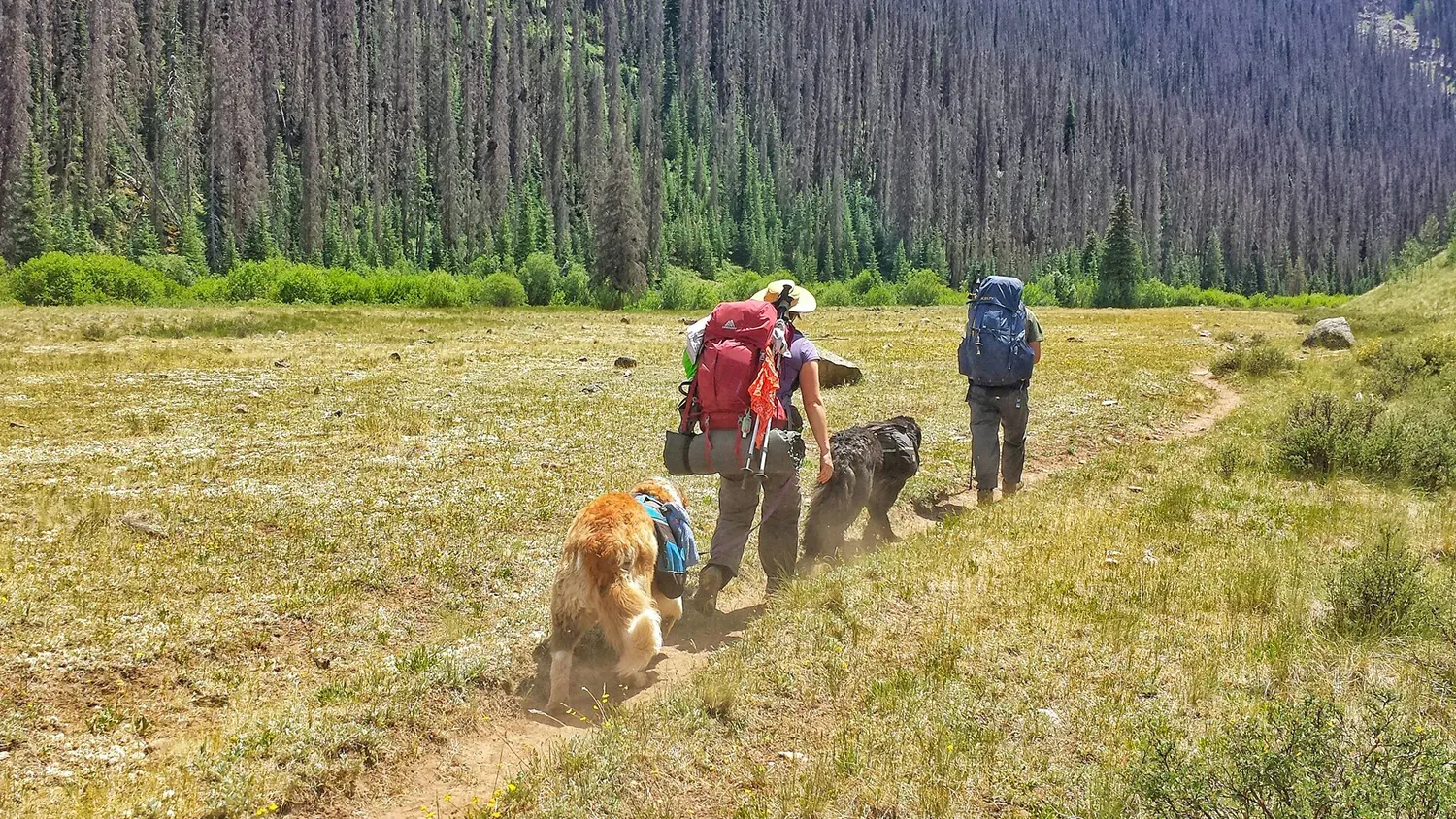
Encouraging your dog to carry some of their own supplies can be a practical approach. However, introduce a dog pack gradually. Start by having your dog wear an empty pack during mealtimes to create a positive association. Gradually introduce the empty pack on daily walks, then slowly add weight. Dogs can typically carry 15-20% of their body weight. This not only gives your dog a “job” but also provides a convenient way to carry essentials like treats, chew items, a collapsible water bowl, poop bags, and first-aid supplies.
 waterbowl-treats
Addressing Training Challenges on the Trail
It’s important to remember that every dog is an individual, and training takes time and consistency. Practice behaviors in low-distraction environments before expecting them to work on the trail. Teaching your dog what to do is more important than solely focusing on what not to do, using high-value rewards as positive reinforcement. If you encounter persistent difficulties, consider hiring a professional dog trainer who emphasizes positive reinforcement and has relevant experience. With patience and consistent practice, you can train your dog to be a responsible and enjoyable trail companion.
