
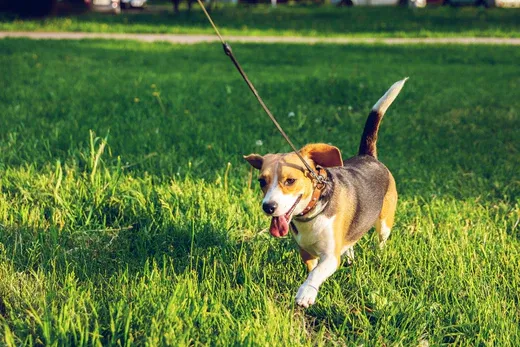
Teaching your dog to walk politely on a leash, without pulling, is a fundamental aspect of dog training. This guide will walk you through the process, ensuring your walks are enjoyable for both you and your canine companion. Leash training a puppy or any dog can be challenging, but the effort is undeniably worthwhile.
Prior to Leash Training a Puppy
While tools like head collars or front-attachment harnesses can help manage pulling, they are aids, not replacements for proper leash training. A dog needs to be taught to walk by your side without tension on the leash. Front-attachment harnesses are user-friendly and effective for most dogs, while head collars offer greater control for dogs with aggressive tendencies or for those with large, strong breeds. These tools should be used with leashes no longer than six feet to prevent sudden strain that could cause injury.
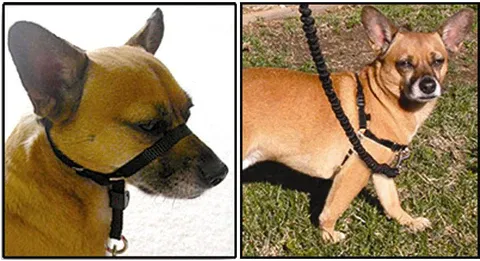 A small tan dog wears a head collar on the left and a front-attachment harness on the right
Gigo wearing a Comfort Trainer head collar (left) and an Easy Walk front-attachment harness (right).
Stop and Reward Method
A core technique for leash training a puppy to avoid pulling is to simply stop moving forward when the leash tightens. Reward your dog with treats when they are walking calmly by your side. If your dog isn’t food-motivated, positive reinforcement can also come in the form of praise, a favorite tug toy, or a brief play session. A waist-worn treat bag can be invaluable for quick and easy rewards during training.
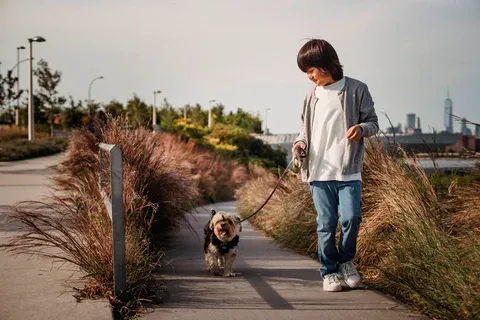 Young boy walking a small dog on a leash
Dog Leash Training Step by Step
Step 1: Walking with My Human Is Delicious!
Begin by attaching your puppy to a long leash or rope (10-20 feet) while they wear a standard harness. Use small, high-value treats like bits of meat or cheese. In a familiar outdoor area, like your backyard, decide on a preferred side for your dog to walk (traditionally the left). Reward your dog with a treat placed near your thigh on that chosen side whenever they are in position. This positive association encourages them to stay close. Walk briskly and randomly, rewarding every step they stay by your side. Gradually increase the duration between rewards as they improve. If your dog shows little interest, try again later when they are hungrier. Practice until they are consistently walking beside you.
Gigo walking by my side. Feeding Gigo a treat by my side.
Step 2: It’s Worth My While to Watch Where My Human Is Going and Go Along, Too!
Continue practicing in your yard. When your dog starts to lag behind or sniff, use an upbeat “let’s go,” perhaps slapping your thigh to get their attention, and turn to walk away from them. When they catch up, reward them with praise and a treat by your preferred side. Continue rewarding them every few steps if they stay with you. If they return quickly, offer an extra treat. If the leash is tight, apply gentle pressure as a reminder of your presence, releasing it as they move towards you. Praise and reward them upon reaching your side. Repeat this until they consistently stay beside you and return promptly when prompted.
“Let’s go”, and walking away.
Step 3: I Know When It’s Time to Smell (Or to Pee On) the Roses
Allowing your dog designated times for sniffing and potty breaks is crucial. About every five minutes, or when you would typically offer a treat, say “go sniff” and let them explore or relieve themselves. This becomes a reward. If they pull during this time, redirect them with “let’s go” and walk in the opposite direction, ending the free time. When you’re ready to resume walking, use the “let’s go” cue.
Authorized sniff break!
Step 4: Sometimes I Really Need to Pay Attention to Where My Human Is Going!
Transition to a shorter leash, gradually reducing it to six feet. Practice walking at different speeds, stopping suddenly, and changing directions. Reward your dog for maintaining position during these variations. Begin to reward less frequently for normal walking but continue to reward heavily for staying with you during these challenging maneuvers or when distractions like other people or animals are present.
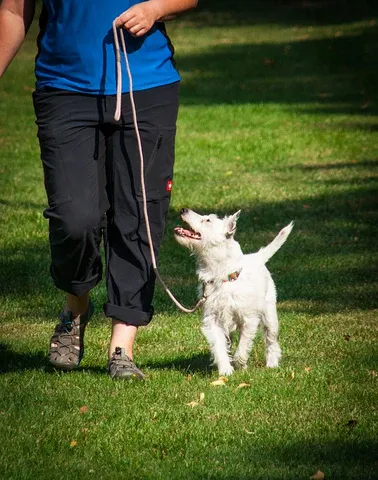 White dog on leash watching owner
Taking It to the Street
Apply the same techniques used in your yard to neighborhood walks, now with increased distractions. Utilize a front-attachment harness or head collar for added control and keep high-value treats readily accessible. Start walking with “let’s go.” If your dog pulls or gets distracted, use the “let’s go” cue and change direction. Reward generously when they walk by your side, especially during challenging moments. Remember to grant permission for sniff breaks.
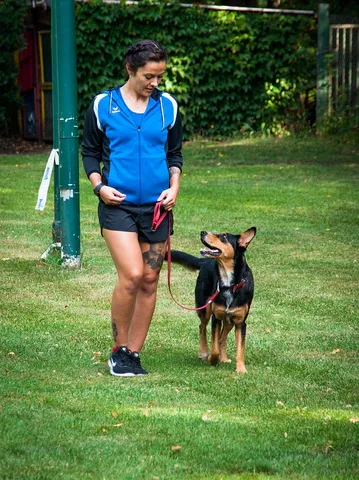 Woman walking attentive black and tan dog
Challenge Your Dog During Leash Training
In your yard, attach your dog to a six-foot leash. Toss a ball or treat 20 feet away. If your dog pulls towards the object, use the “let’s go” cue and walk in the opposite direction. If they walk beside you towards the object, allow them to reach it as their reward. Initially, use a longer leash or a less enticing object to make this exercise easier.
Troubleshooting Common Issues
If your dog crosses in front of you, shuffle your feet slightly to make your presence more noticeable. If they lag significantly, they might be fearful or unwell; use encouragement rather than pulling. If lagging is for sniffing or potty breaks, continue walking with gentle leash pressure. Always reward them for walking with you. If your dog alternates between walking well and pulling, focus on rewarding longer stretches of good walking rather than rewarding the return after pulling.
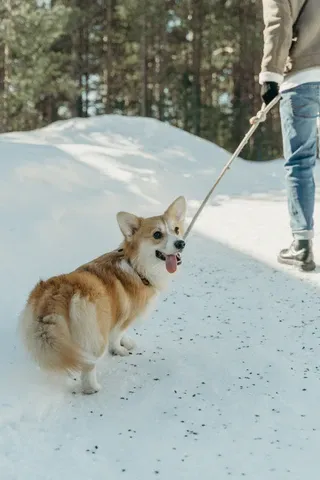 Small white and brown dog on a leash in the snow
How to Train a Dog to Walk On a Leash and Heel
Heeling is useful for short periods when you need your dog to stay close and attentive, especially around distractions. Practice in your home by holding a treat in your fist near your thigh and saying “let’s go” while taking a few steps. Reward your dog for following your fist with their nose. Gradually transition to an empty fist, rewarding them for following it. Increase your expectations over time and practice in more distracting environments. Your closed fist can serve as a hand signal for “heel.”
I hope this guide on leash training proves beneficial for creating more enjoyable walks with your dog. For further assistance, explore our range of leash training aids, puppy supplies, treats, and other unique dog products!
The Author:
Jess Rollins
Jess Rollins and Pet Expertise are dedicated to helping you unlock your dog’s full potential. Through expert product selection and a commitment to canine well-being, we aim to provide the tools and knowledge necessary for a fulfilling life with your dog. Read More
