
Have you ever watched a hawk circle a pasture, sending a chill down your spine as you considered the safety of your flock? For ranchers and farmers, that sight is a constant reminder of the vulnerability of their animals. Livestock guardian dogs (LGDs) offer a time-tested, living solution, providing a vigilant, protective presence against predators. But these aren’t your average family pets; LGDs possess powerful, unique instincts and require specialized training to effectively bond with livestock and do their job.
Simply placing a puppy in a pasture and hoping for the best is a recipe for disaster. Without proper guidance, these powerful dogs can become destructive, wander off, or even harm the very animals they’re meant to protect. Successfully raising and training an LGD is a journey of patience and understanding, rooted in respecting their innate behaviors while gently shaping them to fit your farm’s needs. The process is less about conventional obedience and more about fostering a deep, unwavering bond between the dog and its herd or flock. This guide will walk you through the essential steps to cultivate a reliable and trustworthy guardian for your livestock. For those looking for hands-on guidance, seeking out options for livestock guardian dog training near me can provide valuable local expertise.
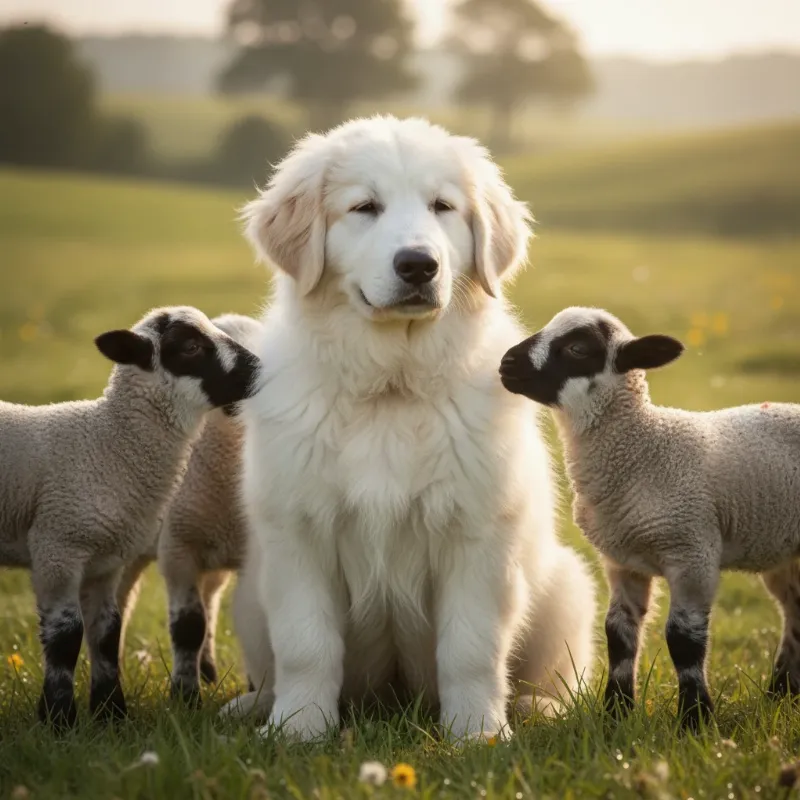 A fluffy white Great Pyrenees puppy sitting calmly in a pasture surrounded by several young lambs, demonstrating how to train livestock guardian dogs from a young age.
Understanding the Guardian Instinct: Not Your Average Dog
Before you begin, it’s crucial to understand that training a livestock guardian dog is fundamentally different from training a herding dog or a household pet. LGD breeds like the Great Pyrenees, Anatolian Shepherd, and Maremma Sheepdog have been selected for centuries to think independently and act on their own initiative. Their goal is not to please you with a quick “sit” or “stay,” but to integrate seamlessly with their livestock and protect them 24/7.
Dr. Sarah Miller, a seasoned expert in working dog behaviors, explains, “The key to LGD training is integration, not domination. You are not teaching a set of commands; you are guiding a natural bonding process. The dog must see the livestock as its family. Your role is to facilitate that bond and set clear, consistent boundaries to prevent undesirable behaviors like over-enthusiastic play or wandering.”
This training philosophy hinges on several core principles:
- Presence over commands: Their effectiveness comes from their constant presence, intimidating scent, and warning barks that deter predators long before a confrontation is necessary.
- Bonding is paramount: The dog must live with the livestock from a very young age to form an unbreakable social bond. They are not pets that visit the flock; they are full-time members of it.
- Patience is non-negotiable: LGDs mature slowly. It can take up to two years for a dog to become a fully reliable guardian. The puppy phase can be trying, but consistency is vital.
The Critical First Steps: From Puppyhood to Pasture
The journey begins the moment you bring your puppy home, ideally between 8 to 12 weeks of age. Sourcing a puppy from a working farm, where it was born and raised with livestock, gives you a significant head start. These puppies have already begun learning crucial behaviors from their mother.
### Initial Bonding and Housing (8-16 Weeks)
The primary goal during this period is to establish a strong bond with the livestock while minimizing human bonding that could distract the dog from its duties.
- Immediate Immersion: The puppy should live with the livestock immediately. A common and effective method is to create a small, secure “puppy pen” made of cattle panels inside the larger livestock enclosure or barn. This allows the puppy to see, smell, and hear the animals constantly in a safe, controlled environment.
- Controlled Interactions: Allow the puppy out of its pen for supervised sessions with a few gentle, mature animals (e.g., ewes, does). Use a long lead line to control the puppy and correct any overly rough play or chasing. The goal is calm coexistence.
- Human Contact in Their Space: Socialization with people is important, but it must happen on your terms and in their environment. Pet and handle your puppy within the pasture or barn. Never bring the puppy into your house or yard to play. This reinforces that their place is with the flock. If the puppy escapes the pasture, promptly and calmly return it without making a game of it.
Establishing Boundaries and Building Trust
As your LGD grows, your focus will shift from basic bonding to teaching boundaries and gradually increasing their responsibility. This is where patience truly becomes a virtue.
### Lead Line to Supervision (4-9 Months)
This phase is about expanding the dog’s world while maintaining control.
- Lead Line Training: During your daily chores, walk the puppy through the flock on a long lead. This gets them accustomed to moving with the animals and respecting your presence. It’s also an excellent time to teach them about electric fences—a supervised shock now is a valuable lesson for the future.
- Supervised Off-Leash Time: Once the puppy is comfortable on the lead, you can begin allowing it off-leash in the pasture, but only when you are present to supervise. Watch closely for behaviors like chasing or roughhousing with young animals. A firm “No” or a loud clap is often enough correction. For persistent issues, some owners use “dangle sticks” or “yokes” that humanely impede chasing.
- Basic Commands: While extensive obedience isn’t the goal, teaching a reliable “come” and “leave it” is essential for management and safety. Keep training sessions short, positive, and integrated into your daily routine.
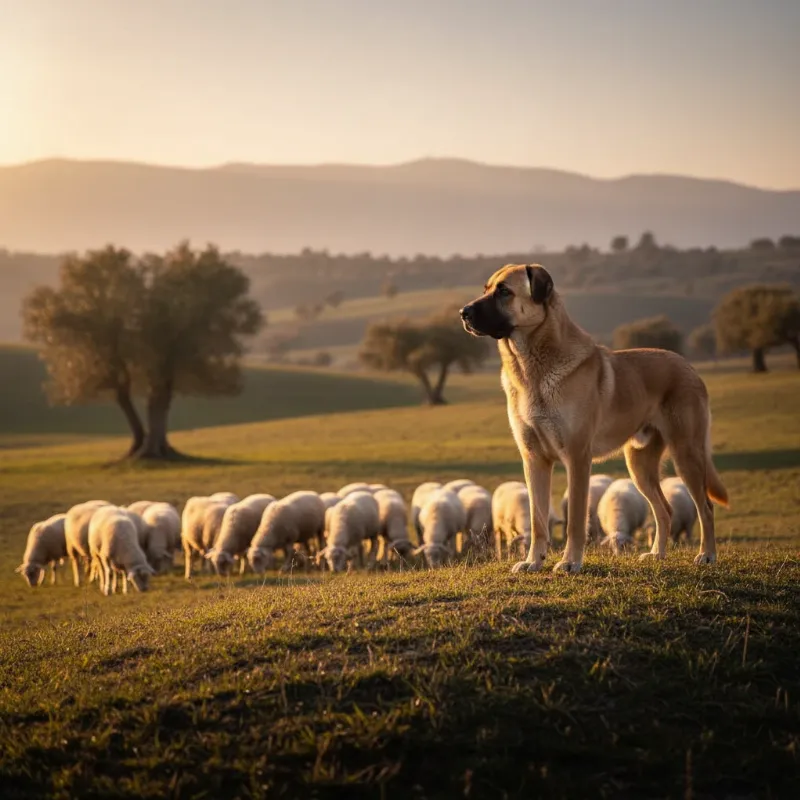 A mature Anatolian Shepherd standing alert on a small hill overlooking a flock of sheep, showcasing a well-trained livestock guardian dog on duty.
### Earning Independence (9-24 Months)
A puppy should be able to work on its own or alongside an experienced dog by 9-10 months of age. The transition to full-time, unsupervised guarding should be gradual.
- Start with Short Periods: Leave the dog with the flock for a few hours at a time while you are nearby. Gradually increase the duration as the dog proves its trustworthiness.
- Mentorship: If you have an older, experienced LGD, it will be an invaluable teacher. A puppy will learn more about appropriate guardian behavior from an adult dog than it ever will from a human. The older dog will also help correct the puppy’s mistakes.
- Ongoing Monitoring: Even after a dog is considered “trained,” you must continue to monitor its behavior. Address any issues like wandering, aggression, or neglect of duties immediately. Sometimes, behavioral problems can be a sign of underlying health issues or boredom. It’s important to differentiate between guarding instincts and problematic actions, which might require specific training for aggressive dog behavior if not managed early.
Troubleshooting Common LGD Challenges
Training is rarely a straight line, and you will likely encounter bumps along the way. Here are some common problems and how to address them:
- Playing Too Rough with Livestock: This is common in puppies. Immediate, firm verbal correction is necessary. Separating the puppy for a “time-out” in its pen can also be effective. Ensure the puppy has appropriate chew toys to redirect its energy.
- Wandering: This is a serious issue that can lead to the dog getting lost, injured, or causing trouble with neighbors. Strong, secure fencing is the first and most important line of defense. Boundary training from a young age is also crucial.
- Excessive Barking: LGDs bark to deter threats, which is a good thing. However, if barking becomes incessant without a clear cause, it may need to be addressed. Investigate the cause; the dog may be alerting you to a persistent predator threat you’re unaware of.
- Aggression Towards Strangers: LGDs are naturally wary of strangers. It’s important to socialize them with trusted family and friends in their environment from a young age. Always supervise interactions with visitors and have control over your dog.
Training a livestock guardian dog is a significant commitment, but the peace of mind that comes from knowing your animals are protected by a loyal, dedicated guardian is immeasurable. By understanding their instincts, starting early, and remaining patient and consistent, you can cultivate a partner that will become an invaluable asset to your farm for years to come.
Frequently Asked Questions
### How do you introduce an LGD puppy to chickens?
Introducing an LGD to poultry requires extra supervision because birds can trigger a dog’s prey drive. Start with the puppy on a leash, allowing it to observe the chickens from a distance. Reward calm behavior. Gradually decrease the distance over many sessions. Correct any lunging or intense staring immediately with a firm “leave it.” Never leave a young LGD unsupervised with poultry until you are absolutely certain of its reliability.
### Can you have a livestock guardian dog as a pet?
While LGDs can be gentle and loving with their human families, they are not suited for life as typical pets. They are working dogs that need a job to do. Confining them to a suburban backyard with no livestock can lead to boredom, destructive behavior, excessive barking, and attempts to escape and “patrol” the neighborhood.
### How do you stop a livestock guardian dog from wandering?
The most effective way to prevent wandering is with secure fencing that the dog cannot dig under, climb over, or push through. Boundary training from a young age helps, but physical barriers are essential. Some owners use GPS collars to track their dogs, but prevention is always better than recovery.
### Do LGDs need to be trained by an older dog?
While an older, experienced LGD is the best teacher a puppy can have, it is not an absolute requirement. A first-time owner can successfully train an LGD puppy by being diligent, consistent, and following a structured process of bonding and supervision. The key is to allow the dog’s natural instincts to emerge while correcting undesirable behaviors.
### What is the difference between herding dogs and livestock guardian dogs?
Herding dogs, like Border Collies, are bred to work closely with humans, responding to commands to move and control livestock. Livestock guardian dogs, in contrast, are bred to work independently from humans. Their job is to live with the flock and act on their own initiative to deter predators, not to herd the animals. Their instincts and training methods are fundamentally different.
