
Bringing a new cat or kitten into your home is an exciting experience. While indoor toileting is standard for most pet cats, some owners explore options for their feline friends to use an outdoor toilet. This guide, inspired by the natural behaviors of domestic cats, offers practical advice on how to encourage your cat to toilet outside. Remember, consistency and understanding your cat’s instincts are key to success. Always ensure your cat has a safe and accessible indoor option as a backup.
Understanding Your Cat’s Natural Instincts
Domestic cats are descendants of the African wildcat, a creature that thrives in arid, sandy environments. In the wild, cats instinctively bury their waste to conceal their presence from potential predators. This deeply ingrained behavior persists in our pet cats, even though they no longer face the same survival pressures. They retain a need for specific conditions that allow them to perform this natural act comfortably and securely. While our back gardens may not mirror the African savannah, we can adapt them to meet these innate feline needs, making an outdoor toilet a viable option for your cat.
Creating the Ideal Outdoor Toilet
The most crucial element in training your cat for outdoor toileting is providing a suitable medium for them to dig and bury their waste. Fine play sand or natural soil are excellent choices as they mimic the cat’s ancestral environment and are easy to dig in.
Toilet Setup Options:
- Outdoor Litter Tray: You can place a standard litter tray filled with sand or soil in your garden. Ensure this is a permanent fixture available year-round.
- Dug Toilet: Alternatively, you can dig a shallow pit in your garden, similar in size or larger than a litter tray, and fill it with your chosen substrate.
Regardless of the method, the toilet area must be accessible in all seasons. If the outdoor toilet freezes over during winter, it becomes unusable, and you must provide an alternative indoor or sheltered option to prevent accidents or stress for your cat.
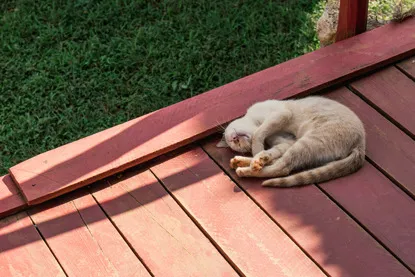 A ginger cat curled up relaxing on a garden deck.
Modern garden designs with decking and concrete are not ideal for cats needing to bury their waste.
Choosing the Right Location
For cats, toileting is a vulnerable behavior, making privacy and safety paramount. Their outdoor toilet should be situated in a quiet, secluded spot, away from high-traffic areas, loud noises, or potential disturbances from neighborhood cats.
Positioning the toilet site close to your house, within their core territory, is generally best. Placing it at the edge of the garden, rather than in the center, can offer a greater sense of security. Surrounding the area with plants or shrubs can further shield your cat from view, creating a more appealing and private space for them to relieve themselves.
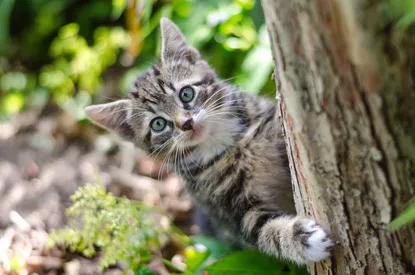 A tabby kitten peering curiously from behind a tree.
Your cat will naturally prefer a private toilet area that is obscured from view.
Considering the Time of Year
If you aim to transition your cat to an outdoor toilet, starting during warmer, drier months is advisable. The outdoor environment is generally more appealing to cats when the weather is pleasant. During colder winter periods, an exposed outdoor toilet may become less inviting. To mitigate this, consider installing a shelter or windbreak around the toilet area to protect your cat from harsh weather conditions.
Maintaining Indoor Toilet Options
Encouraging a cat to adopt new toileting habits requires patience and understanding. It’s vital not to alter their existing indoor toilet setup during this transition. Your cat should always have the choice to use their indoor facilities if they feel more comfortable or if the outdoor option is less accessible. By providing both options and making the outdoor toilet as appealing as possible, you increase the likelihood of your cat gradually adopting it over time.
If you’re facing challenges with your cat’s toileting habits, understanding why cats scratch furniture can also be helpful, as scratching and toileting are often linked behaviors that cats use to mark their territory. This knowledge can contribute to a more harmonious environment for both you and your feline companion. Find more advice about cats and toileting.
Conclusion
Transitioning your cat to an outdoor toilet is achievable by respecting their natural instincts and providing suitable conditions. By offering a comfortable digging medium, a private location, and considering seasonal changes, you can encourage your cat to embrace this outdoor option. Remember to always maintain an accessible indoor toilet as a fallback, ensuring your cat’s comfort and preventing stress. With patience and careful observation, you can successfully guide your cat towards using their new outdoor facilities.
