
Embarking on the journey of training a therapy dog is one of the most rewarding experiences a dog owner can have. It’s a path that transforms a well-behaved pet into a beacon of comfort, joy, and healing for people in need. If you’re wondering How To Train For A Therapy Dog, you’re taking the first step towards making a profound difference in your community. This guide will walk you through the essential steps, from assessing your dog’s temperament to achieving certification and starting your volunteer work. Understanding the nuances of animal assisted therapy dog training is key to building a successful partnership.
Before we dive in, it’s crucial to understand what a therapy dog is. Unlike service dogs, which are trained to perform specific tasks for a person with a disability and have public access rights, therapy dogs are trained to provide comfort and affection to people in various facilities like hospitals, nursing homes, schools, and disaster relief areas. They are volunteers, not service animals.
Is Your Dog a Good Candidate for Therapy Work?
Not every dog is cut out for therapy work, and that’s perfectly okay. The role requires a specific combination of temperament, health, and training. Before you invest time and effort, honestly assess if your dog has the foundational traits for success.
The Ideal Therapy Dog Temperament
The most critical factor is temperament. A good therapy dog candidate is naturally calm, patient, and gentle. They should genuinely enjoy meeting new people and be sociable without being overly boisterous or jumpy.
Key personality traits include:
- A Calm Demeanor: The dog should be unflappable in new environments, unfazed by loud or unusual noises, strange smells, and medical equipment like wheelchairs or walkers.
- Inherent Friendliness: They must love people of all ages and appearances and actively seek out gentle interaction.
- Unwavering Patience: Therapy dogs often interact with individuals who may be clumsy or pet them awkwardly. The dog must tolerate this with grace and without any signs of stress or irritation.
- Confidence: A therapy dog should be confident but not arrogant. They need to be comfortable navigating new places and situations without being fearful or reactive.
Age and Health Requirements
Most therapy dog organizations require dogs to be at least one year old before they can be evaluated. This ensures they have reached social maturity and their personality is well-established. Your dog must also be in excellent health, up-to-date on all vaccinations, and on a regular flea and tick prevention regimen. A clean bill of health from a veterinarian is a standard prerequisite.
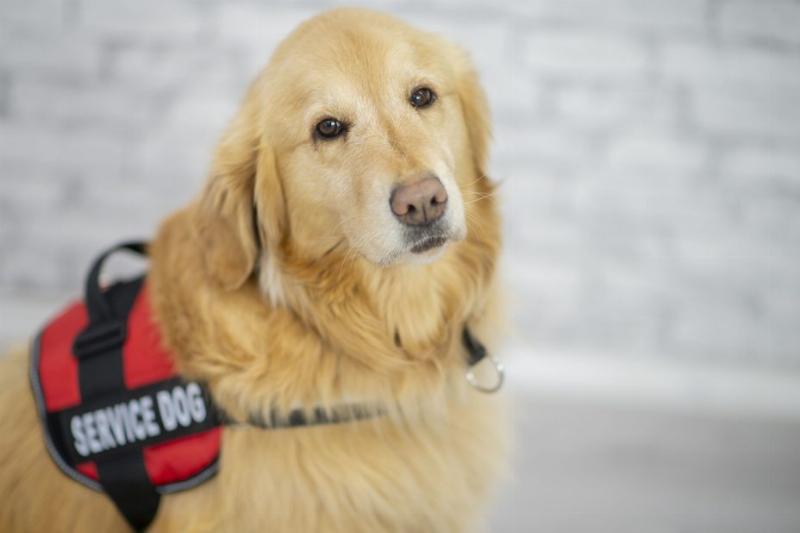 A friendly Golden Retriever therapy dog wearing a vest, sitting calmly next to an elderly person in a wheelchair, illustrating the ideal therapy dog temperament.
Foundational Skills: The First Steps in How to Train for a Therapy Dog
Once you’ve determined your dog has the right temperament, the real work begins. The foundation of all therapy work is solid, reliable obedience training. Your dog must be predictable and under your control at all times, especially in distracting environments.
Basic Obedience Mastery
Your dog should have a rock-solid understanding of basic commands. This goes beyond performing them in your quiet living room; they must be able to respond reliably in a busy hospital lobby or a noisy school classroom.
Essential commands include:
- Sit and Down: The dog should perform these on a single command and hold the position until released.
- Stay: A reliable stay is crucial. You should be able to drop the leash and walk across a room with your dog holding its position.
- Come: Your dog must have a perfect recall, returning to you immediately when called, regardless of distractions.
- Leave It: This is a potentially life-saving command in a facility where dropped medications or other hazards might be present.
The Importance of Socialization
Proper socialization is the cornerstone of a therapy dog’s training. It means exposing your dog to a wide variety of sights, sounds, smells, and surfaces in a positive and controlled way. This process builds confidence and prevents fear-based reactions. Start from a young age if possible, but even older dogs can benefit. Expose your dog to people of different ages, ethnicities, and appearances, including those using hats, glasses, or mobility aids. Places like pet-friendly stores or outdoor cafes are great practice grounds. Many owners find structured courses, sometimes advertised as petsmart therapy dog training prep, can provide excellent socialization opportunities.
Leash Manners are Non-Negotiable
A therapy dog must walk calmly on a loose leash without pulling, lunging, or lagging behind. The handler should be able to navigate crowded hallways and tight spaces with the dog calmly by their side. Using a standard flat collar or harness is typically required; corrective collars like prong or choke chains are not permitted by therapy dog organizations.
Advanced Training for Real-World Scenarios
Beyond the basics, how to train for a therapy dog involves preparing for the specific challenges of a therapeutic environment. This is where you fine-tune your dog’s skills to ensure they are completely prepared for any situation they might encounter.
Neutrality to Distractions
Your dog needs to learn to be neutral to a wide range of distractions. Practice walking past dropped food, squeaky toys, and even other animals without reacting. Visit environments with medical equipment and allow your dog to become comfortable around wheelchairs, IV poles, and walkers. The key is to create positive associations with these objects.
Dr. Eleanor Vance, a certified animal behaviorist, states, “The goal is not just tolerance, but true neutrality. A therapy dog shouldn’t just endure a loud noise or a passing wheelchair; they should be able to genuinely disregard it and remain focused and calm.”
Accepting Awkward Petting
People in hospitals or nursing homes may not have the fine motor skills for gentle petting. Train your dog to accept clumsy or heavy-handed petting without flinching. You can practice this at home by gently grabbing your dog’s paws, ears, and tail while rewarding them with treats for calm behavior. Always monitor your dog for signs of stress and keep these sessions short and positive.
The Path to Certification
Once your dog has mastered these skills, the final step is to get certified by a reputable national or international therapy dog organization. This certification provides credibility, liability insurance, and access to volunteer opportunities.
Passing the Canine Good Citizen (CGC) Test
Many therapy dog programs consider the American Kennel Club’s (AKC) Canine Good Citizen (CGC) test a great starting point or even a prerequisite. The CGC is a 10-step test that demonstrates a dog’s good manners at home and in the community. Passing it shows that your dog has a strong foundation in basic obedience and is ready for more advanced training.
Finding a Reputable Therapy Dog Organization
Do your research to find an organization that aligns with your values and goals. Some of the most well-known organizations in the United States include Pet Partners, Alliance of Therapy Dogs (ATD), and Therapy Dogs International (TDI). Each has slightly different testing requirements and philosophies, so review their websites thoroughly. Finding the right program is as important as the training itself, and looking for therapy dog training classes near me can often lead you to trainers affiliated with these national groups.
What to Expect During the Evaluation
The evaluation is a simulated therapy visit. An evaluator will put you and your dog through a series of exercises designed to mimic real-world scenarios. These may include:
- Navigating a crowded, noisy room.
- Meeting friendly strangers who will pet your dog.
- Encountering people with medical equipment.
- Reacting calmly to a dropped object or a loud noise.
- A supervised separation to ensure the dog is not overly distressed when you are out of sight for a moment.
The evaluator is assessing not just the dog’s behavior, but also the handler’s ability to support and advocate for their animal.
Life as a Therapy Dog Team
Becoming a certified therapy dog team is the beginning of a new chapter. You can start volunteering at registered facilities, bringing smiles and comfort wherever you go. Remember that this work can be tiring for your dog. Always watch for signs of stress or fatigue and keep visits to a reasonable length. Continuing education and practice are essential to keep your dog’s skills sharp and ensure every visit is a positive experience for everyone involved. Whether your journey began with a search for therapy dog training ct or anywhere else, the principles of compassion and preparedness are universal.
Frequently Asked Questions (FAQ)
What breeds make the best therapy dogs?
Any breed or mixed breed can be a therapy dog. Temperament is far more important than breed. Golden Retrievers, Labradors, Poodles, and Cavalier King Charles Spaniels are common choices due to their typically gentle natures, but any dog with the right personality can succeed.
How long does it take to train a therapy dog?
The timeline varies greatly depending on the dog’s age, temperament, and prior training. It can take anywhere from a few months to over a year. The process is a marathon, not a sprint, focusing on building a solid, trusting relationship and reliable skills.
Can I train my own therapy dog?
Absolutely! Most handlers train their own dogs. While professional training classes are highly recommended to guide you and help with socialization, the core training and bonding happen between you and your dog every day.
What is the main difference between a therapy dog and a service dog?
A service dog is trained to perform specific tasks to mitigate an individual’s disability and has legal public access rights under the ADA. A therapy dog is a pet trained to provide comfort and affection to many people in specific facilities and does not have the same public access rights.
Where can therapy dogs volunteer?
Certified therapy dog teams can volunteer in a wide range of settings, including hospitals, nursing homes, assisted living facilities, schools, libraries (for children’s reading programs), airports, and disaster relief centers.
Conclusion
Learning how to train for a therapy dog is a journey of dedication, patience, and deep connection with your canine companion. It requires a dog with a special heart and a handler with a commitment to positive reinforcement and continuous learning. By following these steps, you can prepare your dog for a fulfilling role, strengthening your bond while sharing their unconditional love with those who need it most. The smiles, comfort, and moments of connection you will create together are an immeasurable reward.
