
Dog food aggression, commonly referred to as resource guarding, can be a source of concern for pet owners. This behavior manifests when a dog becomes defensive or hostile towards anyone attempting to take its food or treats, a situation that can unfortunately escalate and pose risks to those around the dog. This article delves into the various reasons behind canine food aggression and offers practical strategies for its effective management.
Understanding the Roots of Dog Food Aggression
Several factors can contribute to a dog exhibiting food aggression.
Genetic Predispositions
Certain dog breeds possess a higher natural inclination towards resource guarding. Breeds such as the Cane Corso and the Akita are historically known for their territorial nature and protective instincts over their possessions, including food. While genetics can influence behavior, it’s crucial to recognize that it is not the sole determinant.
Early Life Experiences
Dogs that have experienced periods of starvation or have had to compete with other animals for food may be more susceptible to developing food aggression. Additionally, rescue dogs from neglectful or abusive backgrounds often guard their food as a learned survival mechanism. These early life experiences can significantly shape a dog’s behavior, but with consistent and appropriate training, such tendencies can be effectively managed.
Anxiety and Stress Factors
Feelings of anxiety and stress can also play a role in food aggression. A dog experiencing insecurity about its food supply might become possessive and aggressive when it perceives a threat to its access to food.
Insufficient or Improper Training
If a dog has not been taught to share or accept that its food can be approached or even temporarily removed, it may develop possessiveness and aggression. Proper training and early socialization are fundamental in addressing and managing resource guarding behaviors.
Recognizing the Signs of Dog Food Aggression
The outward signs of food aggression can vary among dogs. Some may exhibit subtle cues like averting their gaze or lowering their head while eating. Early identification and intervention are key to managing this behavior and preventing it from becoming a more serious issue.
- Growling or Snapping: A dog may growl or snap at people or other animals that approach it while it is eating or near its food source.
- Stiff Body Language: While eating or when someone approaches its food, a dog might display stiff, tense body language.
- Lunging: Aggressive lunging towards individuals or other animals that venture too close to its food.
- Showing Teeth: Baring teeth or displaying other canine signals of aggression when its food is approached.
- Rapid Eating: Consuming food very quickly or frantically, often as a way to prevent others from getting near it.
- Possessive Behavior: Becoming overtly possessive of food or treats, showing clear reluctance to allow anyone near.
- Aggression Towards Other Dogs: Actively guarding food against other dogs or becoming aggressive when other dogs attempt to eat or approach its food.
- Refusal to Share: Demonstrating an unwillingness to share food or treats with humans or other animals.
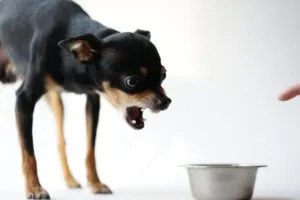 A dog looking protectively at its food bowl
Strategies for Managing Dog Food Aggression
Fortunately, dog food aggression is a manageable behavior with consistent training and the right approach. The following tips can be instrumental in addressing this issue:
Seek Professional Guidance
For severe cases of food aggression, consulting a certified professional dog trainer or a veterinary behaviorist is highly recommended. They can provide a thorough evaluation of your dog’s specific behavior and offer customized strategies. They can also help identify any underlying issues contributing to the aggression.
The Importance of Positive Reinforcement
Punishing a dog for food aggression can often exacerbate the problem. Instead, focus on positive reinforcement techniques. Reward your dog for calm and desirable behaviors around its food, gradually increasing the duration and proximity of your presence. Never use food deprivation as a form of punishment.
Cultivating a Sharing Mentality
Teaching your dog to associate sharing with positive outcomes is crucial. Begin by training your dog to perform a “sit” command and wait patiently before receiving its food. Gradually extend the waiting period, helping your dog learn patience and that food will be provided.
Utilizing Puzzle Feeders
Incorporating puzzle feeders or slow feeders into your dog’s routine can help mitigate food aggression. These tools slow down eating and can decrease anxiety and possessiveness. They also provide valuable mental stimulation, contributing to your dog’s overall well-being.
Ensuring a Safe Feeding Environment
Designate a calm and secure area where your dog can eat its meals without feeling threatened or anxious. This could be a separate room or a specific corner of your home where your dog feels completely at ease.
Implementing Desensitization Techniques
Desensitization involves gradually exposing your dog to situations that trigger its food aggression in a controlled setting. Start by having someone approach your dog while it’s eating and offering a high-value treat. Repeat this process, slowly decreasing the distance until you can confidently remove the food bowl without eliciting an aggressive response.
Establishing Clear Boundaries
Teaching your dog to respect boundaries around food is essential. Implement consistent rules regarding mealtimes and treats, and ensure all household members adhere to them.
Prioritizing Socialization
Adequate socialization can significantly reduce a dog’s anxiety and stress, which are often underlying causes of food aggression. Exposing your dog to various people, other dogs, and different environments helps build confidence and reduce fear-based reactions.
Maintaining a Consistent Routine
Dogs find comfort and security in routine. Establishing a predictable feeding schedule can alleviate mealtime anxiety and uncertainty for your dog.
Teaching the “Leave It” Command
The “leave it” command is invaluable for redirecting your dog’s attention away from its food bowl when necessary. Consistent practice with this command can help diminish food guarding behaviors over time.
Vigilant Behavior Monitoring
Pay close attention to your dog’s demeanor during mealtimes and when treats are offered. If any signs of aggression emerge, disengage calmly and revisit the situation later.
Patience and Consistency are Key
Managing dog food aggression is a journey that requires significant patience and unwavering consistency. Adhere to your training plan and be understanding as your dog learns to overcome these ingrained behaviors.
Conclusion
Dog food aggression stems from various factors and is a prevalent issue among canines. While potentially dangerous if ignored, it is effectively manageable through environmental adjustments, consistent training, and positive reinforcement. By understanding the root cause of the aggression and seeking professional help when necessary, owners can foster a sense of security for their dogs during mealtimes, thereby reducing the risk of harm to both the dog and others.
If your dog exhibits signs of food aggression, it is advisable to consult with veterinary professionals. They can offer a thorough assessment of your pet’s behavior and guide you toward effective solutions. Contact them today for more information.
