
Watching your beloved dog descend into a state of panic every time you walk out the door is heartbreaking. The whining, the barking, the destructive behavior—it’s stressful for both you and your furry friend. The good news is that you’re not alone, and this isn’t a simple case of bad behavior. Separation anxiety is a genuine panic disorder, but with patience, consistency, and the right techniques, you can learn How To Train Dogs With Separation Anxiety and help them feel safe and secure when home alone.
This guide is designed to walk you through the process, transforming your departure from a source of terror into a calm, non-eventful moment. Managing this condition involves more than just teaching commands; it’s about changing your dog’s underlying emotional response to being left alone. For a deeper dive into the fundamentals, understanding the principles behind separation anxiety dogs training is a great starting point. Let’s begin the journey to a calmer, happier dog.
Understanding Separation Anxiety in Dogs
Before you can start training, you must first understand what you’re up against. Separation anxiety is not a dog acting out of spite or boredom. It is an uncontrollable panic attack triggered by the dog being left alone or separated from their primary person.
What Are the Signs of Separation Anxiety?
Recognizing the symptoms is the first step toward a solution. While a little whining as you leave can be normal, a dog with separation anxiety will exhibit more extreme distress signals.
- Excessive Vocalization: Persistent barking, howling, or whining that begins shortly after you leave. Your neighbors might be the first to point this out.
- Destructive Behavior: Chewing on doorframes, clawing at windowsills, destroying furniture, and tearing up household items, especially around exit points. This is an attempt to escape and find you.
- Inappropriate Urination or Defecation: A perfectly house-trained dog having accidents indoors, but only when left alone. This is a physiological response to extreme stress.
- Pacing and Panting: Restless, repetitive pacing in set patterns and anxious panting that starts even before you depart.
- Attempts to Escape: Frantic efforts to get out of their crate or a specific room, which can sometimes lead to self-injury like broken teeth or scraped paws.
- Excessive Salivation: Drooling far more than usual is a common physical sign of canine anxiety.
It’s crucial to note that these signs must occur exclusively in your absence to be diagnosed as separation anxiety. If they happen while you’re home, there might be another underlying medical or behavioral issue at play.
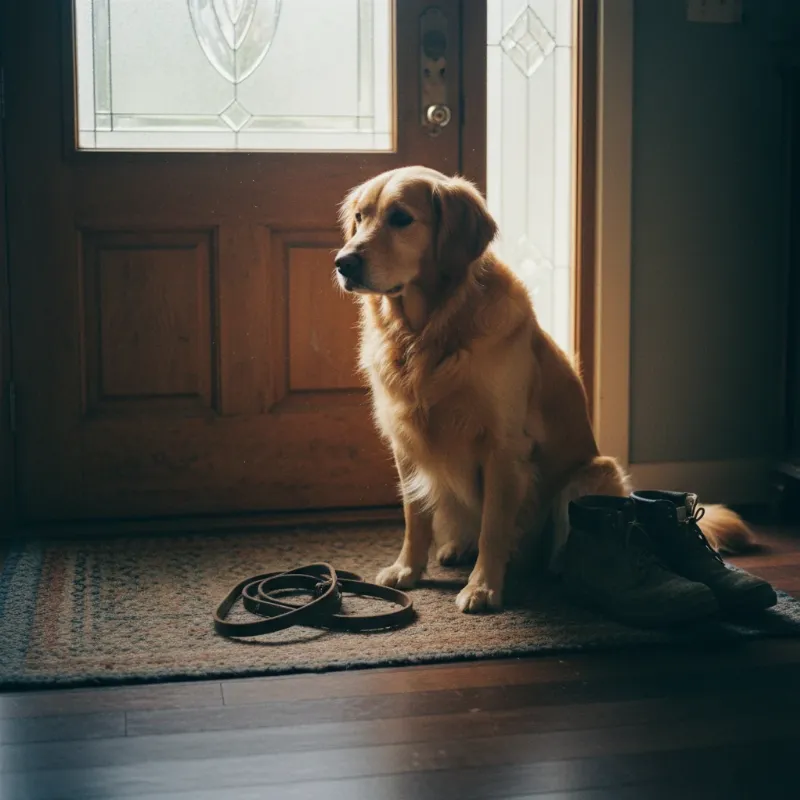 A medium-sized golden retriever looking anxiously at a closed front door, a clear depiction of how to train dogs with separation anxiety
Why Do Dogs Develop Separation Anxiety?
There’s no single reason why some dogs develop this condition. It can be a complex mix of genetics, past experiences, and environmental factors. Some common triggers include a change in routine (like a return to office work after a long period at home), a move to a new house, the loss of a family member or another pet, or a history of being abandoned or rehomed, such as with many shelter dogs.
“Understanding the ‘why’ is less important than addressing the ‘how.’ We need to focus on teaching the dog that being alone is safe, not scary. This is a process of building confidence and changing their perception, one minute at a time.” – Dr. Sarah Miller, Certified Applied Animal Behaviorist.
A Step-by-Step Guide to Training a Dog with Separation Anxiety
The core of treating separation anxiety lies in a process called desensitization and counter-conditioning. The goal is to gradually accustom your dog to being alone by associating your departure with something positive, or at the very least, neutral. This process requires significant patience. There are no quick fixes.
Step 1: Create a Safe and Enriching Environment
Your dog’s environment plays a huge role in their sense of security. Designate a “safe zone” for them—a comfortable space where they love to spend time, even when you are home. This could be a cozy crate with a comfortable bed, a specific room, or a dog bed in the corner of the living room. Fill this space with high-value puzzle toys, long-lasting chews, or a piece of your clothing so your scent is nearby. The goal is to make this spot a haven of relaxation and positive associations.
Step 2: Desensitize Your Dog to Departure Cues
Dogs are masters at picking up on patterns. They know that you grabbing your keys, putting on your coat, or picking up your bag means you’re about to leave. These actions can trigger anxiety long before you even open the door. The solution is to make these cues meaningless.
- Several times a day, pick up your keys and then sit down on the couch to watch TV.
- Put on your shoes and then start making dinner.
- Grab your work bag and then go water the plants.
By repeating these actions without actually leaving, you break the association between the cue and the stressful event of your departure.
Step 3: Master the Calm Departure and Arrival
Excited, emotional goodbyes and hellos can heighten your dog’s anxiety. “Oh, you poor thing, I’ll be back soon, I promise!” can feel reassuring to you, but to your dog, it confirms that your leaving is a big, emotional deal.
- Departures: Keep them low-key. A few minutes before you leave, give your dog their special “alone time” toy and then walk out without any fanfare. No prolonged goodbyes.
- Arrivals: Keep these calm as well. When you return, ignore your dog for the first few minutes until they have calmed down. Once they are relaxed, you can greet them quietly. This teaches them that your coming and going is a normal part of the day. The comprehensive approach of training for separation anxiety in dogs emphasizes this emotional regulation.
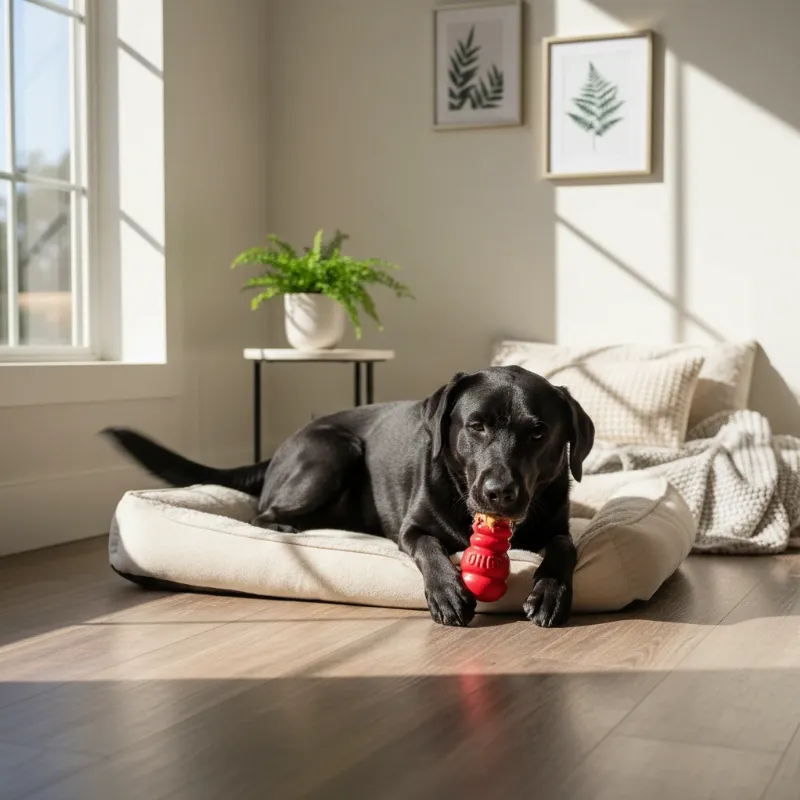 A happy and calm black Labrador resting in its cozy dog bed, which is its safe zone, chewing on a puzzle toy, illustrating effective strategies for how to train dogs with separation anxiety.
Step 4: Implement Graduated Departures
This is the most critical and challenging part of the training. The goal is to leave your dog alone for very short periods and return before they have a chance to panic. You are teaching them that you always come back.
- Start Small: Begin by asking your dog to stay while you walk to the other side of the door. Return immediately. Praise them calmly.
- Increase Duration: Once they are comfortable with that, close the door for a few seconds before returning.
- Vary the Time: Gradually increase the duration you are gone: 5 seconds, 10 seconds, 30 seconds, 1 minute, 5 minutes. The progression must be slow. If your dog shows signs of stress at any stage (like whining), you have moved too fast. Go back to a shorter duration where they were successful.
- Use a Camera: A pet camera is an invaluable tool. It allows you to monitor your dog’s body language and ensure you return before they get anxious.
- Practice, Practice, Practice: This process can take weeks or even months. Consistency is key to building your dog’s confidence.
Step 5: Ensure Adequate Physical and Mental Exercise
A tired dog is a calmer dog. Ensure your dog is getting plenty of physical exercise every day, especially before you plan to leave them alone. A long walk, a game of fetch, or a run can help burn off excess energy that might otherwise fuel anxiety. Mental stimulation is just as important. Puzzle feeders, scent work games, and regular training sessions can help build confidence and reduce overall stress levels.
What Not to Do When Training
How you respond to the situation is just as important as the training itself. Avoid these common mistakes:
- Do Not Punish Your Dog: Never scold or punish your dog for their anxious behavior. The destruction and house soiling are symptoms of panic, not acts of rebellion. Punishment will only increase their fear and anxiety.
- Do Not Crate a Dog That Panics in a Crate: While a crate can be a safe space for many dogs, for others, it can exacerbate their anxiety and lead to frantic escape attempts. If your dog fears the crate, do not force them into it when you leave.
- Do Not Get Another Dog: Getting a second dog to keep the first one “company” rarely solves separation anxiety. The anxiety is about being separated from you, not just being alone.
When to Seek Professional Help
Separation anxiety can be a complex and stubborn condition. If you are not seeing progress or if your dog’s anxiety is severe, it is time to consult a professional. Look for a Certified Applied Animal Behaviorist (CAAB), a board-certified veterinary behaviorist (DACVB), or a certified professional dog trainer (CPDT) with specific experience in anxiety disorders. For assistance in finding a qualified expert, exploring options like a behavioral dog trainer near me can connect you with the right resources. In some severe cases, a veterinarian may recommend anti-anxiety medication to be used in conjunction with a behavior modification plan.
Frequently Asked Questions (FAQ)
How long does it take to train a dog with separation anxiety?
The timeline varies greatly depending on the severity of the anxiety, the dog’s history, and the owner’s consistency. It can take anywhere from several weeks to many months. Patience is the most important factor.
Can separation anxiety be cured completely?
While many dogs can learn to be comfortable on their own, some may always have a mild underlying anxiety. The goal is management—to reduce the panic to a level where the dog is calm and not destructive when left alone.
Is crate training good for a dog with separation anxiety?
It depends entirely on the dog. If a dog already loves their crate and sees it as a den, it can be a helpful tool. If the dog panics inside a crate, using it for confinement during your absence will make the anxiety worse.
Will my dog outgrow separation anxiety?
No, separation anxiety is a clinical panic disorder that will not resolve on its own. It requires active, consistent training and management to improve.
Can I use a dog training app to help with separation anxiety?
Some apps can be very helpful for tracking progress, providing structured training plans, and offering guidance. You can check out some dog training app reviews to see if one might supplement your efforts, but they shouldn’t replace professional guidance for severe cases.
A Journey Towards Confidence
Learning how to train dogs with separation anxiety is a marathon, not a sprint. It requires empathy, patience, and a deep commitment to helping your dog overcome their fear. By understanding the root of the problem, implementing a consistent desensitization plan, and creating a secure environment, you can teach your dog that being alone is not something to be feared. You can restore peace to your home and give your best friend the gift of confidence.
