
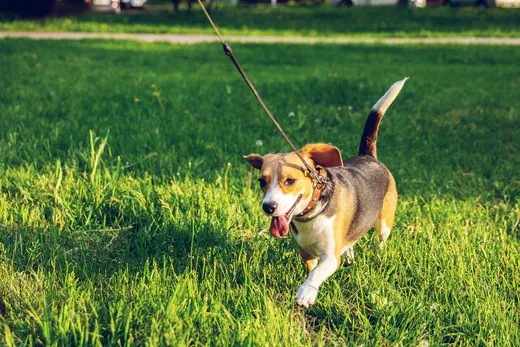
 Small dog on a leash in a grassy area
Teaching your dog to walk politely on a leash is one of the most rewarding aspects of dog ownership. Imagine strolls where your canine companion walks happily by your side, stopping when you stop, turning when you turn, and remaining calm around other dogs and people. While it might seem challenging, successful leash training for a puppy or adult dog is achievable and immensely beneficial for both of you. This guide will walk you through the essential steps to make this vision a reality.
Before You Start Leash Training
While tools like head collars or front-attachment harnesses can immediately help discourage pulling, they are aids, not replacements for proper leash training. A front-attachment harness is a safe and effective tool for dogs of all sizes, offering immediate assistance in preventing pulling. For dogs with more pronounced pulling tendencies or those requiring maximum control, such as a large breed dog with a smaller owner, a head collar can provide enhanced management.
Gigo wearing a Comfort Trainer head collar (left) and an Easy Walk front-attachment harness (right).
When using either a front-attachment harness or a head collar, it’s crucial to use a leash no longer than 6 feet. A shorter leash helps prevent sudden lunges that could cause injury if the leash reaches its full extension abruptly.
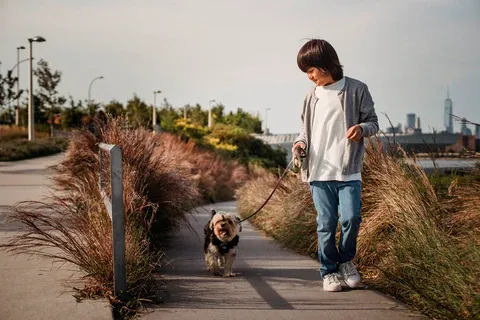 Young boy walking a small dog on a leash
The “Stop and Reward” Method
A highly effective technique for leash training a puppy or dog is the “stop and reward” method. When your dog pulls, you stop walking. When they relax and walk beside you, you reward them with a treat. This positive reinforcement teaches your dog that walking calmly by your side is the key to continuing the walk and receiving rewards. A treat pouch worn at your waist is invaluable for easy access during training. If your dog isn’t highly food-motivated, praise, a favorite tug toy, or a game of fetch can serve as equally effective rewards.
Step-by-Step Dog Leash Training
These detailed steps will guide you through teaching your dog to walk politely on a leash.
Step 1: Make Walking Beside You Rewarding
Begin leash training by attaching your puppy to a long leash (10-20 feet, non-retractable) while they wear a standard harness. Prepare small, high-value treats like pieces of meat or cheese. Move to a familiar, distraction-free area like your backyard. Decide whether your dog will walk to your left or right (left is traditional). Consistently offer treats near your thigh on that chosen side. This associates proximity to your leg with good things.
Walk briskly and change directions randomly. Whenever your dog naturally falls into step beside you, praise them enthusiastically and deliver a treat right by your thigh. Reward every step taken together initially. As they improve, gradually reduce the frequency of treats. If your dog seems disengaged, a short break indoors and a later session when they are hungrier might be more productive. Continue until your dog is primarily staying by your side.
Gigo walking by my side. Feeding Gigo a treat by my side.
Step 2: Encourage Following Your Lead
In this stage of leash training, start by walking around your yard. When your dog lags behind or stops to sniff, cheerfully say “Let’s go!” and turn to walk in the opposite direction. Slap your thigh lightly a few times initially to capture their attention.
When your dog catches up, offer praise and a treat by your preferred side. Continue with a treat every few steps if they maintain position. A quick catch-up deserves an extra reward. If the leash tightens and they don’t respond, apply gentle, consistent pressure. This is a reminder, not a forceful pull. Praise and release pressure as they move towards you. Reward them when they rejoin your side. Practice until your dog consistently stays with you, returning promptly when prompted.
“Let’s go”, and walking away.
Step 3: Granting “Sniff” Privileges
During leash training, dogs need opportunities to sniff and relieve themselves. Designate specific times for these activities. About every five minutes, or around when you’d typically give a food reward, say “Go sniff” and allow your dog freedom to explore or go potty on leash. This is a privilege. If pulling occurs during this time, simply say “Let’s go” and resume walking, ending the sniff break.
Step 4: Reinforce Attention and Shorter Leash Work
Continue practicing leash training in your yard, now transitioning to a shorter leash. Gradually reduce the leash length to the standard 6 feet. Incorporate variations in your walking pace—speeding up, slowing down, stopping abruptly, and changing directions. Reward your dog for successfully maintaining position during these exercises.
Begin to reward less frequently for simply walking by your side in a normal manner. Reserve higher-value rewards for successful heeling during challenging conditions (varied pace, direction changes) or when distractions like other animals or people are present.
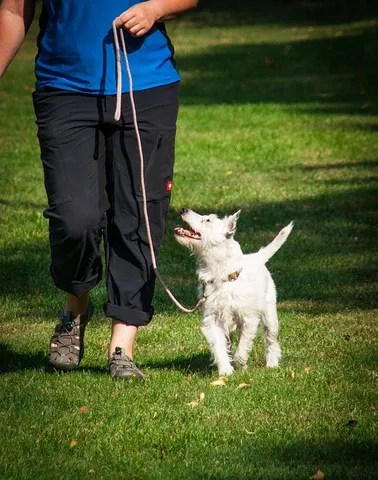 White dog on leash watching owner
Transitioning to Outdoor Walks
Apply the same techniques used in your yard to neighborhood walks. Be prepared for increased distractions such as strangers, squirrels, and other dogs. Using a front-attachment harness or head collar can provide extra control. Continue using high-value treats, especially for moments requiring extra focus.
When distractions arise, use “Let’s go” and change direction if your dog pulls. Reward them generously with treats when they walk beside you, and offer bonus treats for successfully navigating difficult situations. Remember to grant permission for sniff breaks periodically.
Challenging Your Dog During Training
To further solidify leash manners, engage your dog in controlled challenges. While they are on a 6-foot leash and standard harness, toss a ball or treat about 20 feet away. If your dog lunges towards the object, say “Let’s go” and walk in the opposite direction. If they walk beside you towards the target, allow them to reach it and claim it as their reward. Initially, you might use a slightly longer leash or a less enticing object to ease the challenge.
Troubleshooting Common Issues
- Crossing in front: If your dog repeatedly moves in front of you, stomp or shuffle your feet slightly to draw their attention back to your presence.
- Lagging behind: Significant lagging could indicate fear or illness. Use ample encouragement. If it’s for sniffing or potty breaks, maintain a steady pace with only gentle leash pressure. Reward generously when they walk with you.
- Alternating between good and pulling: If your dog struggles to maintain a consistent position, focus rewards on longer stretches of consecutive steps beside you, rather than rewarding every instance of returning to your side after pulling.
Teaching the “Heel” Command
The “heel” command is useful for brief periods when you need your dog to be very close and attentive, particularly when navigating distractions. Practice this indoors first. Place a treat in your closed fist and let your dog sniff it. Say “Heel” and take a few steps, keeping the treat near your thigh. Praise and reward when they follow your fist with their nose.
Progress to having your dog follow your empty fist, continuing to reward them for staying close. Gradually increase your expectations and practice in more distracting environments. Your closed fist will become a visual cue for “heel.”
I hope this guide helps you enjoy more pleasant and fulfilling walks with your dog. Explore our collection of leash training aids, puppy supplies, and unique dog products to further support your training journey.
About the Author:
Jess Rollins and the Pet Expertise team are dedicated to helping you unlock your dog’s full potential. They meticulously select and test products to ensure they are safe and effective, understanding that the right tools can make a significant difference in your dog’s life and your training success.
