
Is your daily walk with your furry friend turning into an arm workout? Does your dog’s enthusiasm for every squirrel, scent, or passing stranger make a peaceful stroll impossible? You’re not alone! Leash pulling is one of the most common challenges dog owners face. But don’t worry, with the right approach and a bit of patience, you can teach your dog to walk calmly by your side. This guide will break down exactly how to train your dog from pulling on leash, transforming your walks into enjoyable experiences for both of you.
Understanding Why Dogs Pull on Leash
Before we dive into training techniques, it’s crucial to understand why your dog pulls. It’s rarely out of defiance. More often, it’s due to a combination of excitement, natural instinct, and a lack of clear communication from their human.
- Excitement and Exploration: Dogs are naturally curious and eager to explore the world. The walk is their chance to sniff, see, and interact with everything around them. Their natural pace is often faster than ours, and they haven’t yet learned that the leash means staying close.
- Breed Predisposition: Some breeds, particularly those bred for work like sledding or hunting, have a stronger natural inclination to pull.
- Lack of Training: Most dogs aren’t born knowing how to walk politely on a leash. They need to be taught, just like any other command. If pulling has been rewarded (even unintentionally) by allowing them to get where they want to go faster, they’ll continue the behavior.
- Improper Equipment: Sometimes, the equipment you’re using might inadvertently encourage pulling. A standard collar, for instance, can put pressure on the dog’s trachea and might not offer enough control for strong pullers.
The Foundation: Choosing the Right Equipment
The gear you use can significantly impact your training success. While the goal is to teach your dog to walk without pulling regardless of equipment, starting with the right tools can make the process smoother.
- Harnesses: Many harnesses are designed to discourage pulling.
- Front-Clip Harnesses: These have a leash attachment point on the dog’s chest. When the dog pulls, the leash gently turns them back towards you, redirecting their momentum without causing pain. This is often a highly effective tool for teaching loose-leash walking.
- Head Halters (e.g., Gentle Leader, Halti): These fit over the dog’s muzzle and behind the ears. They offer excellent control as they guide the dog’s head, and where the head goes, the body follows. They require a gradual introduction period to ensure the dog is comfortable.
- Leashes: A standard 4-6 foot nylon or leather leash is ideal. Avoid retractable leashes, as they teach dogs to pull constantly to extend the leash and offer little control.
- Collars: While not ideal for strong pullers, a flat buckle collar is necessary for ID tags. If you choose to use a Martingale collar for breeds prone to slipping out of collars, ensure it’s fitted correctly and used as a training aid rather than a correction tool.
Essential Training Techniques for Loose-Leash Walking
Consistency is key when teaching how to train your dog from pulling on leash. Implement these methods consistently during every walk, and you’ll see progress.
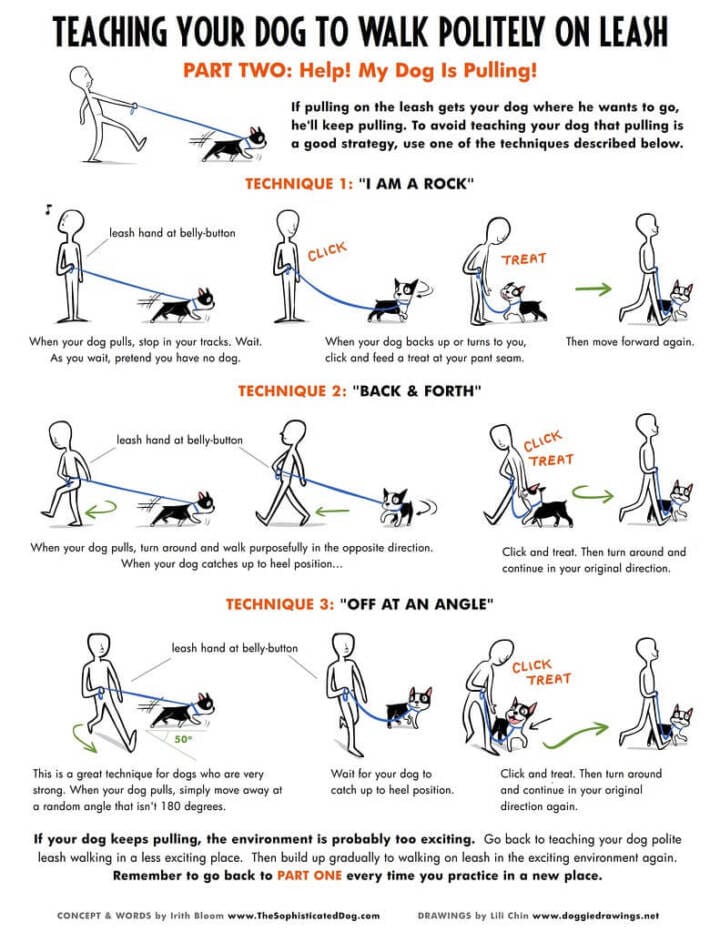
1. The “Stop and Wait” Method
This is arguably the simplest yet most effective technique.
- How it works: As soon as your dog starts to pull and the leash becomes taut, stop walking immediately. Stand still like a tree.
- Reinforcement: Wait patiently. The moment the leash slackens (even slightly, perhaps because your dog turns back to look at you), praise them calmly and resume walking.
- Consistency: If they pull again, stop again. Repeat this process every single time they pull. It might feel like you’re not getting anywhere at first, but your dog will quickly learn that pulling stops the forward momentum, while a loose leash allows them to move.
2. The “Turn Around” Method
Similar to stopping, this method uses redirection.
- How it works: The instant you feel tension on the leash, cheerfully say “This way!” or a similar cue, and turn 180 degrees, walking in the opposite direction.
- Reinforcement: As your dog catches up and walks beside you with a loose leash, offer verbal praise and perhaps a small, high-value treat.
- Goal: The dog learns that pulling leads them away from where they want to go, and staying with you leads them forward. This is a great way to incorporate dog pulling on leash training.
3. Rewarding the “Sweet Spot”
This method focuses on positive reinforcement for desired behavior.
- Identify the “Sweet Spot”: This is the area beside your leg where you want your dog to walk.
- Reward: Whenever your dog is in that position with a loose leash, mark the behavior with a clicker or a verbal cue like “Yes!” and immediately give them a tasty treat.
- Proximity is Key: Reward frequently when they are in the right place. Initially, you might be rewarding every step or two. As they improve, gradually increase the distance between rewards. This teaches them that staying by your side is highly beneficial.
4. Introducing a Cue Word
Once your dog starts to understand the concept, you can introduce a verbal cue like “Heel” or “Close.”
- How to introduce: When your dog is walking nicely beside you, say the cue word and immediately reward them.
- Practice: Use the cue word consistently when you want them to be in the heel position. Over time, they will associate the word with the desired behavior and location.
Addressing Specific Challenges and Common Mistakes
Even with the best intentions, some challenges arise. Here’s how to tackle them:
- High-Distraction Environments: Training in a quiet park or your backyard is easier than on a busy street. Gradually introduce distractions as your dog improves. Start with short walks in slightly more stimulating areas and work your way up. If your dog is struggling, it’s a sign you need to go back to a less distracting environment. Remember, you’re teaching how to walk my dog without pulling in all situations.
- Sudden Lunging: If your dog suddenly lunges at something, the “Stop and Wait” or “Turn Around” methods are crucial. Some owners also find using a harness with an anti-pulling feature that redirects the dog’s body helpful here.
- Puppy Pulling: Puppies have a lot of energy and a natural inclination to pull. Start training early! Consistency from day one is vital. For puppies, focus on making the leash a positive experience and rewarding them for walking near you.
- Using Your Dog’s Name: Avoid constantly repeating your dog’s name while they are pulling. This can inadvertently teach them that pulling is the desired behavior associated with their name. Instead, use their name to get their attention before they pull, or when they are performing the correct behavior.
Advanced Tips for Persistent Pullers
If you’re finding how to train big dog to stop pulling on leash or any dog particularly challenging, consider these advanced strategies:
- “Be a Tree” Game: Make a game out of stopping. When your dog pulls, freeze. When they slacken the leash, walk again. Repeat. This turns the training into a predictable game.
- Reward Calmness: Reward not just for walking by your side, but also for moments of calm when you are stationary, or when they look at you expectantly.
- Varying Rewards: Use a mix of treats, praise, and even brief “play breaks” (like tossing a toy for a few seconds) to keep your dog engaged and motivated.
- Professional Help: If you’ve tried everything and are still struggling, don’t hesitate to consult a certified professional dog trainer or a veterinary behaviorist. They can assess your dog’s specific needs and provide tailored advice. Sometimes, a seemingly simple issue like leash pulling can have underlying causes that a professional can identify.
Making Leash Training a Positive Experience
Remember, training should always be a positive and bonding experience. Your dog wants to please you, and they thrive on clear communication and positive reinforcement.
- Keep sessions short and fun: Especially for puppies or dogs with shorter attention spans. Five to ten minutes of focused training several times a day is more effective than one long, frustrating session.
- Celebrate small victories: Every time your dog walks a few steps with a loose leash, acknowledge it. These small successes build confidence and momentum.
- Patience is paramount: Every dog learns at their own pace. Some will pick it up quickly, while others will take more time. Avoid getting discouraged. Your persistence and positive attitude will pay off.
Teaching your dog to walk politely on a leash is a journey, not a destination. By understanding the root causes of pulling, using the right equipment, and consistently applying positive reinforcement techniques, you can successfully transform your walks. Embrace the process, celebrate your dog’s progress, and enjoy the renewed connection you’ll build with your canine companion.
