
Bringing a new feline companion into your home is an exciting time, and one of the most rewarding aspects of cat ownership is their natural inclination towards cleanliness. Kittens, in particular, often take to litter box training with remarkable speed, a stark contrast to the often more involved process of housetraining puppies. While it’s commonly believed that mother cats are solely responsible for teaching their kittens this crucial skill, this isn’t always the case. Whether you’ve recently adopted a kitten or welcomed a cat of any age, understanding the fundamentals of litter box training is essential for a harmonious home.
The journey to a well-trained feline begins with preparation. Gathering the right supplies is the first step. You’ll need a suitable litter box, the appropriate cat litter, absorbent cat pads for added protection, and a reliable litter scoop. The market offers a diverse range of litter boxes, from enclosed spaces that provide privacy to corner-fitting designs that optimize bathroom space. Similarly, cat litter comes in various types, with clumping litter being a highly favored option due to its ability to bind when wet, forming convenient clumps for easy removal. The ideal amount of litter is crucial; aim for approximately 2 inches, providing enough depth for your cat to comfortably bury their waste.
Beyond the litter itself, the placement of the litter box plays a significant role in your cat’s acceptance and consistent use. Most cats inherently seek a quiet, private location for their toileting needs. It’s also a common feline preference to keep their elimination area separate from their food and water stations. Proximity to their dining area can even deter some cats from using the box. Wee-Wee Cat Pads offer an excellent solution for maintaining cleanliness, featuring an ultra-plush design that is gentle on your cat’s paws and placed beneath the litter box to catch any stray messes. For those using a litter box system, specialized pads can be inserted for enhanced odor control and simplified cleanup.
When selecting a litter box, consider your cat’s size. A general guideline suggests choosing a box that is at least one and a half times the length of your cat, allowing them ample room to turn around and dig with ease.
The Four Steps to Successful Litter Box Training
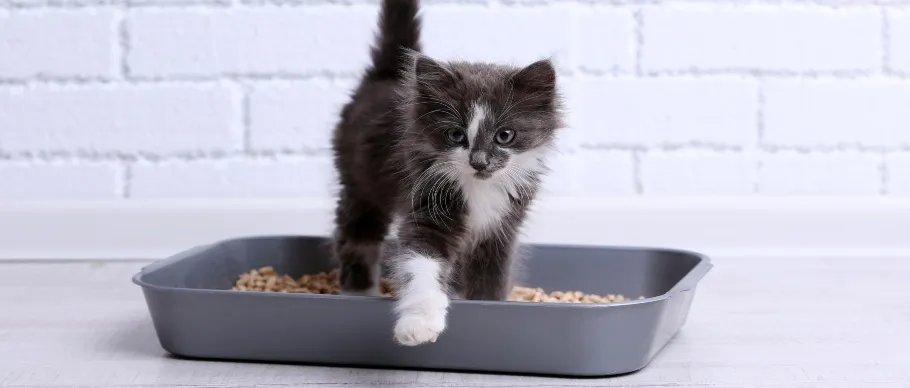 Kitten leaving litter box
Step 1: Strategic Placement
The initial and perhaps most critical step in litter box training is selecting the optimal location for the box. As mentioned, a quiet, private spot is paramount. Critically, ensure the box is situated away from your cat’s food and water bowls. Many cats exhibit an aversion to eliminating in the same vicinity where they eat, and placing the litter box too close can lead to avoidance.
Step 2: The Right Amount of Litter
Once you’ve chosen the location, it’s time to prepare the box. Fill the bottom with about 2 inches of cat litter. This depth is important because cats have a natural instinct to cover their waste. Providing sufficient litter allows them to fulfill this behavior. After preparing the box, gently place your cat inside to acclimate them to the scent and texture of the litter. Don’t be discouraged if they don’t eliminate immediately; some cats may require a few minutes to feel comfortable.
Step 3: Consistent Encouragement
Regularly placing your cat in the litter box throughout the day is crucial for reinforcing the desired behavior. Pay special attention to the times immediately following meals, as kittens, in particular, often have an urgent need to eliminate shortly after eating. If you happen to catch your cat in the act of soiling an inappropriate area, gently interrupt them and immediately guide them to their litter box. Crucially, offer praise and positive reinforcement whenever they successfully use the box.
Step 4: Troubleshooting and Adjustments
If you’re encountering persistent challenges with litter box training, don’t despair. Often, a change in the box’s location or experimenting with a different type of cat litter can make a significant difference. Some cats are particular about the texture or scent of their litter, so trying a few varieties might be necessary. Learning how to properly train a kitten can involve patience and observation of your individual cat’s preferences.
Maintaining a Clean Litter Box
Regular cleaning of the litter box is essential for your cat’s health and to encourage consistent use. As soon as you notice your cat has used the box, use your litter scoop to remove the waste. After scooping, you may need to add a small amount of fresh litter to maintain the optimal depth.
A thorough weekly cleaning will not only keep the box fresh and odor-free but also significantly reduce the risk of your cat developing a UTI due to accumulating bacteria. To do this, completely empty the old litter into the trash, wash the box with a pet-safe cleaner, and refill it with fresh litter. For those dealing with persistent litter box issues, understanding litter box trained cat pooping on floor situations might provide further insights into potential causes and solutions.
A Job Well Done!
Consistent effort and a little patience in training can yield excellent results. By observing your cat’s natural schedule and consistently guiding them to their designated spot, you’ll find that your feline friend will soon be reliably using their litter box. Remember, understanding how to potty train your kitten and other essential kitten training tips contributes to a happier, healthier life for both you and your beloved pet.
