
It can be concerning when your playful kitten gets a bit too rough, leaving you with a sharp bite or scratch. While some playful nipping is normal, it’s crucial to teach your feline friend from a young age that hands and furniture are not toys. This training ensures you can enjoy a happy and friendly adult cat without the risk of injury.
1. Redirect Playful Energy to Toys, Not Hands
Kittens often express excitement by playfully attacking hands and feet. It’s vital to teach them that only designated toys are for biting and pouncing. If this behavior isn’t addressed, their play-biting can become more forceful as they grow, potentially causing harm.
The next time your kitten targets your ankles or hands, respond with a firm “No!” Redirect their attention to an appropriate toy and briefly pause playtime. To solidify the “toys, not hands” message, never use your own hands or feet as playthings. Always opt for a toy, preferably one that keeps a safe distance between you and your kitten, such as feather wands, balls, or stuffed toys.
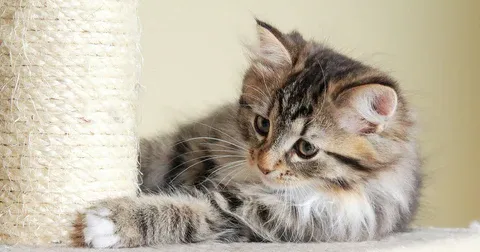 Kitten playing with a feather toy
2. Encourage Scratching Post Use
Scratching is an innate behavior for cats, essential for stretching their claws and marking their territory. In play, kittens may use their claws as part of hunting and pouncing practice, which is a normal part of kitten development. However, if they direct this practice towards you, gently redirect them to their scratching post or toys whenever their claws emerge.
Look for signs that indicate your kitten is about to pounce and scratch: dilated pupils, a rapidly twitching tail, and flattened ears are all signals of an impending playful attack. Training your kitten to use their scratching post should be a key part of their overall training. Ensure each cat in your household has access to at least one scratching post (plus an extra one) to help manage their claws effectively.
 Kitten scratching on a post
3. Immediate Interruption of Biting or Scratching
If your kitten exhibits excessive aggression, biting, or scratching beyond occasional accidental nips, it’s important to establish boundaries. When such behavior occurs, immediately cease all interaction and play. Step away from your pet and out of their immediate reach. Do not offer comfort or attention, as this can inadvertently reward the unwanted behavior.
Walking away, ignoring your kitten, and leaving them alone to calm down without any interaction (avoiding eye contact or talking to them) for 5-10 minutes is the most effective way to curb aggressive play. Consistency is key; applying this method every time your kitten becomes aggressive will teach them that rough play leads to social isolation. This technique is particularly effective while cats are still kittens, as they are in a critical learning phase. For adult cats, this method is most successful with those who are generally affectionate and will miss your attention. Remember that cats respond best to positive reinforcement, so maintaining a calm and patient demeanor is essential.
4. Utilize Your Voice Effectively
Your voice can be a powerful tool in communicating your feelings to your pet. To discourage biting and scratching, use a sharp “No!” or “Ouch!” command the moment your cat nips you. This vocal cue, combined with ignoring the unwanted behavior, reinforces that you are displeased. It’s crucial to never shout at your cat. Always maintain a calm tone and avoid losing your temper, as an angry reaction can make your cat fearful or anxious, potentially worsening their behavior.
After a few minutes, when you feel it’s appropriate to resume play, continue using your voice to reward calm and good behavior. Always praise positive interactions and cease play whenever your pet becomes overly excited or rough.
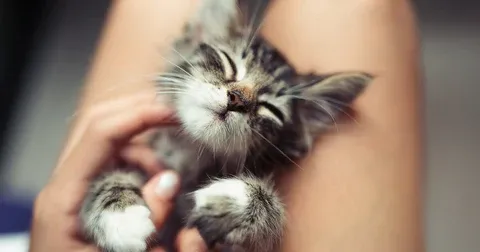 Two cute kittens
5. Engage in Daily Play Sessions
Establishing a routine is vital for your cat’s well-being. Daily play sessions, lasting 10-15 minutes twice or thrice a day, can significantly strengthen your bond, promote relaxation, and help expend excess kitten energy and aggression. Teaching your kitten to play calmly is a fundamental aspect of your relationship, and learning not to bite or scratch during play is a critical component of this training. By consistently reinforcing good play behaviors and ignoring unwanted ones, your kitten will gradually learn appropriate conduct. This approach aligns with how to teach a cat not to bite or scratch.
6. Avoid Reinforcing Unwanted Behavior
It might be tempting to fuss over or continue playing with your kitten after they bite or scratch you, but this attention can inadvertently signal that these actions are acceptable. In some cases, they might even escalate their behavior to seek more attention. Instead, always disengage and ignore your cat immediately when unwanted behavior occurs.
 Kitten's paw with claws slightly extended
7. Ensure Your Kitten is Healthy
If biting or scratching persists, or if your cat displays unusual aggression, it’s essential to consult a veterinarian to rule out any underlying health issues. Pain or illness can make a cat feel defensive, increasing their likelihood of acting aggressively.
8. Cultivate a Calm Environment
A stressed or anxious kitten may exhibit increased biting and scratching behaviors. To foster a sense of calm, ensure your kitten’s environment is conducive to their well-being. Verify that all resources are ample for every cat, including adequate hiding spots, easy access to food, water, litter boxes, and scratching posts. Maintain a consistent routine for meals and playtime, and minimize sudden noises or significant changes in the household.
Utilizing a FELIWAY Optimum diffuser in areas where your cat spends the most time can help promote a tranquil atmosphere, and is recommended for reducing scratching, spraying, and hiding behaviors. This comprehensive approach, combined with consistent training, will help your kitten develop into a well-behaved companion.
