
Bringing a new cat into your home is an exciting experience, and for many new cat owners, the topic of litter boxes can be a significant concern. While traditional litter box maintenance is a given, some owners wonder if there’s an alternative. Toilet training a cat is a method that, with patience and the right approach, can lead to a cleaner home and a unique bond with your feline friend. This guide outlines a seven-step process to help you toilet train your cat effectively. Remember, the key is to let your cat set the pace, ensuring they feel secure and comfortable throughout the transition.
Step One: Relocation and Acclimation
Begin by moving your cat’s current litter box to the bathroom, placing it directly next to the toilet. Allow your cat ample time to adjust to this new location. It’s crucial that your cat feels at ease using the litter box in this spot before proceeding. Rushing this initial stage can lead to accidents and behavioral issues, so observe your cat’s cues and proceed only when they seem comfortable. Patience is paramount during this entire toilet training journey.
Step Two: Gradual Elevation
Once your cat is comfortable with the litter box next to the toilet, begin to gradually raise its height. Use sturdy, stable objects like phone books or stacks of newspapers to elevate the litter box incrementally. Each time you add height, ensure the litter box remains secure to prevent any wobbling or movement, which could startle your cat. As you raise the box, you can also start to slightly reduce the amount of litter.
Step Three: Proximity to the Throne
Continue to move the elevated litter box closer to the toilet, advancing it about one inch each day. The goal is to have the litter box positioned directly over the toilet seat. Throughout this process, continue to reduce the litter depth, aiming for no more than an inch of litter remaining. This gradual approach helps your cat associate the toilet’s location with their elimination spot.
Step Four: Introducing the Training System
This step involves replacing the traditional litter box with a specialized “training box” or a DIY setup that can safely sit on the toilet seat. You can purchase commercial cat toilet training systems or create your own. A common DIY method involves taping wax paper or an aluminum pan securely over the toilet seat. Flushable litter is then added to this temporary receptacle.
- DIY Training Box:
- Cover the entire toilet seat with wax paper, securing the edges with tape.
- Add flushable litter to the wax paper.
- Alternatively, tape a bowl or aluminum pan to the edges of the toilet seat, then lower the toilet seat to hold it in place. Fill this pan with flushable litter.
Pro-Tip: To encourage your cat to use the training box, consider adding a sprinkle of catnip to the clean litter. Cleaning the training box after each use is also essential.
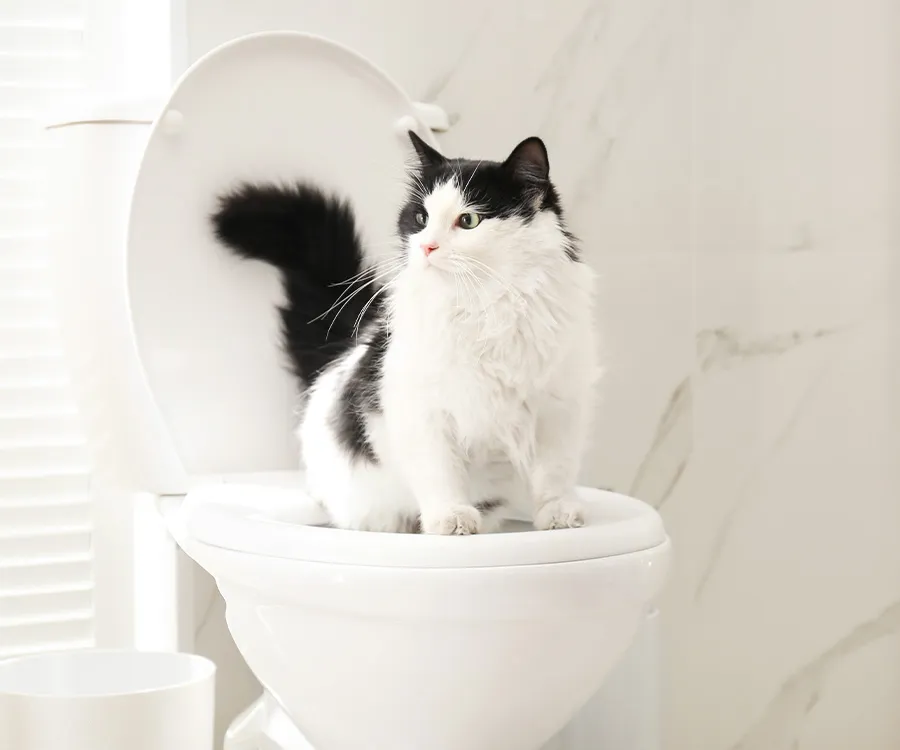 Cat on a toilet, with a training litter box in place. Rewarding your cat with treats after successful use can significantly aid the training process.
Step Five: Creating the Opening
Begin to transition your cat to using the toilet bowl directly. If using wax paper or a pan, start cutting a small hole (about one inch in diameter) in the center. Gradually enlarge this hole over time. Simultaneously, reduce the amount of flushable litter used. The aim is to have the hole large enough and the litter minimal enough so that your cat begins to eliminate directly into the toilet water.
Step Six: The Flush Factor
Once your cat is consistently using the toilet with minimal or no litter, you’ll need to flush the toilet after each of their eliminations. This reinforces the idea that the waste is disposed of.
Pro-Tip: It is generally not recommended to train your cat to flush the toilet themselves. While some cats can learn this behavior, they may develop a habit of flushing repeatedly, leading to significant water waste.
Step Seven: Positive Reinforcement and Success
The final step in toilet training your cat is to offer positive reinforcement. Lavish praise and offer a small, high-value treat each time your cat successfully uses the toilet. This reward system is crucial for cementing the desired behavior.
Pro-Tip: If your cat shows apprehension towards the water in the toilet bowl, you can add a small amount of flushable litter to the water. This can help them associate the smell and texture with their familiar litter box, easing their anxiety.
Toilet training a cat can be a rewarding experience, leading to a cleaner and more convenient household. By following these seven steps with patience and consistency, you can guide your feline companion towards successfully using the toilet. Remember, every cat is an individual, and their learning pace may vary. Celebrate small victories and always prioritize your cat’s comfort and well-being throughout the process.
